
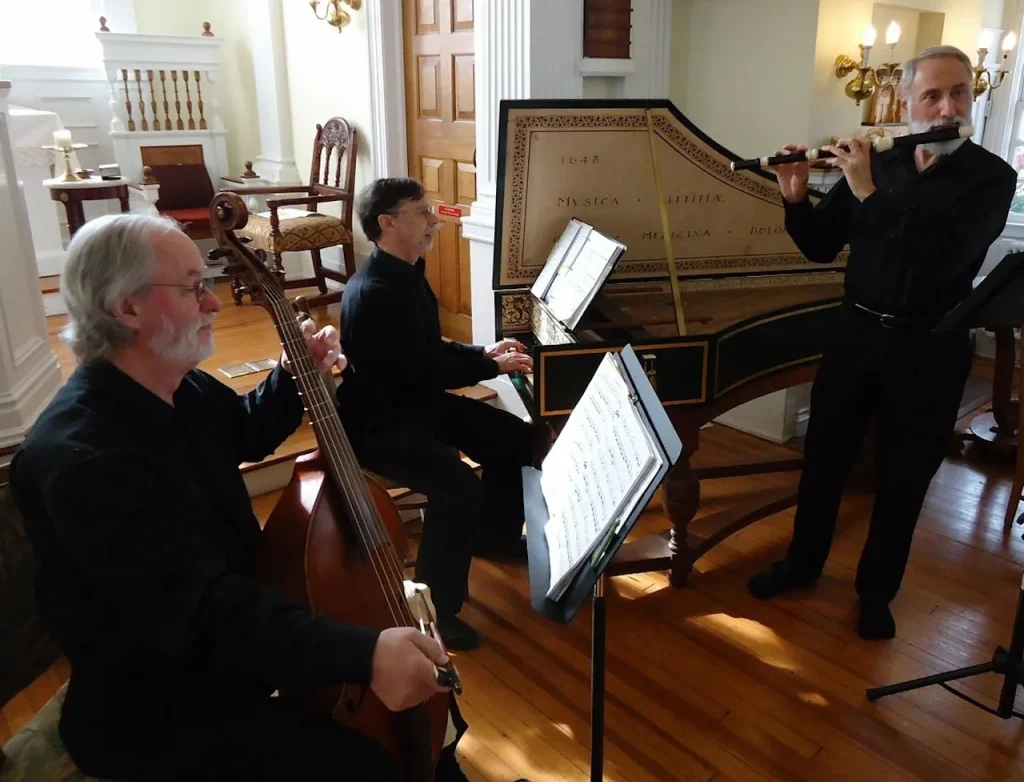
This guide presents the features that distinguish three major early instruments. We explain how their shape, mechanism and tone evolved from the Middle Ages onward.
Since the 14th century, these keyboards have occupied royal salons. In 1360, John II of France had already received an eschiquier, evidence of the early presence of keyboards at court.
Construction, materials and string arrangement strongly influence the sound. This article also examines these instruments’ role in the Baroque repertoire and the challenges involved in preserving them.
For an in-depth technical analysis and definitions, consult this historical resource: history and construction of keyboard instruments.
Harpsichord, spinet and virginal: what are the differences?
The family of plucked-string instruments encompasses keyboards with distinctly different tones and mechanisms.
The mechanism relies on the jack, a device that plucks the string, unlike the modern piano, whose hammer strikes it. This action produces a clear attack and a different dynamic response.
The touch requires precision and subtlety.
Among these instruments, the harpsichord is often distinguished by its two keyboards. This feature expands the Baroque performer’s polyphonic possibilities and tonal palette.
Other models prioritize compactness or a more intimate sound.
Studying these keyboards reveals a great diversity of shapes and sizes designed for various uses in the 17th and 18th centuries.
Understanding these distinctions helps trace the instruments’ evolution toward the piano and supports a more informed interpretation of early repertoire.
- A distinct sonic identity for each instrument.
- Jack mechanism and precision of attack.
- Variations in touch that affect performance.
The origins of plucked-string instruments
Before the age of mechanized keyboards, music-making relied on simple resonating bodies. The earliest forms favored direct contact with the string to produce harmony.
The medieval psaltery
The psaltery is the direct ancestor of keyboard instruments. Its strings were plucked with a plectrum or a finger over a wooden soundboard. Widespread in the 14th and 15th centuries, this instrument offered a clear sound but a limited range.
The transition to the harpsichord required the ingenuity of instrument makers. They explored shapes and strings that would increase its range and tonal richness.
The invention of the jack
In 1440, Arnault de Zwolle’s manuscript described experiments with mechanisms. The jack mechanized the plucking of strings and transformed instrument construction.
In 1511, Sebastian Virdung published Musica getutscht, providing valuable technical descriptions. These advances made keyboards more precise and opened up new musical possibilities.
- Origin: the plucked-string psaltery.
- 1440: the first documented mechanisms.
- 1511: Virdung’s treatise describes the technique.
The harpsichord as a pillar of Baroque music
At the heart of the Baroque repertoire, the harpsichord played a central role both as a solo and an accompanying instrument. It provided the foundation for basso continuo and enriched the harmonic texture of ensembles.
The soundboard, often made of resonant wood, promotes rich projection. It made it possible to achieve a complex sound suited to the large halls of the period.
In 1638, Flemish makers such as the Ruckers family helped standardize construction. Their influence made instrument building more consistent throughout Europe and expanded the instruments’ range.
The possibility of having two keyboards enabled subtle contrasts and dynamic effects. Unlike the piano, the clarity of the plucked strings’ attack highlights counterpoint and the defining qualities of Baroque music.
“The benchmark instrument shaped the harmony and contrapuntal lines of the Baroque centuries.”
- Solo and accompanying roles.
- Wooden soundboard for projection and tonal richness.
- Standardization by instrument makers in 1638.
The spinet and its angular structure
The angular case of this small keyboard profoundly alters its projection and resonance. This compact shape makes efficient use of domestic space while retaining a beautiful sound.
By 1570, an English spinet of Italian design already illustrated this concept: a smaller case, diagonally arranged strings and a soundboard designed for salons. The result is a more intimate sound than that of a large harpsichord.
French and Italian makers followed different approaches to construction. Italian workshops favored strings under greater tension and a rigid soundboard. French makers often emphasized the case’s angle.
Differences between French and Italian models
The angular shape affects the arrangement of the jacks and the response of the keys. A sharper angle changes the plectrum’s attack and clarifies the tone.
The choice of wood, string tension and mechanism ultimately determine the tonal color. Each model reflects a regional tradition adapted to the music of its time and the tastes of enthusiasts.
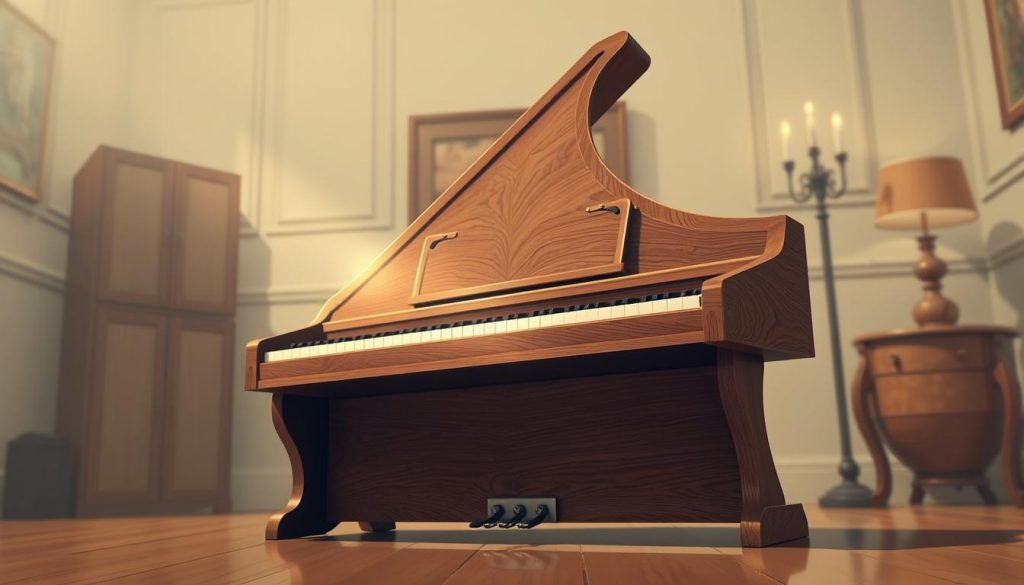
- Angular case: saves space and provides focused projection.
- Soundboard: maximizes vibrations and delivers an intimate sound.
- Instrument makers: French and Italian variations in wood and tension.
The virginal and its rectangular design
The rectangular model is immediately recognizable by its elongated case. It produces a round, warm sound particularly well suited to chamber music.
The instrument’s soundboard is often richly decorated. It contributes to the instrument’s projection and internal harmony.
Flemish muselar
The muselar has an offset keyboard that emphasizes the upper harmonics. This configuration creates a bright tone that is easily recognizable in Flemish collections.
Italian ottavino
The ottavino is a smaller model that sounds an octave higher. It was prized in Venetian palaces for its clarity and suitability for confined spaces.
Although it is sometimes confused with struck-string instruments, this keyboard uses a plucking mechanism. Flemish makers improved its construction by choosing sturdy woods to stabilize the case and strings.
| Model | Keyboard position | Register | Sonic characteristic |
|---|---|---|---|
| Standard rectangular | Central | Normal | Warmth and roundness suited to the middle octaves |
| Flemish muselar | Offset toward the end | Emphasized treble | Bright harmonics and a penetrating tone |
| Italian ottavino | Central and compact | Upper octave | Clear sound with reduced but distinct projection |
Architecture and construction of early instruments
The framework of every early instrument combines proportions, choice of wood and engineering to maximize resonance.
The case directs vibrations toward the soundboard. Makers took great care with assembly to optimize the transmission of string vibrations. This precise work often dates back to the 16th century.
The design of the keyboard and jacks emerged from the guilds. These workshops passed down their craftsmanship and key-regulation techniques. Each instrument consequently retains its own characteristics.
The choice of wood for the soundboard and case was crucial. It shaped the tone, the stability of the octaves and the dynamic response sought by composers.
“Successful construction reveals the perfect balance between form, soundboard and strings.”
- Preservation: museums conserve these instruments so their architecture can be studied.
- Mechanisms: combinations of registers and stops that provide new expressive possibilities.
- Heritage: to learn more about historical instrument making, consult this resource on the Mirecourt violin makers’ workshops.
| Element | Role | Sonic impact |
|---|---|---|
| Case | Structure and projection | Determines warmth and the length of resonance |
| Soundboard | Transmission of vibrations | Clarity and harmonic richness |
| Jacks and keyboard | Mechanical interaction | Precision of attack and tonal color |
Sound-production mechanisms
Each note results from a calibrated interaction between the keyboard, plectrum and case resonator. The jack plucks the string at the moment of attack. This mechanical action produces a clear, articulated sound very different from that of the piano.
The soundboard transforms this energy into vibrations. Its shape and the choice of wood determine harmonic richness and projection.
Makers designed devices to vary the tone. Multiple stops allow strings at different tensions and octaves to be engaged.
String tension and plectrum quality affect tuning and clarity. The keyboard remains the interface: the musician’s touch shapes the attack and duration.
The case directs the sound toward the listener. Its shape optimizes diffusion throughout the room, as it did in 17th-century salons and chapels.
“Studying these mechanisms reveals the ingenuity of craftspeople who gave their instruments remarkable sonic longevity.”
- Jack: precise attack and articulation.
- Soundboard: amplification and tonal color.
- Instrument makers: regulation and combinations of stops.
| Element | Function | Effect on the sound |
|---|---|---|
| Jack | Pluck the string during the attack | Clarity and definition of attack |
| Soundboard | Amplify vibrations | Harmonic richness and projection |
| Case | Direct the sound | Projection and tonal color according to shape |
To explore the origin and evolution of the mechanism further, consult this history of the harpsichord.
Regional variants and acoustic characteristics
Each region shaped its construction according to local tastes, creating families of instruments with distinctive tonal colors.
Italian makers favored lightness and tonal clarity for court music. Flemish workshops chose denser woods, resulting in instruments with deeper resonance and different octave stability.
After the Thirty Years’ War, French workshops introduced technical innovations. These changes altered string arrangement and case shape and influenced production throughout Europe.
The choice of material, the shape of the case and the position of the keyboard determine the final sound. The variety of jack mechanisms and plectra produces tones ranging from lute-like softness to metallic brilliance.
Musicians selected their instrument according to the repertoire. Compact models were preferred for intimate pieces and sturdier instruments for concerts.
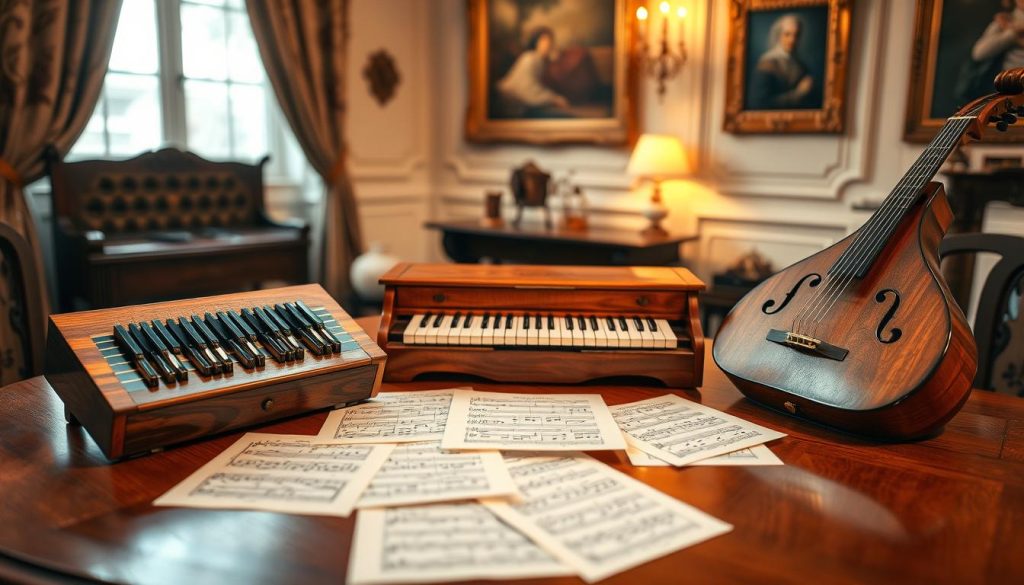
| Region | Acoustic emphasis | Choice of wood |
|---|---|---|
| Italy | Lightness, clarity | Pine and lightweight maple |
| Flanders | Deep resonance | Oak and dense walnut |
| France | Balance and innovation | Mixed woods and reinforcements |
The role of materials in tone
The woods selected by craftspeople largely determine the tonal color and projection of an early instrument.
The soundboard is often made of spruce. This lightweight wood transmits string vibrations clearly, affecting the richness of the harmonics.
The case, made of oak or walnut, provides structural stability. A well-designed case maintains string tension for several centuries.
Makers selected the density of the wood used for the jacks. A denser material produces a more precise attack. Plectra made from feathers or leather alter the tone and dynamics of every note.
Harmony among the materials remains the secret of the finest makers. This combination explains why some 17th-century instruments retain a sound that is still admired today.
“Understanding wood species enables restorers to preserve the authentic sound of historical keyboards.”
- Soundboard and case woods: a direct influence on projection.
- Jacks and plectra: precision of attack and tonal color.
- Historical knowledge useful for restoration; see also early cordophones as a reference: historical chordophones.
Playing techniques and interpretation
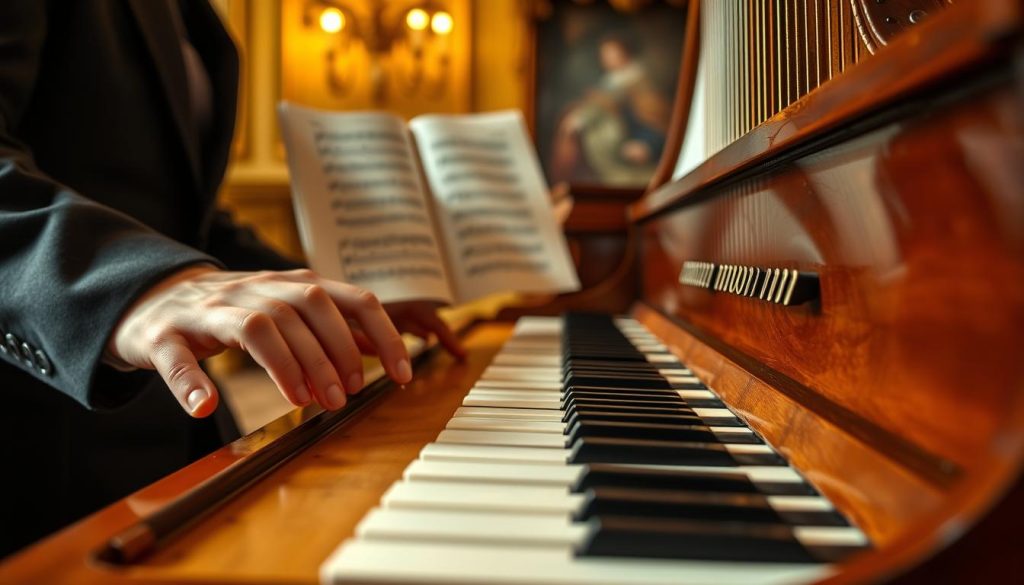
On these keyboards, the quality of touch shapes the musical phrase. The hand must remain light to preserve the mechanism’s precision and the strings’ clarity.
Articulation relies on small pauses between notes. These micro-silences highlight counterpoint and allow the voices to breathe.
Ornamentation remained central to the period: trills, mordents and embellishments demand great finger agility. Their execution follows 17th-century conventions to restore the music’s original character.
Arpeggiated playing enriches the resonance of chords. Without a sustain pedal, the arpeggio helps prolong the harmony and fill the resonating case.
Techniques vary according to the chosen model. A compact model calls for an intimate approach, while a larger instrument offers greater polyphonic possibilities.
For historically faithful practice, historically informed performance draws on early treatises and makers’ adjustments. A useful resource on these instrument families can be found here: virginal and spinet — a comparative study.
The repertoire for keyboard instruments
From intimate pieces to grand entertainments, the literature for these keyboards covers a broad spectrum.
In the 16th and 17th centuries, domestic music-making fostered a flourishing repertoire. The Fitzwilliam Virginal Book brings together hundreds of pieces for virginal. These works demonstrate the richness of short forms and dances.
Composers took advantage of the instruments’ mechanical characteristics. They wrote lute transcriptions for harpsichord, exploiting the polyphony and brilliance of plucked strings.
During the Baroque period, the music grew more complex. Suites, preludes and concertos demanded great virtuosity. Composers also drew on popular music to enrich their motifs.
Studying the repertoire helps explain how the work of instrument makers shaped composition. To explore the subject further, consult a guide to the keyboard repertoire.
| Collection | Century | Characteristic |
|---|---|---|
| Fitzwilliam Virginal Book | 16th–17th | Short pieces, dances and transcriptions |
| Baroque repertoire | 17th–18th | Suites, preludes and virtuosity |
| Lute transcriptions | Renaissance | Polyphonic adaptation and flexibility |
Hybrid instruments and instrument-making curiosities
At the intersection of different crafts, workshops experimented with unprecedented combinations to enrich the tonal palette. These efforts demonstrate the makers’ boldness and their pursuit of new colors.
The claviorganum
The claviorganum combines a keyboard and an organ in a single case. Rochus Egedacher’s 1756 example illustrates this quest: it offered organ stops coupled with the harpsichord mechanism to create original harmonic effects.
The lute-harpsichord
The lute-harpsichord attempts to reproduce the lute’s warmth with gut strings. The result combines the lute’s softness with the precision of a keyboard. These instruments were often unique pieces commissioned by curious patrons.
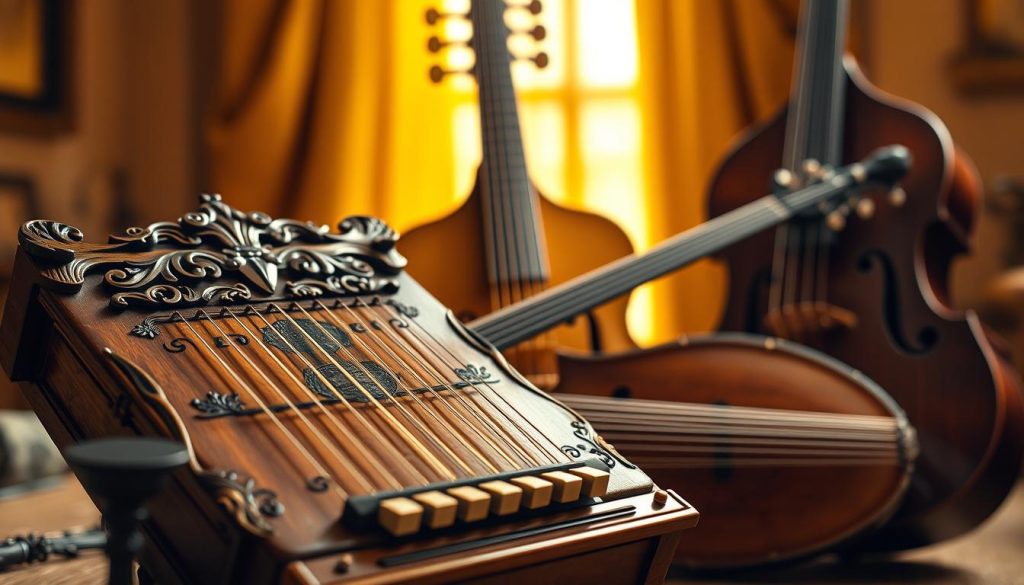
- These models demonstrate inventive instrument making.
- Their construction brought several trades together to master the strings, case and mechanism.
- Although rare, they inspired composers and broadened the instrument family.
“Hybrid instruments reveal the ingenuity of craftspeople and the tonal richness of an era.”
Decline amid the rise of the pianoforte
As the pianoforte gained power, early keyboards gradually lost their place in 18th-century salons and concert halls.
The hammer mechanism offered dynamic nuances that were impossible with the jack, which plucks the string. Classical composers sought this new expressiveness.
Instrument makers had to respond: some converted their workshops to piano production, while others modernized existing models.
Nevertheless, the piano did not entirely erase the value of historical instruments. The clarity of attack and articulation of plucked strings remained unique.
Over the course of the century, the keyboard repertoire changed. Many models were abandoned and forgotten for more than a century, leading to the loss of techniques and artisanal knowledge.
“The transition marked a profound technical and aesthetic break in the history of music.”
- Power and nuance: advantages of the hammer-action piano.
- Instrument makers adapted to changes in the market.
- Partial loss of earlier techniques and construction methods.
| Period | Development | Consequence |
|---|---|---|
| Early 18th century | Adoption of the pianoforte | Growing demand for struck-string instruments |
| Mid- to late 18th century | Transformation of workshops | Decline in the production of early instruments |
| 19th century | Neglect and disappearance | Loss of artisanal techniques |
Historical rediscovery in the 20th century
In the postwar period, interest in early performance practices grew.
In 1950, a research movement revived the study of early instruments. Musicologists and performers worked to restore their original sound.
This return to the sources enabled the restoration of examples preserved in museums. Restoration allowed the strings, keyboard mechanisms and distinctive colors of each model to be heard again.
Modern makers drew inspiration from historical techniques to build faithful copies. Thanks to these replicas, the Baroque repertoire regained its authenticity. Research also clarified the rules governing ornamentation and performance.
“The revival gave contemporary audiences access to a forgotten world of sound.”
- Key year: 1950, the popularization of historically informed listening.
- Restoration: commitment from museums and workshops.
- Result: these instruments regained their place in concerts alongside the modern piano.
| Aspect | Effect | Example |
|---|---|---|
| Research | More accurate recreation | Studies of construction and performance |
| Restoration | Recovered sound | Retensioning the strings |
| Reconstruction | Faithful copies | Workshops using historical methods |
Conservation challenges and museum collections
Preserving these treasures requires strict climate control to prevent the wood from warping and the strings from corroding. Rapid changes in humidity and temperature damage the keyboard, compromise the soundboard and accelerate the deterioration of the mechanisms.
Museum collections play a central role: they provide stable conditions, support the study of construction and ensure access for researchers. In-situ conservation facilitates analysis of historical techniques without dispersing rare pieces.
Restoration requires great caution. Every intervention seeks to preserve the virginal’s or spinet’s sonic and structural authenticity without over-restoring it. Meticulous documentation accompanies every operation to preserve a record of technical decisions.
Patrons and foundations fund acquisitions and conservation campaigns. Collaboration among museums, instrument makers and musicians remains essential to conveying these instruments’ historical significance to the public.
“Thanks to their combined efforts, these objects continue to testify to the ingenuity of craftspeople through the centuries.”
- Climate control: stabilization of temperature and humidity.
- Documentation: complete technical and historical records.
- Partnership: museums, instrument makers, musicians and patrons.
Conclusion
This overview demonstrates how each keyboard has its own technical and musical history.
The study reveals how construction, shape and strings contribute to a unique tonal palette. These elements illuminate the instrument’s role in musical practice and creation.
The virginal and spinet illustrate different responses to the same challenges of resonance. Each model offers a distinctive tone useful for interpreting early music.
The 20th-century revival of historical practices brought these sounds back to life alongside the modern piano. Museum conservation and restoration guarantee their transmission to future generations.
In short, this guide aims to distinguish these instruments more clearly and invite listeners to hear their singular voices.