
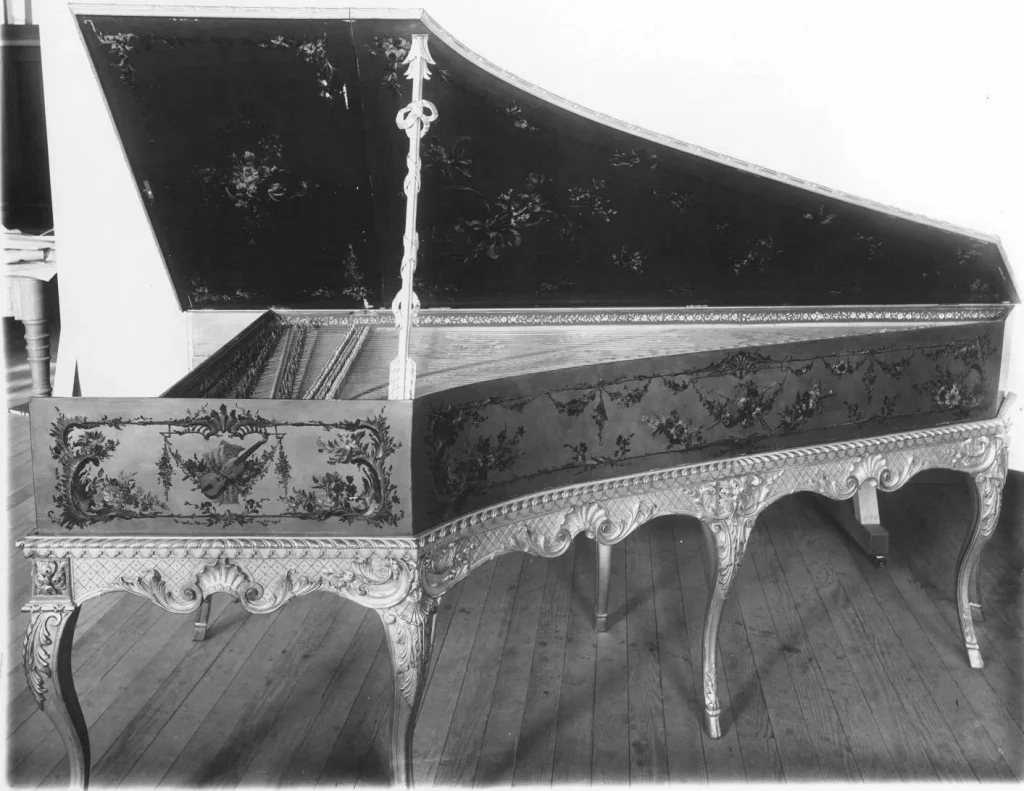
Choosing the right instrument requires care and a methodical approach. This short text introduces a practical guide. It helps clarify the essential criteria: keyboard, sensitivity, sound quality and budget.
Brands such as Yamaha, Roland and Korg offer a wide range of models. These options meet the needs of beginners and experienced musicians alike.
We will cover the key elements: pedal, strings, response time and accessories. The available space and value for money are also decisive.
To learn more about instrument types and price ranges, read our article. This resource will guide you through your purchase step by step.
Buying a Harpsichord: A Guide to Choosing the Right One
A good decision begins with a list of precise criteria suited to the player and the space. Start by defining how it will be used: practice at home, in the studio or in concert.
This guide provides practical advice for identifying the elements essential to quality. Consider durability, mechanical reliability and the finish of the materials.
Learning how to choose means comparing the options in three areas: sound, touch and after-sales service. This method helps avoid common mistakes.
Here are a few quick pointers:
- Test how responsive the keys are.
- Check the consistency of the tone.
- Ask about warranties and servicing options.
“A reliable instrument today prevents future expenses.”
Ultimately, knowing how to compare models properly can be simple if you prioritize these criteria.
Understanding the Differences Between Digital and Acoustic Harpsichords
The musician’s needs and daily routine often determine the choice of instrument. This section clearly compares two approaches: the convenience of electronic devices and the warmth of traditional mechanisms.
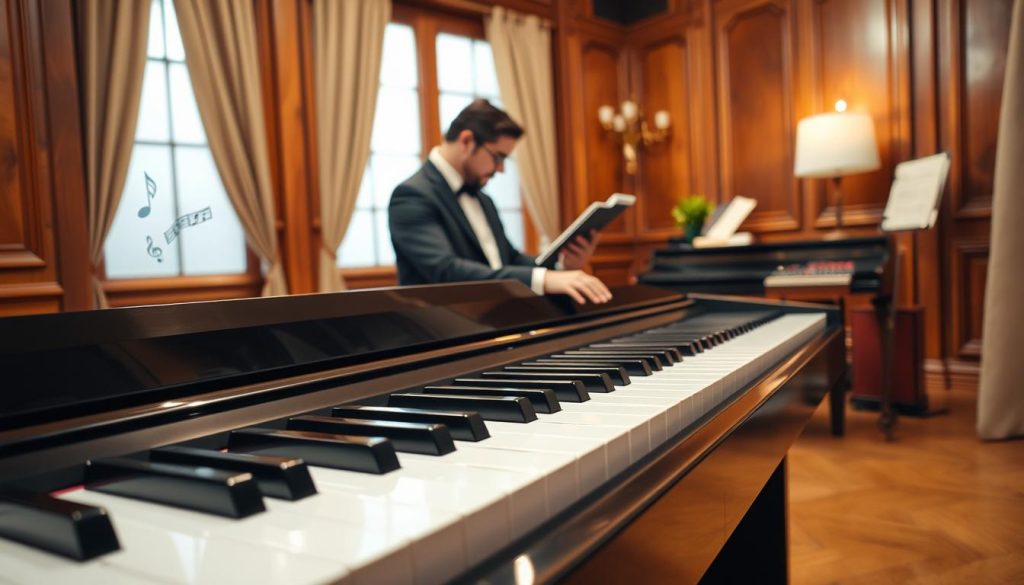
Advantages of Digital Instruments
The modern digital piano is appealing because it is lightweight and requires little maintenance. The Casio CDP-S110 weighs only 4.5 kg, making it much easier to transport.
In addition, around 72% of music schools now use digital keyboards. This confirms their importance for beginners and in music education.
Constraints of Acoustic Instruments
Acoustic instruments offer natural resonance and a richness of tone that is difficult to imitate. However, they require adjustments, space and regular maintenance.
- Advantage: organic sound quality and expressiveness.
- Limitations: purchase cost, weight and maintenance.
- Tip: assess the keyboard’s responsiveness and the fidelity of its sounds if you are undecided.
This guide offers advice on comparing sample quality and keyboard dynamics. You will therefore know how to choose according to your needs and daily practice.
Assessing Your Budget and Available Space
Choosing a piano begins with two simple factors: the space you can devote to it and the budget you are prepared to spend.
If space is limited, a compact digital piano is often the natural choice. It takes up less room while retaining convincing sounds.
For larger rooms, a console model offers better touch and a stronger acoustic presence.
To optimize value for money, compare entry-level options and check accessories such as the pedal and bench.
Keyboard quality and the richness of the sounds vary with the budget. Set your priorities: portability, sound fidelity or playing comfort.
This guide helps you identify the options suited to your setup. If you want to explore model comparisons in greater depth, read the guide.
“Assessing your budget and available space helps prevent buyer’s remorse.”
Keyboard Quality and Playing Mechanism
A responsive keyboard changes how you phrase, articulate and feel the music.
Sensitivity shapes expressiveness. Modern systems reproduce the resistance and attack of the keys. The Roland FP-30X, for example, uses Virtual Sautereau technology to simulate a historical mechanism. This solution provides a more realistic response during rapid changes in dynamics.
The Yamaha CLP-825 incorporates triple sensors. They measure pressure and attack speed more accurately. This gives the keyboard finer sensitivity and provides greater control over dynamics.
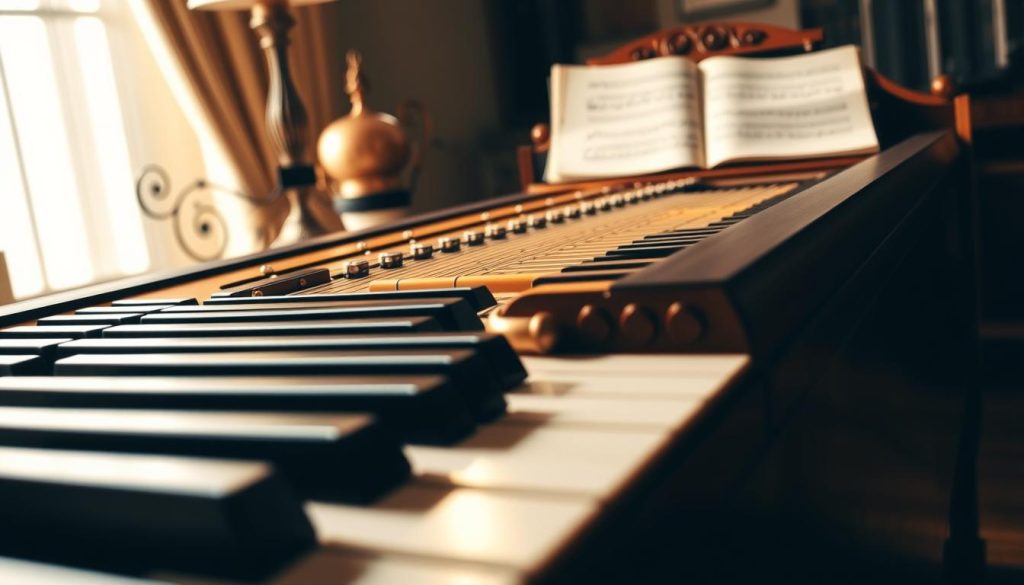
Sensitivity and Expressiveness
The quality of the keyboard directly affects the playing experience and the sounds produced by the instrument. A good mechanism helps improve precision and finger agility.
“A faithful keyboard frees expression and makes daily practice richer.”
- Roland FP-30X: Virtual Sautereau, historical touch.
- Yamaha CLP-825: triple sensors, precise dynamics.
- Standard keyboards: often sufficient for beginners, but less nuanced.
| Model / feature | Touch | Sensitivity | Recommended use |
|---|---|---|---|
| Roland FP-30X | Response similar to historical mechanisms | Good, realistic simulation | Expressive playing, small concerts |
| Yamaha CLP-825 | Precise touch | Excellent thanks to triple sensors | Advanced study, subtle dynamics |
| Standard keyboards | Variable | Basic to adequate | Beginners, home practice |
If you want to explore how to choose a keyboard according to your goals in greater depth, read our article on the Yamaha digital piano. This guide supplements the technical points and helps compare playing sensations.
Sound Characteristics and Registers
Tonal color and the range of registers define an instrument’s soul.

Sample Quality
Sound quality begins with the samples. The Korg B2 SP uses 24-bit/192 kHz resolution to capture nuance and dynamics.
Variety of Registers
Some models offer historical sound banks. The Yamaha YDP-165, for example, provides 15 registers including 8′ and 4′ stops.
This helps performers play Baroque repertoire more authentically.
Effects and Reverb
Modern keyboards incorporate reverb and modulation to shape their sounds.
Physical modeling can also faithfully reproduce plucked strings. This guide explains how to choose the right settings to adapt the result to your playing.
“A rich range of registers transforms interpretation and enriches the music.”
Connectivity and Modern Features
Modern connectivity transforms playing into a creative, collaborative space. Wireless and wired options make it easier to record, share and practice remotely.
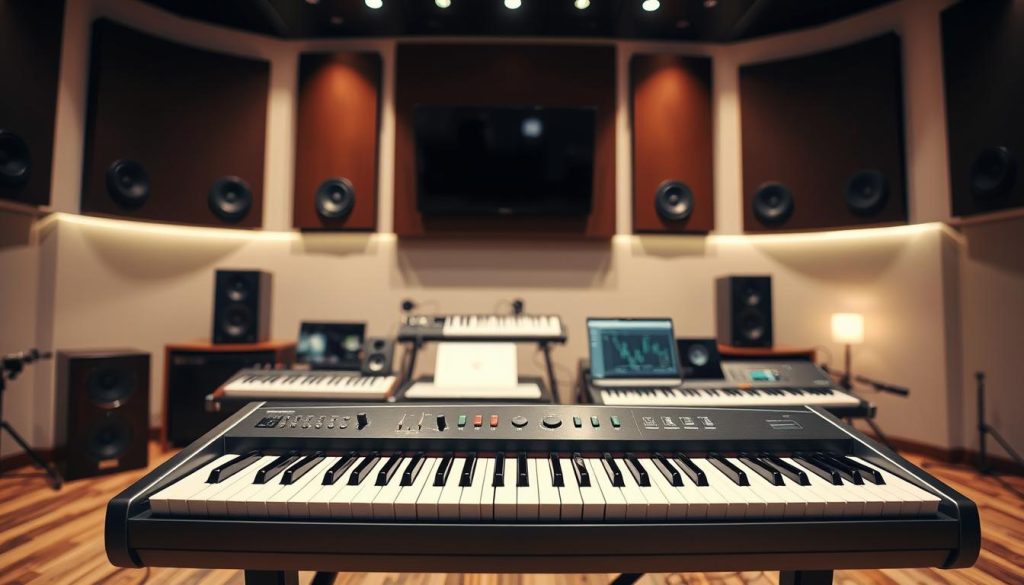
This guide explains how to identify useful features: Bluetooth, USB, MIDI and software updates.
- Bluetooth 5.2 (on the Roland GO-61P, for example) simplifies connections to a phone or tablet.
- USB and MIDI ports allow you to record and use composition software.
- High-quality interfaces provide intuitive control of sounds and settings, regardless of skill level.
- Updates help future-proof your instruments.
Seamless connectivity has become standard. It helps integrate your piano or keyboards into a studio and makes it easier to take online lessons.
“Reliable interfaces make production and sharing accessible.”
To explore the subject further, see our dedicated page: choosing your first digital harpsichord, which details the features to prioritize and explains how to choose according to your playing.
The Different Types of Instruments Available
Today’s market offers a wide variety of instruments, ranging from portable models to high-end console instruments.
Portable solutions promote mobility and are useful for rehearsals or performances. They remain suitable for small budgets and limited spaces.
At the other end of the spectrum, console pianos offer presence and a refined finish. The Roland LX-6 is a good example of this category: solid wood, elegant finishes and rich sounds.
This guide helps define your needs: portable practice or integration into the living room, sound priorities and space constraints.
- Portable: lightweight, practical, perfect for performances or lessons.
- Console pianos: more supple touch, attractive appearance, better sound projection.
- Hybrid models: a compromise between portability and sound quality.
Your choice of instrument will depend on the available space and how you want it to fit into your home.
“Understanding the different types of instruments ensures a lasting and satisfying purchase.”
| Type | Advantage | Recommended use |
|---|---|---|
| Portable | Easy to transport, affordable price | Performances, rehearsals, space-saving start |
| Console piano (for example, Roland LX-6) | High-end finish, superior sound quality | Living room, studio, demanding musicians |
| Hybrid | Good compromise between sound and size | Mixed use, musicians seeking versatility |
To learn more about their particular features and compare keyboards and sound quality, read the dedicated guide.
If you want to explore recommended brands and models, read the guide for some useful pointers.
Selecting the Best Brands on the Market
Selecting the right brand directly affects the longevity and resale value of your instrument.
French makers bring traditional expertise. They often favor careful finishing and precise mechanisms. This expertise benefits musicians seeking stable, lasting sound quality.
International manufacturers supplement the range with electronic innovations. High-end models offer more realistic mechanisms and highly sensitive keyboards. This particularly benefits demanding players who want to refine their touch.
Always compare entry-level and high-end ranges: material quality, after-sales service and parts availability are decisive criteria.
The Expertise of French Makers
Local workshops often provide responsive technical support. Choosing a recognized brand makes maintenance easier and protects your purchase over the long term.
- Prioritize brands with a support network in France.
- Assess sound quality and keyboard consistency.
- Check the update policy and availability of parts.
“A reliable brand reduces the risk of unpleasant surprises and preserves your instrument’s value.”
For a comparison of representative models, see our page dedicated to the Yamaha piano, which clearly illustrates the differences between ranges and how a brand structures its offerings.
Practical Tips for Trying Your Future Instrument
Nothing replaces a showroom trial when checking an instrument’s touch and tonal color.
Take the time to visit specialist locations such as Woodbrass in Paris, Piano Conseil in Lyon or Audiofanzine in Toulouse. These showrooms allow thorough trials and direct comparisons.
Pay attention to keyboard responsiveness, pedal sustain and richness of sound. Try fast passages and gradual changes in dynamics.
- Invite your teacher to provide an expert opinion on your choice and technique.
- Test several keyboards to compare how they feel with what you need.
- Prepare a list of short pieces to check dynamics and touch.
Practical tip: compare similar models side by side and note what you like about their sound and comfort. A thorough trial saves time and reduces the risk of a poor purchase.
| Showroom | City | Benefit when trying instruments |
|---|---|---|
| Woodbrass | Paris | Wide selection and technical assistance |
| Piano Conseil | Lyon | Thorough trials and educational advice |
| Audiofanzine | Toulouse | Instrument comparisons and local offers |
“Trying, comparing and seeking an expert opinion remain the best ways to make your purchase safer.”
For a model comparison and additional advice, read our article about digital pianos.
Essential Accessories for the Best Playing Experience
Investing in a few well-chosen accessories makes daily practice easier and protects your instrument. This section presents items that improve posture, sound and the keyboard’s lifespan.
Bench and Posture
An ergonomic bench stabilizes the pelvis and promotes natural posture. Choose an adjustable height to align your arms and wrists.
Good positioning reduces tension and makes it easier to use the pedal.
Headphones and Isolation
Sennheiser HD 599 headphones are recommended for analyzing nuances without disturbing the neighbors.
With quality headphones, you can work on the strings and refine dynamics in an apartment.
Other useful accessories:
- A case or cover to protect the cabinet and strings.
- A non-slip mat to stabilize the keyboard and protect the pedal.
- A stable stand for sheet music or a tablet, plus dedicated lighting.
“A carefully arranged setup, including the right accessories, is the key to steady progress and renewed musical enjoyment.”
For DIY projects or to assemble certain components yourself, read this practical article: building your own instrument. Investing in suitable accessories allows you to get the most from your instruments and improve your playing experience.
Conclusion
In conclusion, remember the priorities that distinguish one instrument from another. This guide will help every musician identify their needs according to time, space and budget.
We have covered the key elements: sound quality, keyboard mechanism, types and features. These points make choosing easier and ensure good value for money.
Whether you are a beginner or an experienced player, choose an instrument that supports your playing and your projects. With this advice, your purchase will become a lasting and rewarding experience.
Feel free to consult the additional resources if you would like to learn more about maintenance, the differences between pianos and keyboards, or entry-level options.