
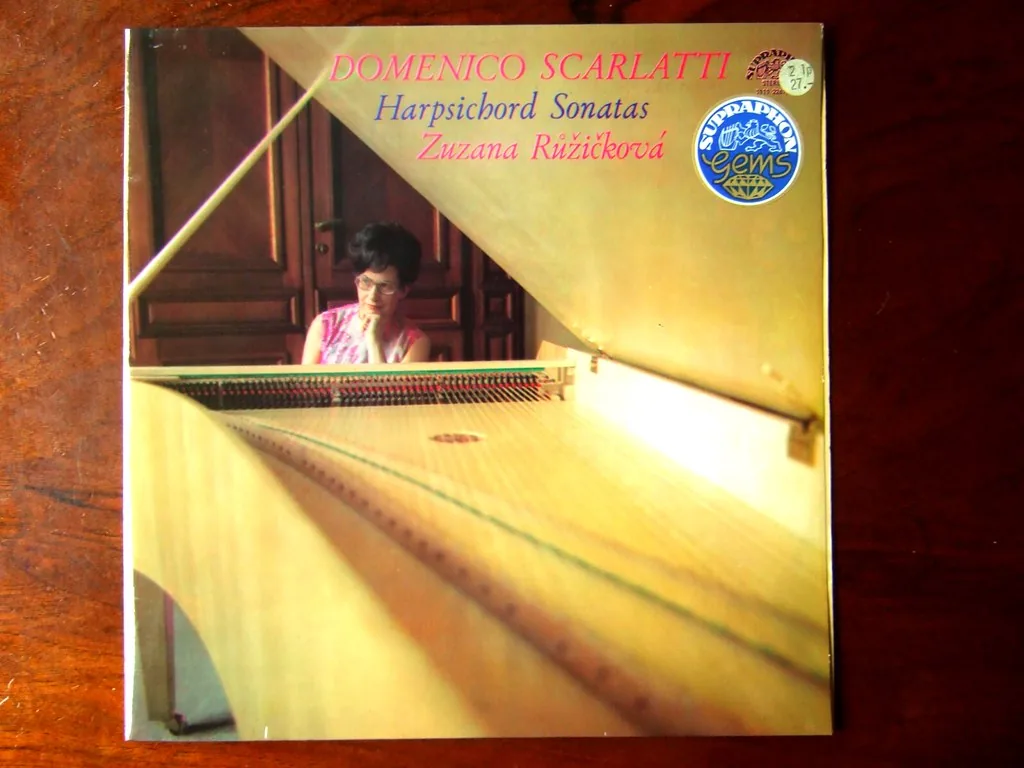
The harpsichord remains a central instrument in Baroque music. Its mechanism plucks strings to produce a clear, bright tone.
Double-manual models offer rich playing possibilities. They allow registers and tone colors to be juxtaposed without changing the force of the keystroke.
This layout facilitates counterpoint. Each hand can follow an independent line, ideal for basso continuo and polyphonic textures.
Careful construction by makers such as Hans Ruckers optimizes the resonance of the soundboard and the tension of the strings.
In this guide, we will explore how the combination of manuals, registers, and mechanism creates tonal contrasts. For a historical and technical overview, see the dedicated reference page.
Introduction to the two-manual harpsichord
This instrument occupies a distinctive place between the organ and the piano. Its mechanism enables rich polyphony and articulate playing, prized by Baroque composers.
The case, often long and made of solid wood, amplifies resonance. The plucked strings provide a clear, precise tone. Makers used oak and maple to achieve strength and nuance.
Models equipped with two manuals make it possible to manage separate registers without changing instruments. Each manual operates independent jacks.
- Ingenious mechanism: polyphony approaching that of an organ.
- Enlarged case: extended range, often in an instrument nearly 2.5 meters long.
- Specific technique: the tone remains drier than that of a modern piano.
For further historical and technical information, see the harpsichord’s role in music.
What is a two-manual harpsichord used for?
This arrangement of keys gives musicians the ability to alternate tone colors without interrupting the musical flow.
Main use: this instrument is primarily used to perform Baroque music with historical authenticity. The earliest documented model dates from 1598 and bears the name of Hans Ruckers.
The presence of two manuals gives the hands complete independence. This facilitates the management of voices in complex counterpoint and the realization of basso continuo.
“Movable registers make it possible to shift from a gentle tone to a brilliant sound in an instant.”
- Registers: varied tonal combinations for dialogues between soloist and orchestra.
- Mechanism: plectra pluck the strings, producing a precise attack that differs from that of the organ.
- Structure: parallel strings improve resonance and harmonic clarity.
The versatility of this instrument makes it an essential tool for musicians exploring the seventeenth- and eighteenth-century repertories. For more technical details and applications, see its advantages and uses.
Origins and historical development
History shows that this instrument evolved through successive stages. Technical innovations and aesthetic choices shaped its tone and use.
The contribution of Flemish makers
Flemish makers, such as Hans Ruckers, revolutionized harpsichord building by introducing coupled manuals.
This arrangement improved the power and clarity of the strings. It also allowed better coupling between registers.
The Baroque golden age
During the golden age, craftspeople such as Dumont and Blanchet refined the mechanism to achieve greater tonal precision.
In 1768, Pascal Taskin replaced quill with leather, changing the tone and attack of the notes.
“Every century brought technical innovations that shaped the unique identity of this instrument.”
- French standardization under Louis XIV and its influence on construction.
- Rediscovery in the twentieth century by Wanda Landowska, who revived its use in concert.
- Hemsch’s treatises guided modern reconstructions.
For a detailed overview, see the history of the harpsichord.
Anatomy and case structure
The case has a triangular, harp-like shape resting on a concave hypotenuse. This geometry optimizes string resonance and tonal projection.
About 2.5 meters long and one meter wide, it incorporates bottom braces and flying braces. These elements stiffen the structure to withstand the high tension of the strings.
The soundboard, often made of straight-grained wood, transmits vibrations to amplify the instrument’s sound. The solid oak wrestplank supports the tuning pins and ensures tuning stability.
“The case serves as the instrument’s soul: its construction influences every note played.”
- Strings arranged perpendicular to the manuals for optimal tension.
- Case separate from the stand for better resonance management.
- No metal frame, making this instrument lighter than the organ or piano.
| Component | Material | Role in the sound |
|---|---|---|
| Soundboard | Spruce / straight-grained wood | Transmission and amplification of vibrations |
| Wrestplank | Solid oak | Supports the tuning pins and provides stability |
| Flying braces & bars | Hardwood | Structural reinforcement against tension |
The jack and plectrum mechanism
The vertical movement of the key is transformed into a clean pluck of the string by the jack. This small hardwood component lifts a plectrum which, on contacting the string, produces the instrument’s characteristic attack.
The role of composite materials
Historically, plectra were made from bird quills. Today, makers use composite materials that provide consistent flexibility and a longer service life.
A boar-bristle spring returns the jack silently. The jackrail limits vertical travel to ensure consistent key repetition.
The damper, made of woolen cloth, rests on the string when the key is released, stopping the sound cleanly and quickly, which is useful in the Baroque repertory.
“The precision of the jacks determines the clarity of every note.”
- Immediate sound production, essential for polyphonic playing.
- Composite materials reproduce the response of traditional quills.
- Careful design ensures stability and consistency in tuning and string tension.
Register configuration and coupling
The combination of stops and the coupling system defines the instrument’s dynamic possibilities. An 8′ + 4′ coupling creates levels of power that are highly useful in concert.
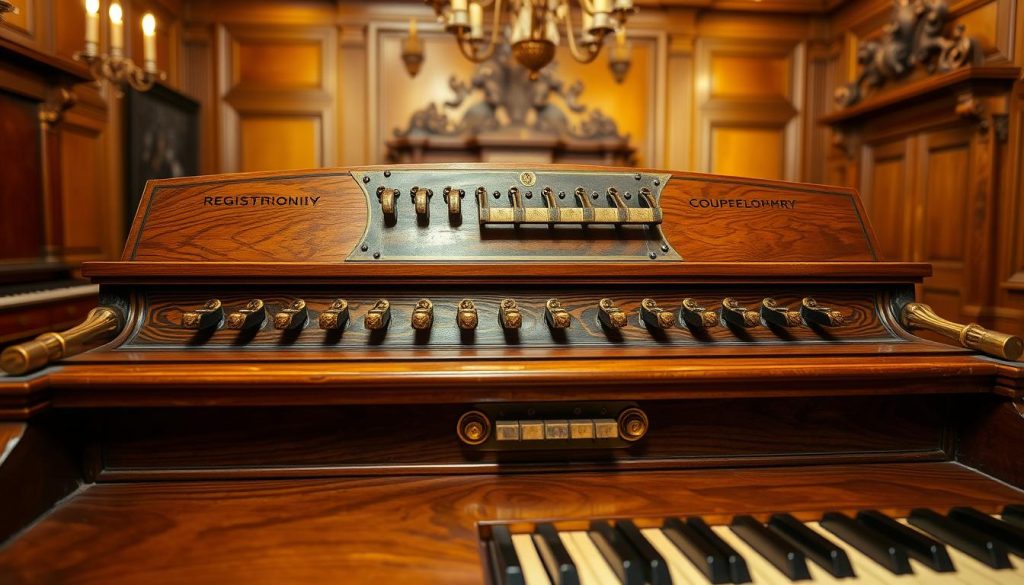
The shove coupler connects the manuals so that several choirs of strings can be played at once. This makes it easy to move from tutti to solo without interrupting the phrasing.
The lute stop, with its felt dampers, provides an intimate color ideal for preludes and solo songs.
- 8′ + 4′: graduated power and clarity in the octaves.
- 16′ (rare): harmonic depth reminiscent of the organ or harp.
- Movable registers: instant changes in tonal palette.
The arrangement of the registers reflects the long tradition of harpsichord building and varies between the French and German schools. This precision ensures that every note is plucked with the same intensity.
For practical exercises in managing registers and coupling, see this tutorial on polyphonic playing and tonal color: techniques for adapting your playing.
| Function | Tonal effect | Common use |
|---|---|---|
| 8′ + 4′ coupling | Increases presence and brilliance | Soloist/orchestra dialogues |
| Lute stop | Muted, intimate sound | Preludes and solo pieces |
| 16′ stop | Depth and harmonic foundation | Large concert instruments |
Polyphony and independence of the hands
On this instrument, each hand can function as a small ensemble in its own right. This changes the way lines overlap and answer one another.
Managing the voices
The separation of the manuals makes it possible to isolate the bass, tenor, and soprano. The musician can perform three simultaneous voices with remarkable clarity.
The left hand often maintains the basso continuo. The right hand develops the ornamented melody.
Differentiated registers prevent the lines from blending in complex passages.
Bachian counterpoint
Bach systematically exploited the separation of the manuals in his fugues. He structured each voice as an architectural element.
“Separation teaches you to think of each hand as a distinct instrument.”
D’Anglebert’s studies show that this layout improves finger coordination and precision of playing.
| Advantage | Effect | Use |
|---|---|---|
| Independence of the hands | Clarity of lines | Counterpoint and fugues |
| Differentiated registers | Distinct colors | Soloist/orchestra dialogues |
| Optional coupling | Reinforcement of voices | Powerful concert passages |
Advantages for basso continuo
Basso continuo gains remarkable clarity from the physical separation of the manuals. On a modern harpsichord, the left hand can maintain the pulse without interfering with the melodic line in the right hand.
This arrangement transforms accompaniment. In nearly 80% of Corelli’s trio sonatas, the separation of musical planes improves the intelligibility of the voices.
The lower manual develops the bass and provides the rhythmic foundation. The upper manual enriches the harmony and ornaments, making it easier to alternate between accompaniment and solo roles.
For madrigals and vocal pieces, this system handles the inner voices with precision. Rameau’s theories of harmony then apply naturally because the registers remain distinct.
- Clear separation: each line remains audible.
- Flexibility: rapid alternation between accompaniment and solo roles.
- Dialogue: the strings and keys create polyphony in which every note finds its place.
Expressive nuances and tonal contrasts
A simple move to the upper manual can transform a phrase into a dramatic echo effect. This gesture creates an immediate contrast between tone colors and registers.
Baroque music, particularly Couperin’s suites, exploits these variations to lend a theatrical dimension to the musical discourse.
The lute stop adds an intimate color. Combined with the registers, it produces harmonically rich preludes.
“Each performance becomes a sonic architecture in which every line finds its place.”
The 8′ + 4′ coupling enables brilliant toccatas with an almost orchestral effect. Meantone temperament enhances the authenticity of Scarlatti’s works.
- Rapid ornamentation benefits from escapement mechanisms that preserve tonal precision.
- Changes of hand and position shape the dynamics without altering string tension.
- The Brandenburg Concertos often require this expressive capacity.
| Element | Effect | Musical use |
|---|---|---|
| Changing manuals | Echo and contrast | Suites and dialogues |
| Lute stop | Intimate color | Preludes and airs |
| 8′ + 4′ coupling | Orchestral brilliance | Toccatas, concertos |
Educational role in musical training
In the classroom, this instrument serves as a laboratory for developing independence and historical style. It requires students to think of the left and right hands as separate entities.
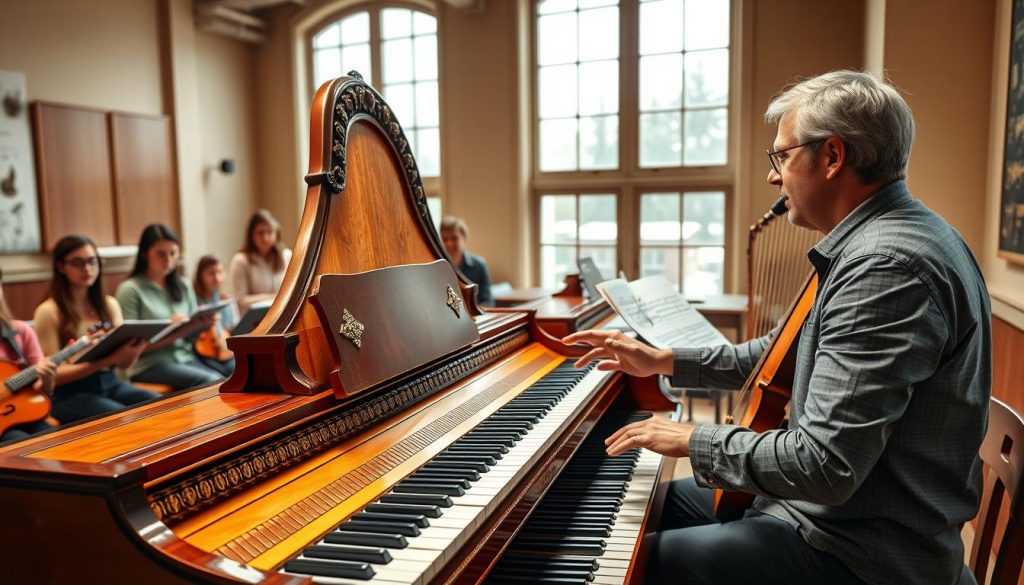
Developing finger coordination
D’Anglebert’s seventeenth-century studies offer ideal exercises for putting the principles of independence into practice. With two manuals, these studies can immediately be applied in a real context.
The response of the keys varies from one manual to another and requires fingering adjustments. This refines finger coordination and makes historical fingerings—often involving limited use of the thumb—feel natural.
- Independence of the hands: each hand learns a clear line, ideal for bass and melody.
- Baroque registration: introduction to registers and unequal temperaments.
- Authentic practice: the construction and plectra teach note production and attack.
“The separation of the manuals teaches the musician to think of each hand as a distinct instrument.”
As a supplement, teachers often use adapted scores and tutorials, such as those explaining how to read sheet music, to facilitate the transition to historical playing techniques.
Maintenance and tuning challenges
Maintaining this instrument’s tonal stability requires meticulous monitoring and regular attention. Quarterly tuning is recommended to preserve its tone and string tension.
Quill plectra need to be replaced approximately every six months. This creates a recurring maintenance cost and directly affects the quality of playing.
Professional servicing generally costs between 300 and 500 euros per year, depending on the condition of the brass strings and the complexity of the construction. The precise alignment of the two manuals must be checked by a specialist maker.
- Quarterly tuning for acoustic stability.
- Twice-yearly replacement of quill plectra.
- Monitoring of brass strings, especially in humid regions.
| Operation | Frequency | Estimated cost |
|---|---|---|
| Professional tuning | 3 times/year | €300–€500 |
| Plectrum replacement | 2 times/year | Variable |
| Manual alignment check | Annually or after transport | Depends on the work required |
Ongoing commitment to maintenance is the price of this instrument’s exceptional musical value.
Sensitivity to humidity fluctuations
Stable humidity is essential to the preservation and sound of this instrument. The solid wood of the case and soundboard reacts to climatic variations. A drop in humidity can cause cracks; an increase can slacken the strings.
Makers recommend relative humidity between 45% and 55%. A change of only 5% can sometimes disrupt the tuning and deform the resonating case.
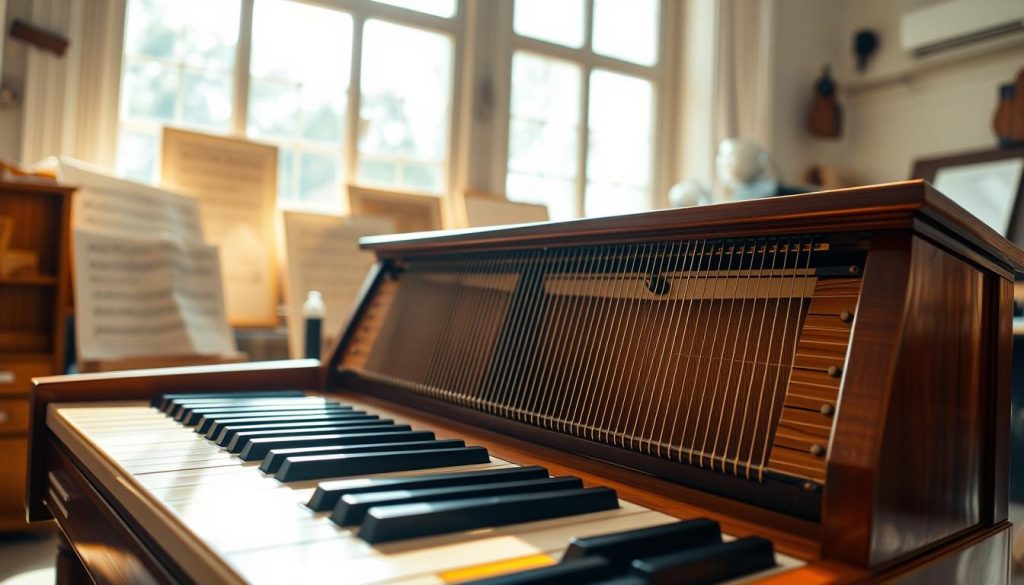
In winter, a room humidifier prevents cracking. The responsiveness of the wood also requires the strings—especially in the treble—and the contact of the felt dampers to be monitored. Their grip changes with humidity and affects the precision of playing.
- Maintenance: regular checks of tuning and alignment.
- Preservation: stable conditions for older, more fragile harpsichords.
- Construction: historical quality comes at the price of increased vigilance against household environmental fluctuations.
“Constant conditions preserve the instrument’s tone, tension, and longevity.”
Comparison with a single-manual harpsichord
Comparing single- and double-manual models reveals clear functional differences.
Range: the two-manual model covers five full octaves, compared with four for single-manual instruments. This extension broadens the range of notes and harmonic possibilities.
Polyphony: the double mechanism makes it possible to control up to five distinct voices with remarkable clarity. Baroque composers, including Bach, exploited this possibility when writing five-part chorales.
Bass and projection: the reinforced case structure improves bass projection. The bass gains depth and presence, which is useful in concerts and larger halls.
Decline of single-manual models: variants such as the spinet fell out of use in the eighteenth century. Their limited range and restricted polyphony no longer met musicians’ needs.
“The arrangement of the registers makes possible tonal dialogues that cannot be achieved on a single manual.”
- Instant transitions between solo and tutti through coupling.
- Varied registers for creating contrasts without changing instruments.
- Developments in construction that opened up new harmonic possibilities.
| Criterion | Single-manual model | Double-manual model |
|---|---|---|
| Octave range | 4 octaves | 5 octaves |
| Practical polyphony | 3 voices | Up to 5 voices |
| Bass projection | Limited | Enhanced (separate case) |
| Concert use | Local and limited | Recommended for broad repertories |
Fundamental differences from the piano
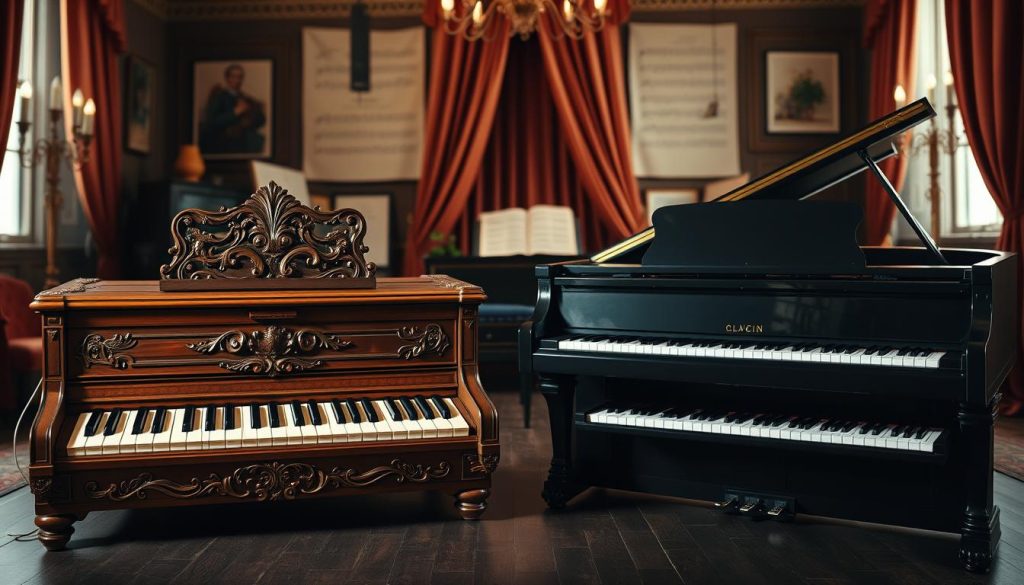
The contrast between the piano and the harpsichord lies above all in their mechanisms and expressive capabilities. The pianoforte steered the evolution of keyboard instruments toward greater power and sustain. The harpsichord remains a historical instrument favored for the Baroque repertory.
Sound-production mechanism
The harpsichord’s mechanism uses jacks that pluck each string, whereas the piano strikes its strings with hammers. This difference explains the piano’s more percussive tone and the harpsichord’s sharper but less sustained attack.
- Harpsichord: plucked by plectra, with a precise attack.
- Piano: hammers, dynamic control, and double escapement.
- Consequence: today the piano predominates in large halls and the Romantic repertory.
Differences in sustain
The harpsichord’s sustain is very brief: approximately 0.8 seconds. The piano can sustain a note for up to 15 seconds.
“The harpsichord whispers; the pianoforte speaks.”
Because of its power and sound duration, the harpsichord reaches approximately 60 dB, which is insufficient to compete with an orchestra in halls seating more than 500 people. Harpsichord playing emphasizes independence of the hands and contrapuntal clarity, whereas the piano requires continuous dynamic control.
Contemporary uses and experimentation
The contemporary scene highlights the harpsichord’s ability to engage with electronic music and jazz.
Modern composers such as György Ligeti have pushed its tone far beyond traditional conventions. His piece Hungarian Rock (1978) displays a surprising modernity.
Performers such as Jean Rondeau combine jazz improvisation with historically informed playing. Makers are also innovating: Ducornet’s electroacoustic harpsichord uses sensors to transform string vibrations into electronic sounds.
The HIP movement preserves tradition through period copies, while other artists explore clusters and textures (Xenakis) or novel forms of synthesis.
Rare objects and the market: the 1740 harpsichord by Hieronymus Albrecht Hass commands record prices (estimated at €1,200,000), demonstrating its heritage value.
| Use | Examples | Impact |
|---|---|---|
| Sound research | Ligeti, Xenakis | Reinvention of tone |
| Hybridization | Ducornet, Takahashi | Electronics + traditional construction |
| Popularization | Soundtrack of Tous les matins du monde | Visibility among the general public |
Conclusion
In conclusion, this instrument remains a living pillar of Baroque music. Its mechanism and history give it a rare expressive richness.
The harpsichord allows complete independence of the hands and fine control of its registers. By mastering each manual, the performer constructs tonal dialogues resembling those of a small orchestra.
Its maintenance requires regular attention, but its historical and tonal value justifies the investment. Its evolution from Flemish models to contemporary experiments demonstrates its enduring relevance.
In short, this instrument remains indispensable for anyone seeking authenticity, contrapuntal precision, and surprising tonal colors.