
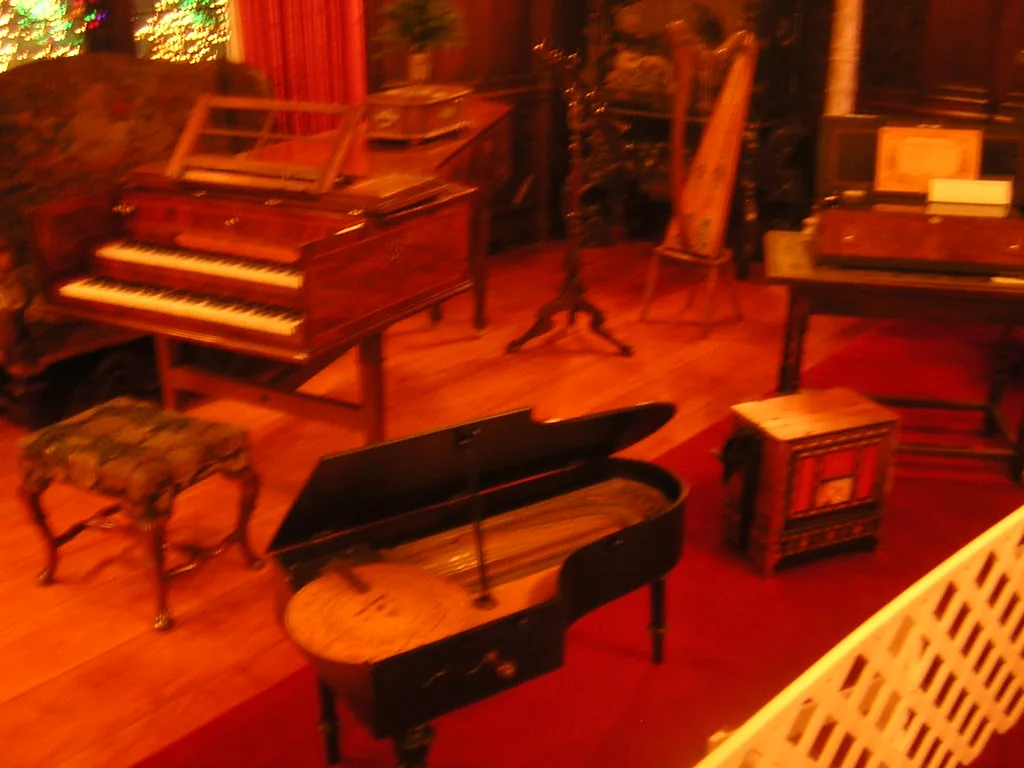
The eighteenth-century French harpsichord after Henri Hemsch remains a benchmark for musicians in France. His concert model, dated 1751, exemplifies the art of instrument making and appeals to discerning collectors.
Acquiring a historical instrument requires careful preparation. Every instrument has a history and has received maintenance that affects its voice and structure.
This concise guide will help you identify the essential criteria. We explain how to assess sound quality and the strength of the case. You will also learn to recognize signs of proper regulation and restoration that respects tradition.
Objective: to give you clear pointers for avoiding the pitfalls of the French market and ensuring the longevity of your future instrument.
Used harpsichord: advice before buying your first instrument
Start by defining your needs so you can focus your search more effectively. A brief assessment of your intended repertoire and practice time will guide you toward the right option.
Define your musical needs
If you mainly play simple Baroque repertoire, a single-manual version may be sufficient. It offers rounded bass notes and an even balance across the entire range.
The model after Henri Hemsch (1751) offers an extended range of 60 notes. This configuration accommodates a broad repertoire while retaining excellent clarity of touch.
Set a realistic budget
Determine a maximum price, including transportation and any necessary regulation. This helps you avoid buying an instrument whose maintenance would exceed your budget.
- Choose between one or two manuals according to your level and repertoire.
- Prioritize a reliable instrument that does not require immediate repairs.
- Compare several instruments to understand how the action affects their value.
| Criterion | Single-manual version | Double-manual version | Note |
|---|---|---|---|
| Simplicity | High | Moderate | Ideal for beginners |
| Versatility | Good | Very good | Two manuals for a broad repertoire |
| Cost and maintenance | Less expensive | More expensive | Compare before making a decision |
To explore your options further and obtain practical guidance, consult a useful guide on choosing wisely.
Assess the technical characteristics and condition of the wood
Begin by examining the wooden structure to assess the instrument’s longevity. A quick visual inspection can reveal cracks, reglued joints and movement in the case.
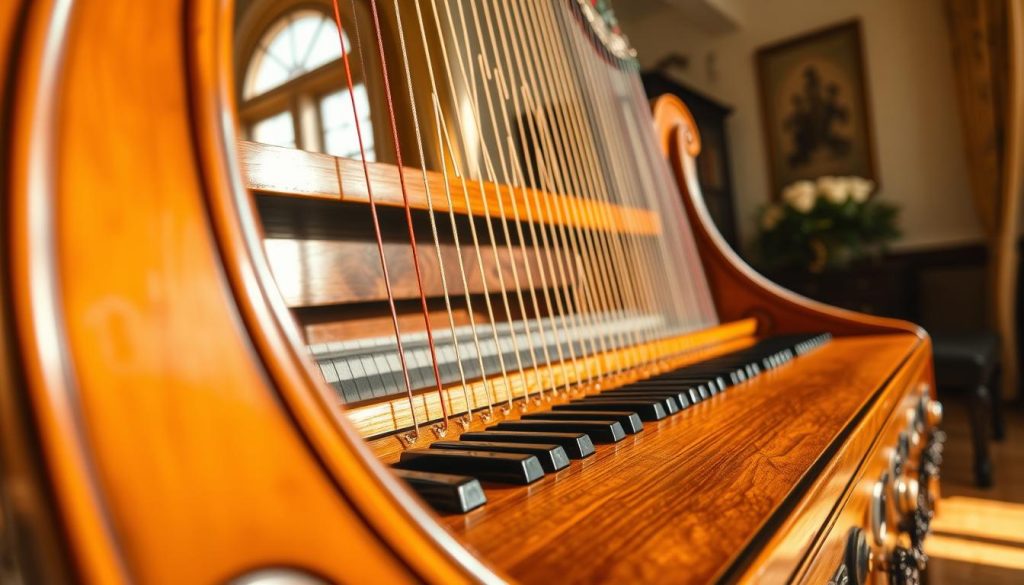
Importance of the soundboard
A soundboard made from Jura spruce offers remarkable stability. Its straight grain limits deformation caused by changes in humidity.
Check that it is flat and free from cracks. A sound soundboard ensures resonance and tuning stability, particularly at 415 Hz for historical instruments.
Condition of the jacks and strings
Inspect the oak jacks: they should operate without excessive play to ensure the accuracy of all 60 notes. Also check the tension and wear of the strings.
Replacing an old string can breathe new life into a historical version, but it entails a cost.
Checking the stand
The legs designed by André Lambert are a mark of solidity. Test the stability and assembly of the legs to prevent the instrument from tipping over.
| Component | What to check | Effect on playing | Remedy |
|---|---|---|---|
| Soundboard | Cracks, flatness | Resonance, tuning | Repair by a luthier |
| Jacks | Wear, adjustment | Accuracy of the notes | Replacement or correction |
| Legs | Strength, attachment | Stability of the case | Structural reinforcement |
| Strings | Tension, corrosion | Tone color and power | Replacement according to the 415 Hz standard |
For detailed technical procedures, consult a tuner-repairer’s manual here: tuning manual.
Check the seller’s reliability and the instrument’s history
Asking about the instrument’s origin and maintenance history is essential before any trial. Ask the seller about its storage conditions and how frequently it has been used over the years.
Recognized maker: a luthier such as Jacques Magnette (B-4920 Aywaille) provides useful traceability. Order and delivery dates make the instrument’s history verifiable.
Check whether the original legs are present and stable. Their integrity keeps the case safe during transportation.
- Ask for evidence of the origin of the wood used for the case.
- Play the instrument in the seller’s presence to identify unwanted noises or mechanical sticking.
- Make sure the notes respond evenly across the entire keyboard.
| Inspection point | Items to verify | Consequence |
|---|---|---|
| History | Invoices, dates, repairs | Traceability and value |
| Legs | Presence, attachment, stability | Safety of the case |
| Wood | Origin, moisture, repairs | Structural durability |
| Action and notes | Response, noises, regulation | Performance quality |
For practical advice on purchasing and logistics, consult this practical guide.
Manage the budget and logistical considerations
Planning for transportation and maintenance protects your investment over the long term. The advertised price of an original Ruckers is often around 12,500 euros, an amount that sometimes includes transportation accessories.
Plan for transportation and maintenance
Allow an additional budget for expert handling and padded covers. These expenses ensure that the case and legs remain intact during transit.
A maintenance kit includes Delrin plectra and a tuning wrench. Regularly replacing the plectra preserves the quality of the action.
- Include the adjustable bench in the final cost so that you have a complete setup.
- Check the stability of the H-frame stand to prevent it from tipping during transportation.
- A thermal barrier for the floor helps protect the wood if you have underfloor heating.
Tip: investing in well-maintained instruments avoids unexpected repair costs. For a useful cost reference, consult this indicative price.
Conclusion: make your purchase with confidence
Patience and careful observation are the best guarantees of a sound choice. Take the time to examine the soundboard, hinges and legs to avoid unpleasant surprises.
Test the action thoroughly and compare the response of the keys. A complete inspection of the legs and joints prevents stability problems.
Make sure that all the notes sound in tune and that no mechanical component catches. A carefully chosen instrument will become a faithful companion for years.
For additional information about the features you should test, consult this comparison guide, which provides useful and practical pointers.