
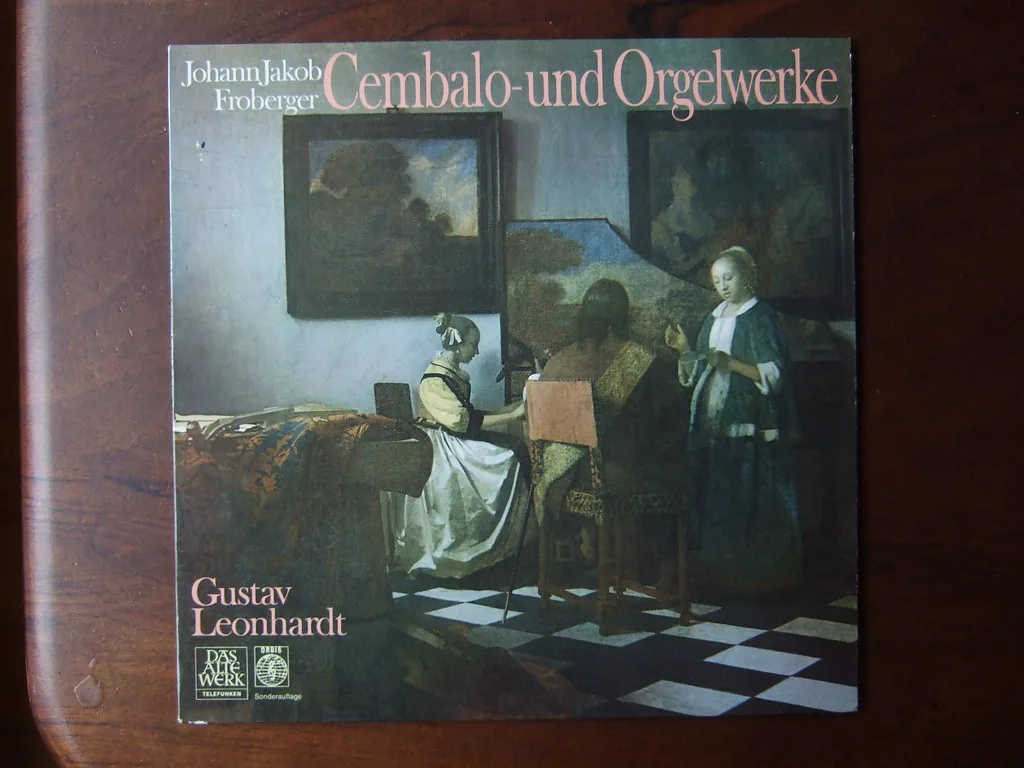
Introduction
Exploring the mechanics and emotion of an early instrument helps us hear it better today. This section provides an overview of the acoustic mechanisms that shape the sonic personality of this historic instrument.
We will explain how string vibration, the soundboard, and the jack work together to generate great harmonic richness. The text also discusses the evolution of instrument making, from early models to contemporary restorations.
You will find practical guidance on playing and varying nuances. Simple structural details show why projection changes depending on whether the lid is open and which stops are combined.
For a more detailed technical and historical discussion, consult the dedicated page.
Introduction to the harpsichord
This historic instrument combines precise gestures with subtle mechanics that define its unique voice.
The harpsichord is a plucked-string instrument that has shaped Western music since the early sixteenth century. Unlike other members of the keyboard family, its strings are plucked by plectra, giving it a distinctive harmonic palette.
Jean-Paul Rouaud’s 1707 model, made after Nicolas Dumont, illustrates the instrument’s technical complexity. Its construction requires great mastery of the keyboard to bring the Baroque repertoire to life with finesse.
Before the advent of the piano, the history of the harpsichord shows that it dominated the musical scene thanks to a harmonic richness often considered superior to that of many other instruments.
| Feature | Function | Musical impact |
|---|---|---|
| Plucked strings | Sound produced by a plectrum | Bright attack, short sustain |
| Keyboard | Mechanical control | Expressiveness linked to touch |
| 1707 case (Rouaud/Dumont) | Reinforced structure | Greater harmonic complexity |
To explore the development and transcription of the repertoire further, consult a dedicated study of the transcription of French repertoire.
Understanding the sound of the harpsichord: timbre, attack, and resonance
Sound production begins with a simple but decisive action. When a string is plucked, its vibration sets a mechanical chain in motion. This energy travels from the point of impact to the soundboard, which transforms the pulse into audible projection.
The components of timbre
Each string has its own frequency. Through its interaction with the soundboard, this particular frequency shapes the sound of the harpsichord.
The quality of the soundboard and the tension of the strings influence clarity. Period instruments and modern copies therefore offer different nuances.
The physics of resonance
The vibration of the string is amplified by the soundboard. The soundboard’s construction creates rich, complex harmonics.
Unlike other instruments that use membranes or enclosed bodies, the soundboard projects the sound here. To explore acoustic principles further, consult a resource devoted to musical science.
| Element | Role | Impact |
|---|---|---|
| String | Source of the frequency | Determines the fundamental note |
| Soundboard | Amplification | Projects and colors the sound |
| String tension | Pitch stability | Clarity and sustain |
| Construction | Harmonic balance | Richness of harmonics |
The structure of the resonating case
Extending more than two meters, the case provides an essential framework for acoustic balance.
The case, often 2 to 2.5 meters long, is made from solid wood. This part provides rigidity that promotes projection.
Inside, a reinforced structure supports the tension of the strings. This tension is much higher than in most other keyboard instruments.
- The soundboard is incorporated into the case to maximize harmonic resonance.
- The case supports the soundboard and optimizes wave propagation.
- The bottom, located below, stabilizes the whole structure and colors the depth of the sound.
The result is a precise harpsichord in which the wood, soundboard, and tension form a coherent whole. Careful construction determines the clarity and richness of every note.
The fundamental role of the soundboard
The soundboard transforms the initial vibration into clear, nuanced projection.
Natural sound amplification
The soundboard acts as a very thin wooden resonator. Its thickness, ranging from 2.2 mm to 4.2 mm, governs the dynamic response.
On small models, its surface area may reach 0.09 m². This dimension influences tonal color and carrying power.
In this instrument, the soundboard acts like a vibrating membrane. It converts the strings’ energy into sound waves projected toward the listener.
- Optimized thickness: a balance between rigidity and flexibility.
- Adequate surface area: promotes an effective internal resonator.
- Light, fibrous wood: transmits harmonics without filtering them.
“A properly fitted soundboard changes the very nature of the note.”
This part must remain light. Harmonic balance depends on this precise adjustment. The chosen wood and the thinness of the soundboard ensure optimal amplification.
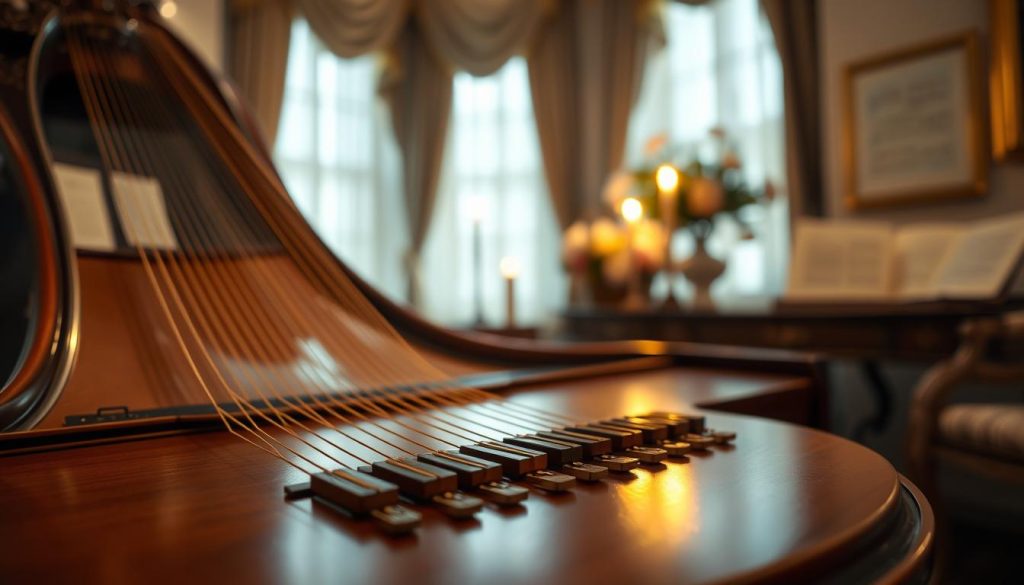
String arrangement and tension
The internal arrangement of the strings directly affects the color and sustain of the notes.
Tension is adjusted with the tuning pins to ensure a stable position on the bridge.
The speaking length of each string, measured between two fixed points, determines the resulting pitch.
On models with two keyboards, the arrangement of the string choirs makes it possible to activate different layers of sound. This provides a wider choice of timbres.
The strings may be made of iron, brass, or copper. Their diameter and material give them distinct acoustic characteristics.
- Stability: a properly tuned string maintains its position on the bridge.
- Variety: combining string choirs changes the register’s color.
- Transmission: a properly positioned bridge faithfully transmits vibration to the soundboard.
“A properly adjusted bridge and suitable strings are the basis of clear projection.”
The complex jack mechanism
The internal mechanism controls movement and the precision of the pluck.
How it works
Beneath each key, a piece of wood called the jack rises. This action sets the string in vibration and triggers sound production.
Role of the plectrum
A small plectrum attached to the jack plucks the string at the precise moment of contact. The pluck creates the vibration of the string, and the note springs forth without a continuous attack.
Return of the key
The upper part of the jack is hinged. This allows the plectrum to pass the string without plucking it again on its return.
- On instruments with two keyboards, registers guide the jack toward one choir or another.
- This operation is far more complex than it appears.
- Regular adjustment preserves the precision of the pluck and the stability of the strings.
“A properly adjusted jack guarantees the clarity and consistency of every note.”
The dynamics of attack and plucking
The way the key transmits energy to the mechanism determines the immediate perception of every note.
On the harpsichord, the force applied to the keyboard almost never changes the volume. The mechanism plucks the string with nearly constant intensity. As a result, dynamics depend on articulation rather than power.
Unlike the piano, where the strike changes the sound level, the string’s tension and the speed of the jack determine the quality of the attack here.
String adjustment influences clarity. A more tightly tensioned string produces a sharper attack. Several well-tuned strings create a more precise color.
Musicians must learn to control the keyboard’s resistance to achieve expressive articulation. The sensation is direct: the hand feels the mechanism’s response and adjusts instantly.
“Mastering the speed of the action is often better than seeking greater power.”
For a detailed technical examination, consult this study of the mechanism.
Transmitting vibrations to the bridge
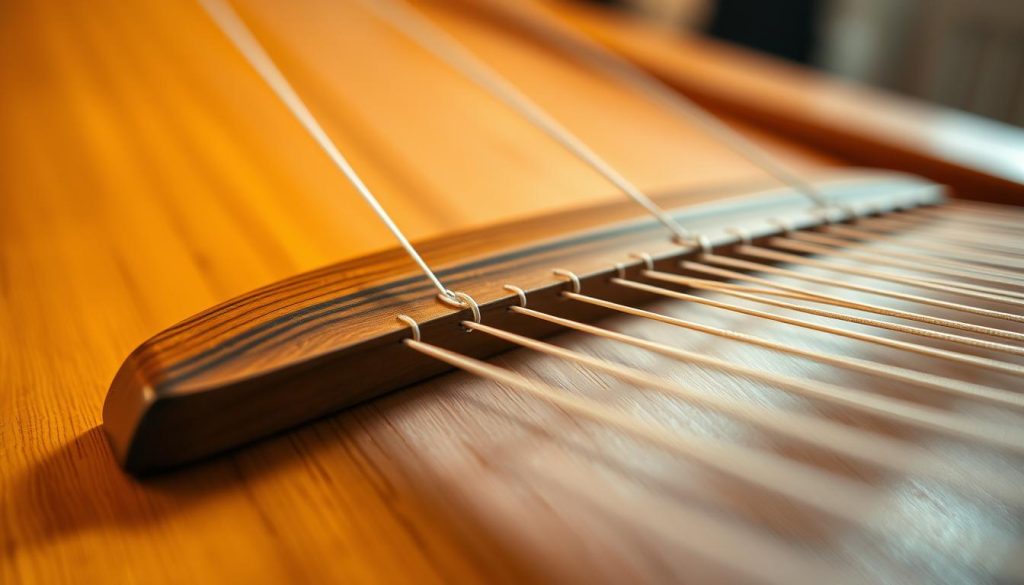
The bridge acts as a mechanical link, transmitting every impulse from the string to the soundboard.
This transfer is essential. Without a solid connection, sound production remains weak. The bridge must be firmly glued to the soundboard so that vibration can travel without loss.
The tension exerted by the strings influences the soundboard’s response. Incorrect tension alters the response of the harmonics and the note’s sustain.
Effective transmission ensures that every vibration is amplified by the soundboard. The result is rich, balanced harmony that remains faithful to the instrument’s material.
Bridge design: it must be made of hardwood to withstand the strings’ constant pressure. A good profile and precise gluing extend its stability and longevity.
| Element | Function | Impact |
|---|---|---|
| Bridge | Transmits vibration | Ensures projection through the soundboard |
| Soundboard | Amplifies and colors | Defines harmonic balance |
| Strings | Energy source | Tension influences sustain and clarity |
“A properly fitted bridge transforms every impulse into audible substance.”
The acoustic nuances of the different stops
On a two-keyboard instrument, combining registers multiplies the expressive possibilities without changing the force applied.
Using the registers
The registers can be activated to combine several string choirs. This process provides a variety of timbres that can create contrasts between sections.
The way musicians select the choirs influences sound production. Although the force applied remains almost constant, the perception of every note changes according to the selected combinations.
The commonly adopted pitch is 415 Hz; it affects tuning and string tension. This relationship influences the note’s sustain and the soundboard’s response.
- Combine delicate and low-pitched choirs to achieve greater presence.
- On two keyboards, alternate registers to vary the character without changing the touch.
- The soundboard responds differently to each choir, creating a direct link between mechanics and acoustics.
“The sound can be shaped more through the choice of stops than through the force of the gesture.”
To explore the palette of instrumental colors further, consult this practical guide to the art of listening to colors.
Comparing plucked and struck strings
The way a string is excited radically changes its sound and expressive palette.
Mechanical difference: with plucked strings, a plectrum catches and then releases the string. With struck strings, a hammer hits it through a mechanical keyboard action.
This distinction explains why a piano can vary the volume from one note to another. The same gesture on another instrument does not change the intensity as much.
Within the same family, the use of several choirs and a second keyboard provides access to different colors. On a harpsichord with two keyboards, musicians alternate the choirs to vary expression without changing the force.
| Feature | Plucked strings | Struck strings | Musical impact |
|---|---|---|---|
| Mechanism | The plectrum plucks the string | The hammer strikes the string | Crisp or dynamic attack |
| Volume control | Limited | Extensive | Greater expressiveness on the piano |
| Color | Contrapuntal clarity | Broad palette of nuances | Choice of register according to the music |
| Use | Baroque repertoire, precise playing | Romantic repertoire, dynamic playing | Choice based on musical intention |
“The choice of mechanism often defines how a piece is interpreted.”
For additional historical and organological information, consult this study of chordophones.
Mastering playing techniques to vary the timbre
To color every musical phrase, playing requires highly precise gestures and great freedom of the fingers. Practice focuses on independence and a relaxed hand position on the keyboard. These elements influence the relationship between the strings, soundboard, and harmonic balance.
Finger independence
Focused practice: slow exercises make it possible to isolate each finger. They strengthen precision when several strings vibrate together.
The force applied remains moderate to protect the wood of the keys and the mechanism. A stable position helps players move through rapid passages without tension.
Articulation and counterpoint
Articulation is developed through brief, controlled pressure. On two-keyboard instruments, the voices are distributed between the registers to clarify the counterpoint.
“Finger independence transforms a polyphonic line into an audible conversation.”
The influence of posture on sound
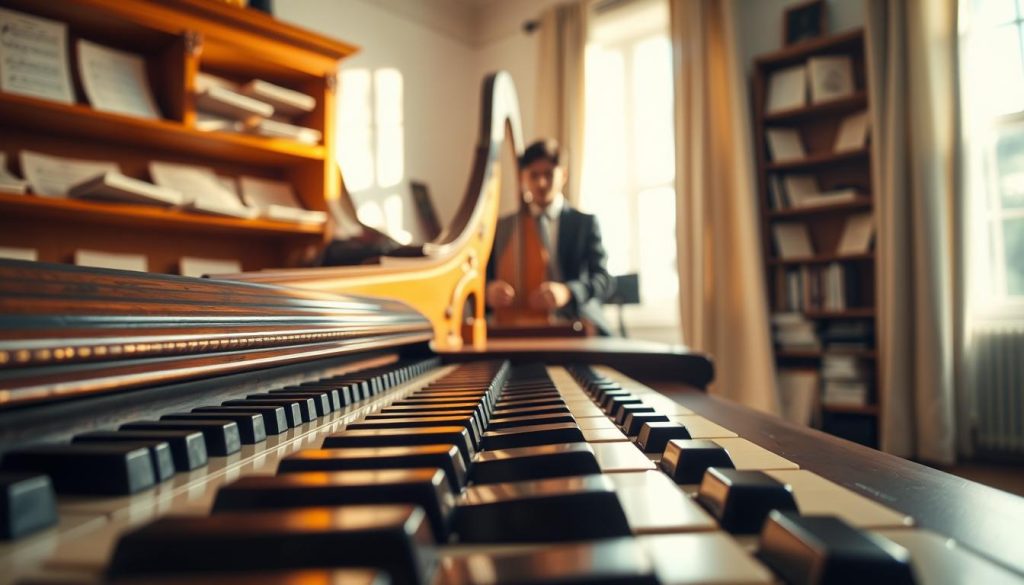
A stable seated position profoundly changes the clarity of the sound produced at the keyboard.
The position of the seat and the alignment of the torso promote effective energy conservation. Sitting too high or too low tires the hand and reduces playing precision.
The way a key is pressed affects the force applied to it. Measured force produces clean attacks without muscular tension.
Playing techniques rely on free alignment of the shoulders, arms, and wrists. This adjustment facilitates fluid finger movement during rapid passages.
Physical comfort reduces recurring tension. Less tension means greater clarity in the musical phrase and better endurance.
| Aspect | Effect | Advice |
|---|---|---|
| Seat height | Arm control | Adjust it so that your arms are parallel to the keyboard |
| Distance from the keyboard | Range of movement | Sit close to the keyboard without crowding it |
| Lumbar support | Endurance | Use a cushion if necessary |
| Breathing | Relaxation | Breathe regularly between phrases |
“A stable posture frees the hand; the music gains clarity.”
Historical development of instrument making
The art of making keyboard instruments evolved with changing musical needs.
In its early years, this instrument dominated the Baroque scene. It served as a mainstay in courts and salons. Its popularity surpassed that of many other instruments.
Over time, the family of keyboard instruments underwent major transformations. Makers modified their structure to meet composers’ demands. These adaptations played an essential role in modernizing the models.
By the end of the eighteenth century, the piano offered far broader dynamic possibilities. The new mechanism appealed to musicians and audiences. The piano gradually replaced the harpsichord in several of its historical roles.
The relationship between musicians and their instruments changed. Makers remained crucial. Their work made it possible to adapt construction to technical and artistic requirements.
| Period | Transformation | Impact |
|---|---|---|
| Early period (sixteenth–seventeenth centuries) | Standardization of stops | Dominance in Baroque music |
| Eighteenth century | Experiments with the mechanism | Greater expressiveness |
| Late eighteenth–nineteenth century | Adoption of the piano | Transition to new repertoires |
“Hands learned to engage with changing machines.”
The revival of the harpsichord in the modern era
The 1889 Paris Universal Exposition opened a new era for this instrument.
This moment marked the beginning of renewed interest. Curious audiences rediscovered a long-forgotten musical heritage.
After a long eclipse, changing practices allowed the instrument to regain a place alongside the piano. Performers brought the Baroque repertoire back into the spotlight.
During the twentieth century, and particularly toward its end, specialized workshops flourished. Makers devoted themselves to restoring and copying early instruments. This led to a better understanding of the technical differences between the historic keyboard and the modern piano.
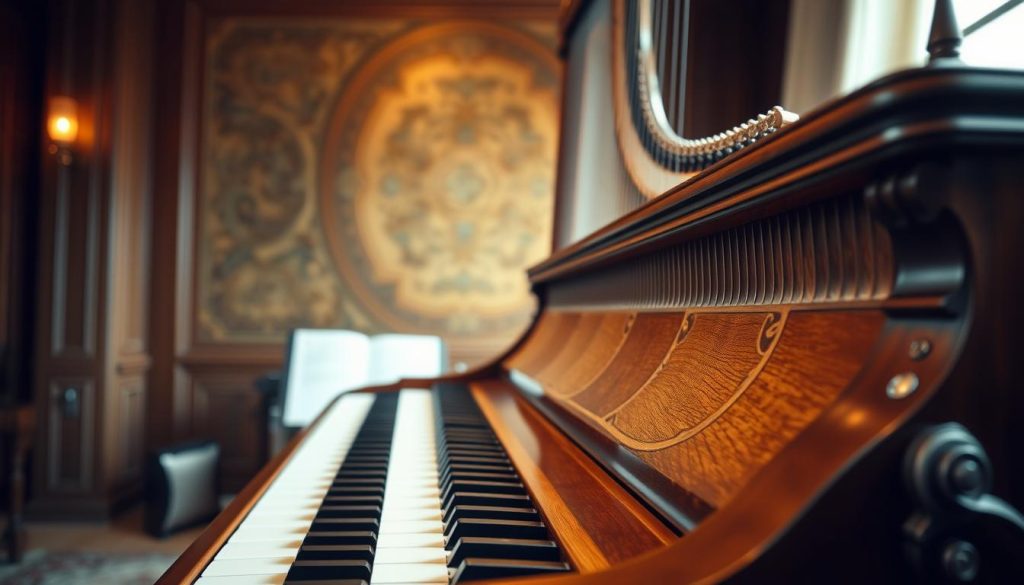
- 1889: exhibition and international visibility.
- Rediscovery of Baroque works by modern musicians.
- Growth in the number of makers at the end of the twentieth century.
| Phase | Feature | Impact |
|---|---|---|
| Beginning (1889) | Public showcase | Renewed interest |
| Twentieth century | Specialized restorations | Access to faithful copies |
| Late twentieth century | Professionalization | Stronger dialogue with the piano |
“Historical rediscovery changed the way an early repertoire was heard and interpreted.”
Care and maintenance to preserve sound quality
An instrument’s longevity depends on simple measures: inspecting the soundboard, cleaning the strings, and adjusting the mechanism.
The strings should be cleaned after every playing cycle. A dry cloth removes dust and residue that can affect their tension. Regular tuning checks are essential because tension may vary from one session to another with humidity.
Check the soundboard for cracks or separation. A healthy soundboard fulfills its role as a wooden resonator. Any crack alters vibration and harmonic production.
The bridge and the harpsichord mechanism require frequent adjustment. An improperly adjusted jack affects the pitch and consistency of every note. Technical maintenance ensures consistent sound production.
- Frequent tuning to stabilize string tension.
- Gentle cleaning of the strings and light lubrication of the pivots if necessary.
- Inspection of the soundboard and verification of the bridge’s glue joint.
“Regular maintenance preserves the clarity of string vibration and the instrument’s characteristic sound.”
Conclusion
In short, the course of this instrument illustrates continuity between early practices and modern revival.
From the beginning of the Baroque era through the end of the eighteenth century, its use evolved without erasing its historical value. The history of the harpsichord bears witness to the makers’ constant adaptation.
Versions with two keyboards reveal remarkable technical ingenuity. The plucked strings provide a contrapuntal clarity that continues to appeal to performers.
The harpsichord thus remains a source of inspiration. By mastering its nuances, every musician can revive this rich tradition and move a contemporary audience.