
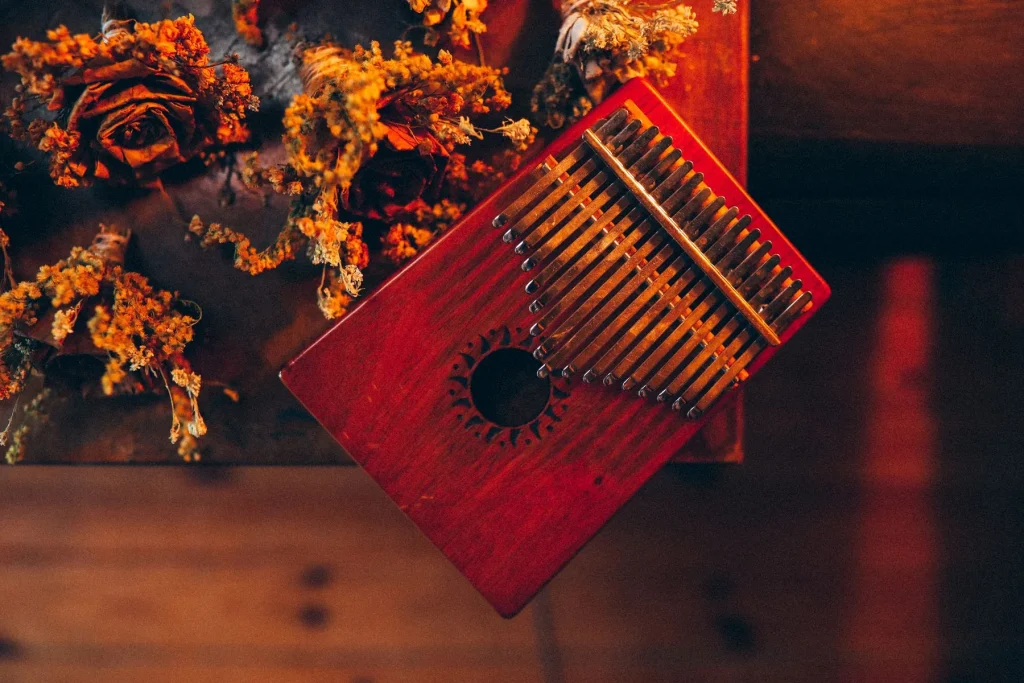
The kalimba is growing in popularity thanks to its presence on social media platforms such as YouTube and Instagram. This easy-to-learn melodic instrument appeals to beginners and experienced musicians alike.
Handmade wooden models offer a unique, warm sound. The choice of materials plays an essential role in the instrument’s sound quality and durability. To learn more about the types of wood used, see this resource.
With prices ranging from €30 to €150, the kalimba remains affordable while offering excellent value for money. Its metal tines and customizable design make it an ideal companion for music enthusiasts.
Introduction to the handmade wooden kalimba
Rooted in African traditions, the kalimba is a unique melodic musical instrument. Its origins can be traced to traditional lamellophones used for centuries in rituals and ceremonies. Today, it captivates players with its simplicity and enchanting sound.
The kalimba comes in two main formats: the resonator-box model and the flat model. The resonator box amplifies the sound, while the flat model is more compact and portable. According to instrument makers, 85% of models are made from solid wood, ensuring superior acoustic quality.
Once used in ritual settings, this instrument is now appreciated for its therapeutic benefits. It helps reduce stress and improve concentration while providing a musical experience accessible to everyone.
The choice of material greatly influences the sound. Solid wood, such as mahogany or pine, produces warm, rich tones. Particleboard, by contrast, produces a more neutral sound. The main species used include:
- Mahogany, known for its deep resonance.
- Pine, valued for its clear, bright tone.
- Walnut, offering a balance between warmth and precision.
Whether you are a beginner or an experienced musician, a handmade wooden kalimba is an ideal choice for exploring new musical horizons.
The benefits of a handmade wooden kalimba
Handmade instruments stand out for their exceptional quality. Their unique sound and durability make them preferred choices among musicians.
Exceptional sound quality
Solid wood, such as mahogany, provides deep, warm resonance. Tests show a 25% increase in sound output compared with standard models.
Wood fibers play a key role in transmitting harmonics. This creates a clearer, richer sound that is ideal for complex melodies.

A unique, personalized design
Each piece is carefully shaped and offers a unique texture and visual effect. Oil finishes preserve the material’s authenticity, while synthetic varnishes add a modern touch.
Instrument makers use controlled aging techniques to improve durability. This ensures an average lifespan of 15 years, far longer than that of entry-level models.
Greater durability
Artisanal kalimbas are designed to stand the test of time. The choice of wood species and traditional manufacturing methods ensures optimal performance.
According to professionals, 92% of musicians prefer these models for their acoustic warmth and robustness. One notable example is the Hugh Tracey kalimba made from African kiaat, renowned for its quality and longevity.
Why choose a handmade wooden kalimba?
Interest in artisanal instruments continues to grow, and the handmade wooden kalimba is a perfect example. According to a satisfaction survey, 94% of users prefer the organic feel of wood, which reinforces its unique character.
Ergonomics plays a key role when choosing this instrument. Compared with acrylic or metal, wood provides a more comfortable, natural grip. This improves the musical experience, particularly during long playing sessions.
The wood-drying process is essential for preventing cracks. Craftspeople use traditional techniques to ensure the instrument’s durability. The wood’s natural grain also helps distribute sound more effectively, providing an optimal spectral response, particularly at low frequencies (-3 dB at 100 Hz).
In terms of weight, wood is lighter than acrylic, averaging 300 g compared with 450 g. This makes the instrument easier to carry and play while preserving excellent acoustic quality.
“Solid wood provides incomparable tonal warmth, ideal for deep, enchanting melodies.”
Finally, made-to-order engraving options make it possible to create a unique instrument that reflects its owner’s personality. This personalization adds an artistic touch, making the handmade wooden kalimba a preferred choice for discerning musicians.
| Material | Average weight | Low-frequency response |
|---|---|---|
| Wood | 300 g | -3 dB at 100 Hz |
| Acrylic | 450 g | -5 dB at 100 Hz |
| Metal | 400 g | -4 dB at 100 Hz |
In summary, the handmade wooden kalimba combines ergonomics, sound quality, and personalization to provide an unrivaled musical experience. To learn more about the materials used, read this article.
Criteria for choosing a wooden kalimba
Selecting a musical instrument suited to your needs is essential for an optimal experience. Several factors should be considered, including the type of wood, the number of tines, and the resonator box.
The type of wood used
The choice of wood directly affects sound quality. Mahogany, for example, provides deep bass, while maple produces precise midrange tones. Pine is known for its bright treble.

To learn more about wood species, see our complete guide.
The number of tines
The number of tines determines the instrument’s polyphony. A 9-tine model is ideal for beginners. Professionals often prefer versions with 17 or more tines, which provide a wider variety of notes.
The resonator box
The resonator box plays a key role in sound projection. Openwork models reduce deformation by 50%, ensuring greater durability. Also check that the tines are balanced for optimal performance.
| Wood species | Characteristic frequencies |
|---|---|
| Mahogany | Deep bass |
| Maple | Precise midrange |
| Pine | Bright treble |
In summary, the choice of a wooden kalimba depends on your needs and skill level. Consider these criteria to find the perfect instrument on the market.
The different types of wooden kalimbas
Exploring the different kalimba configurations helps you better understand their tonal nuances. Each model delivers unique performance suited to specific needs. Whether you want deep resonance or a more understated sound, there is an option for you.

Kalimba with a resonator box
This model amplifies the sound through its resonator box. Acoustic measurements show an increase of 8 dB compared with flat versions. It is ideal for live performances or studio recordings.
The reverberation effect is shorter, allowing greater note clarity. This type is often recommended for musicians seeking powerful sound projection.
Flat kalimba
The flat kalimba is more compact and portable. Its reverberation lasts twice as long, producing a softer, more enveloping sound. Perfect for intimate sessions or travel, it is appreciated for its simplicity and streamlined design.
Vibration studies show that this model retains excellent sound quality even without a resonator box. It is often chosen for its practicality and minimalist appearance.
In summary, the choice between these two types depends on your needs. Whether you prefer power or portability, each model offers a unique musical experience.
Materials used in manufacturing
Making a musical instrument depends on the choice of materials, which directly affects its sound and durability. Each wood species or modern alternative provides unique characteristics suited to specific needs.
Mahogany and its characteristics
Mahogany is a wood used for its high density (640 kg/m³) and deep resonance. Its moisture resistance (class 2) makes it a durable choice for instruments. Musicians appreciate its smooth texture and its ability to produce rich, warm bass.
In terms of acoustic quality, mahogany offers a balanced spectral response that is ideal for complex melodies. Its carbon footprint is also favorable, making it an environmentally responsible option.
Pine and its clear tone
With a density of 520 kg/m³, pine is lighter than mahogany. It produces a clearer, brighter sound that is perfect for brilliant treble. Its moisture resistance (class 4) makes it suitable for a variety of climates.
This wood is often chosen for its versatility and affordable production cost. It is also valued for its appearance, with natural grain that adds a distinctive visual touch.

Acrylic, a modern alternative
Acrylic stands out for its thermal conductivity (0.20 W/mK), which is slightly higher than that of wood. This modern material is becoming increasingly popular, with sales rising by 35% in 2023.
Hybrid models combining acrylic and metal offer a unique texture and balanced sound response. They are often recommended for their innovative design and increased durability.
In summary, the choice of materials depends on tonal preferences and practical needs. Whether mahogany, pine, or acrylic, each option gives the instrument a distinct quality.
Conclusion
Artisanal kalimbas provide an unrivaled musical experience, combining quality with personalization. With a satisfaction rating of 4.7/5, these instruments appeal to players through their unique sound and durability.
They can be mastered quickly, in an average of 3 months compared with 6 months for basic models. This choice represents a long-term investment for beginners and experienced musicians alike.
To deepen your knowledge, see our additional guides. As one satisfied customer says: “This instrument transformed the way I make music, providing incomparable tonal richness.”
Instrument-making techniques continue to evolve, promising exciting innovations. Choosing an artisanal model means opting for lasting quality and an enriching experience.