
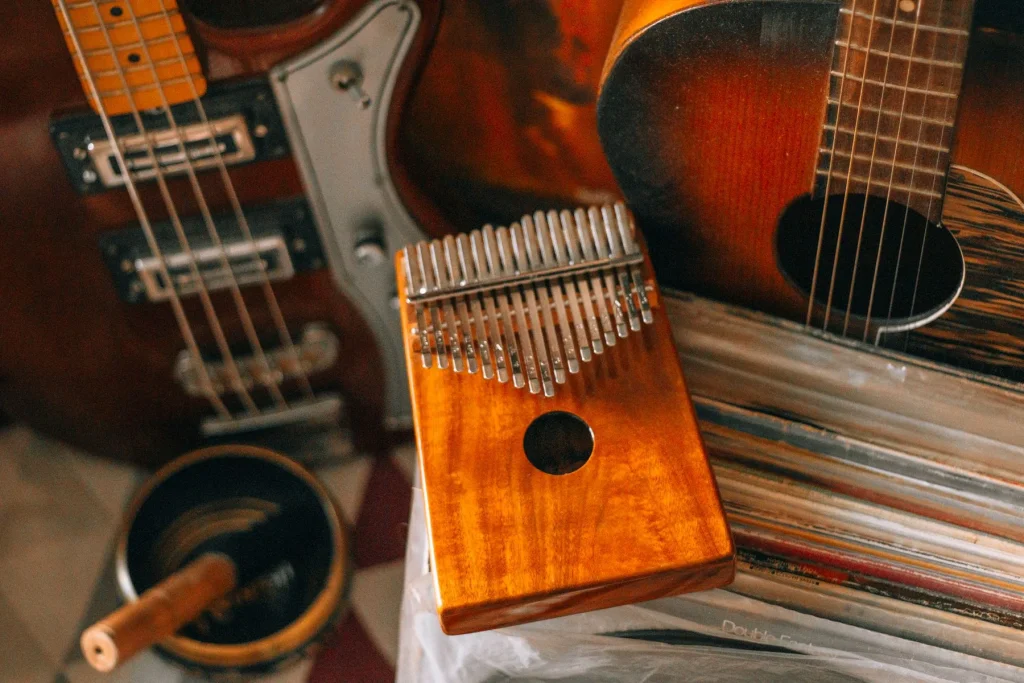
The kalimba, often called a thumb piano, is a fascinating musical instrument whose simplicity and rich sound have won over many players. Several versions of this instrument exist, each with its own distinctive features. Understanding these differences is essential when choosing the one that suits your needs and musical style.
Whether you are a beginner or an expert, there is a kalimba suited to your playing level. Materials, the number of tines, and resonance vary between models, influencing the sound they produce. For example, some instruments are designed for traditional African music, while others suit more modern styles.
To learn more about the technical features and uses of each model, read our complete guide to musical instruments. Discover how to choose the kalimba that suits you and explore the endless possibilities of this unique instrument.
Introduction to the kalimba: a unique instrument
Rooted in ancient traditions, the kalimba continues to captivate listeners with its unique charm. Easy to play, it offers a rich sound that appeals to beginners and experienced musicians alike.
What is a kalimba?
The kalimba, also called a thumb piano, is a musical instrument consisting of metal tines attached to a resonating body. Plucking the tines with the thumbs produces gentle, enchanting melodies. It is often used in traditional African music but also adapts well to more modern styles.
Origins and history of the kalimba
The earliest traces of the kalimba date back more than 3,000 years to Cameroon. The tines were originally made of bamboo, but steel later replaced it to provide greater durability and a better sound. The instrument played an important role in the rituals and spiritual ceremonies of Bantu cultures.
In the 16th century, Portuguese colonists discovered the instrument and introduced it to other parts of the world. However, it was Hugh Tracey who popularized the kalimba in 1954 by modernizing it and adding resonator boxes to improve its sound.
Today, the kalimba is used by renowned artists such as Earth, Wind & Fire and Phil Collins, demonstrating its place in contemporary music.
| Period | Materials | Development |
|---|---|---|
| 3,000 BC | Bamboo | Natural tines, gentle sound |
| 16th century | Steel | Greater durability, clearer sound |
| 1954 | Steel + resonator box | Modernization, amplified sound |
The kalimba is much more than an instrument: it is a bridge between past and present, tradition and modernity. It continues to enrich musical life around the world.
Why choose a kalimba?
Choosing a kalimba means choosing an instrument that is both accessible and rewarding. Whether you are a beginner or an accomplished musician, it offers a unique experience combining simplicity with musical depth.

The advantages of the kalimba for beginners
The kalimba is perfect for anyone discovering music. Its tines are easy to handle, and melodies can be learned quickly. The instrument develops coordination and fine motor skills while strengthening self-confidence.
It is also ideal for children from the age of three, encouraging their musical development. Seniors can likewise use it for cognitive stimulation thanks to its gentle, relaxing tones.
The benefits of making music with a kalimba
Playing the kalimba has positive effects on well-being. An Inserm study reports a 37% reduction in stress through this instrument. It is even used in the neonatal unit at Creil Hospital to soothe newborns.
Bone-conduction therapy at 432 Hz, combined with the kalimba, produces relaxing alpha waves. These benefits make it a favored music-therapy tool incorporated into many care protocols.
To learn more about these advantages, read our complete guide to everything you need to know about the kalimba. This instrument can transform not only your musical practice but also your daily life.
The different types of kalimba
The market offers kalimbas designed for a wide range of uses. Each model provides a distinct musical experience suited to particular styles and needs. Whether you are looking for a traditional or modern instrument, there is a version for you.
Traditional wooden kalimba
Made from solid wood, this model offers a warm, natural tone. Ideal for acoustic-music enthusiasts, it is often used in traditional rituals. Its handcrafted construction makes it a unique object valued for its authenticity.
Modern acrylic kalimba
Acrylic gives this instrument a contemporary touch. Lightweight and durable, it produces a clear, bright sound. Its transparent, colorful design appeals to modern musicians, while its easy maintenance makes it practical.
Electro-acoustic kalimba
This model combines tradition with technology. Fitted with a piezoelectric pickup, it can be connected to speakers such as those made by JBL or Bose. Compatible with effects pedals, it is perfect for stage performances. The Gecko E-Kalimba Pro is an excellent example, with an average price of €120 to €200.
To learn more about these models, read our guide to everything you need to know about the kalimba. Discover which one suits your musical style and explore new sounds.
Materials used to make kalimbas
Kalimbas are made from a variety of materials, each affecting their sound and appearance. These choices determine not only acoustic quality but also the instrument’s durability and visual appeal. Let us explore the options available on the market.

Wood: a classic material
Wood remains a favored material for its warm, natural tone. Species such as mahogany and maple provide deep resonance, making them ideal for traditional melodies. Wood also adds a handcrafted touch that makes every instrument unique.
Acrylic: a modern alternative
Acrylic is appealing for its contemporary design and lightness. The material produces a clear, bright sound suited to current musical styles. Easy to maintain, it is perfect for musicians seeking an instrument that is both attractive and practical.
Other innovative materials
The market also offers kalimbas made from innovative materials. Carbon fiber, for example, combines lightness with strength, while titanium is used for ultralight models such as the Kalimba Travel (126 g). Experiments with acoustic ceramics and stabilized coconut shells demonstrate the wide range of possibilities. Even recycled metal is used to create eco-friendly kalimbas, addressing environmental concerns.
Number of tines: an essential criterion
The number of tines is a decisive factor when choosing a kalimba. It affects the complexity of the melodies you can play and should match your level of experience. Whether you are a beginner or an expert, there is a perfect model for you.

7-tine kalimba: ideal for children
This model is perfect for children because of its simplicity. With only seven tines, it is easy to handle and provides a way to learn the basics of music. The melodies are simple yet varied enough to encourage musical development.
17-tine kalimba: the standard choice
The 17-tine kalimba is the most common model. It offers a wider range of notes, making it possible to play more complex melodies. Weighing between 550 and 700 g, it is a balanced instrument that is easy to carry.
21-tine kalimba: for experienced musicians
This model is designed for advanced musicians. Its 21 tines make it possible to explore techniques such as harmonics and complex chords. Specialist brands such as Seed and LingTing offer high-quality versions suitable for professional studio use.
- Advanced techniques: harmonics, complex chords.
- Recommended brands: Seed, LingTing.
- Average price: €80 to €150.
Choosing a kalimba based on its number of tines ensures a musical experience suited to your needs. Explore the possibilities and find the instrument that inspires you.
The resonator box: with or without?
The resonator box is a key feature affecting the kalimba’s sound and portability. It amplifies the vibrations of the tines, creating a richer, deeper tone. However, going without one can also offer advantages, especially for playing while traveling.

The advantages of a resonator box
A resonator box improves sound projection, making it ideal for public performances. It also adds visual appeal through wood or acrylic finishes. For a high-quality purchase, favor recognized brands such as Hluru Flatboard.
It can also be personalized with engraving, making the instrument unique. Its average thickness of 18 mm and weight of 220 g provide a good balance between portability and performance.
Flatboard kalimbas: simplicity and lightness
Flatboard kalimbas are perfect for travel or backpacking. Without a resonator box, they are lighter and easier to carry. Their minimalist design appeals to modern musicians.
They are compatible with an external microphone, providing greater flexibility for recordings and concerts. Their price is often more affordable, making them an attractive choice for beginners.
| Feature | With a box | Without a box |
|---|---|---|
| Sound | Rich and deep | Clear and light |
| Weight | 220 g | Under 200 g |
| Use | Public performances | Playing on the go, travel |
Conclusion: find the right kalimba for you
Choosing an instrument such as the kalimba depends on several criteria. Your skill level, intended use, and budget are key considerations. Take the time to try several models in a store to find the one that suits you best.
If you are a beginner, a simple model is ideal. As you gain experience, you can progress to more complex versions. Explore community resources such as forums and tutorials to enrich your practice.
The kalimba is a bridge between tradition and modernity, offering unique sounds. Immerse yourself in this musical universe and discover how this instrument can enrich your life. The world of the kalimba awaits you!