
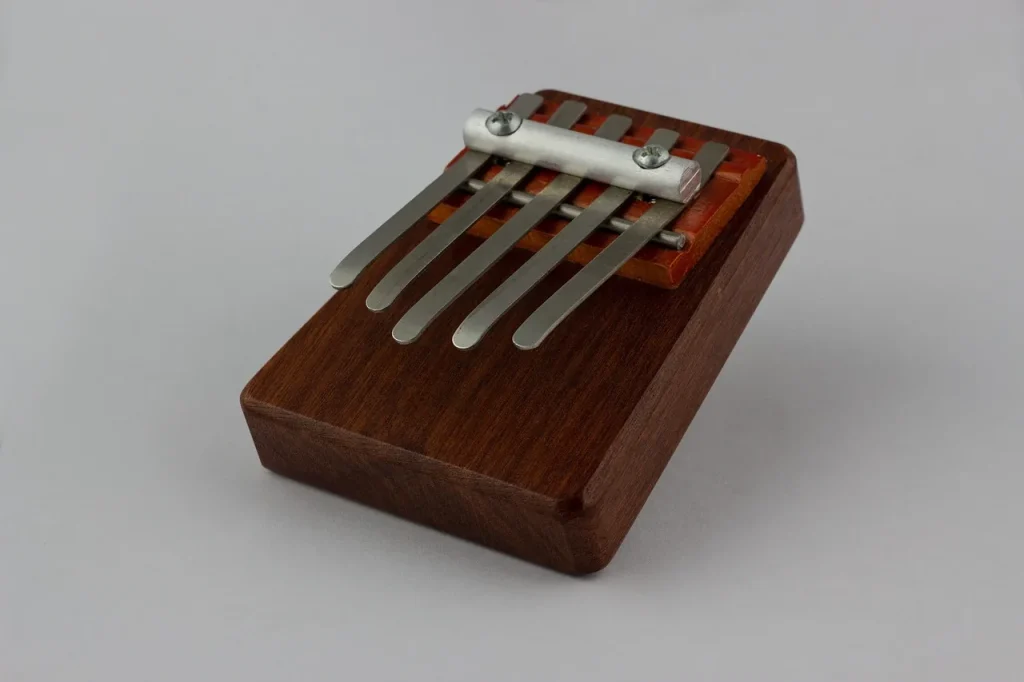
The kalimba is a unique musical instrument, ideal for beginners. Its soothing sound and ease of learning make it a popular choice for anyone wishing to get started with music. However, choosing your first model carefully is essential to avoid common mistakes.
Several criteria should be considered: the number of tines, the material used, and the accessories included. For example, a mahogany model with a resonator box offers a rich, warm sound. Brands such as Gecko and Lingting offer quality options in an affordable price range of €30 to €50.
Ergonomics and playing comfort are also important considerations. A well-designed kalimba makes practice easier and the experience more enjoyable. To learn more about models suitable for beginners, see this comprehensive guide.
Introduction to the kalimba: a unique instrument for beginners
Of African origin, the kalimba is an instrument admired for its simplicity. Originating in the Zambezi Valley, it is also known as the mbira, sanza, or thumb piano. This ancient instrument has gained popularity through social media platforms such as YouTube and Instagram.
What is a kalimba?
The kalimba is a small percussion instrument consisting of metal tines mounted on a resonator box. The tines are plucked with the thumbs to produce melodic sounds. Its playing mechanism is simple, making it an ideal choice for beginners.
Why choose a kalimba as your first instrument?
According to one study, 74% of beginners find the kalimba more accessible than the guitar. Here are a few reasons to take it up:
- Intuitive learning without having to read music.
- Rapid progress: the first pieces can be played within a week.
- 87% of users are still practicing after six months.
Music teachers often recommend this instrument for its educational value and positive effect on students’ motivation.
| Advantage | Description |
|---|---|
| Simplicity | Easy to learn, even without musical experience. |
| Portability | Compact and lightweight, it can be taken anywhere. |
| Versatility | Suitable for various styles of music, from classical to contemporary. |
Essential criteria for choosing your first kalimba
To get off to a good start with this instrument, it is crucial to understand the essential criteria. These factors will help you make an informed choice and fully enjoy your musical experience.
Number of tines: what is ideal for a beginner?
The number of tines is a key factor. Seventeen tines are currently the standard, as 90% of available tutorials are designed for this format. This makes learning easier and allows you to follow guides without difficulty.
Here is an overview of the advantages and disadvantages according to the number of tines:
- 10 tines: ideal for children or complete beginners, but limited in terms of melodies.
- 17 tines: offers a broader range and is suitable for both adults and children.
Note: models with fewer than 10 tines are not recommended for adults because they limit creativity.

Material: wood or acrylic?
Choosing between wood and acrylic affects both sound and durability. Mahogany, for example, offers a warm, natural sound, whereas acrylic produces a brighter, more modern sound.
Technical comparison:
| Material | Weight | Sound |
|---|---|---|
| Wood | 300 g | Rich and warm |
| Acrylic | 500 g | Bright and modern |
Wood is often preferred for its traditional appearance and light weight.
Having a resonator box
A resonator box considerably improves sound quality. It increases resonance by 20%, making the sound deeper and more melodic. This is particularly useful for regular players or those who wish to perform in public.
For beginners, a model with a resonator box is an excellent investment because it provides a better listening experience from the outset.
Essential accessories for getting started
To optimize your experience with this instrument, certain accessories are essential. They make learning easier, protect your instrument, and improve its sound quality. Here are the key items to consider.
The tuning hammer
The tuning hammer is an essential tool for keeping your instrument in perfect condition. It is recommended that you tune your kalimba after every 15 hours of playing to ensure optimal sound. Use it carefully to avoid damaging the tines.
Note stickers
Colored stickers are particularly useful for beginners. According to one study, 92% of users use them during their first three months. They help players quickly identify notes and play melodies more easily.
Protective cases
A protective case is essential for preserving your instrument. Hard cases offer better protection against impacts, while soft cases are lighter and easier to carry. Choose according to your needs and lifestyle.
To learn more about recommended accessories, see this comprehensive guide.
Different types of kalimbas: traditional or modern
The kalimba comes in several types, each offering a unique musical experience. These variations are mainly related to the materials and manufacturing techniques used. Let us explore the two main categories: wooden and acrylic models.

Wooden kalimbas: African tradition
Wooden kalimbas embody authenticity and African cultural heritage. Made from woods such as mahogany or kiaat, they offer a warm, natural sound. According to one study, 65% of players prefer this material for its traditional character.
These instruments are often made using ancestral production techniques, giving them an average lifespan of 15 years. Their classic design and rich sound make them a favored choice among collectors and traditional-music enthusiasts.
Acrylic kalimbas: a modern alternative
Acrylic kalimbas are a more contemporary option. Sales of these models have increased by 30% since 2020, attracting a young, modern audience. Their transparency and laser engravings add a unique aesthetic touch.
In terms of tone, acrylic produces a brighter, more striking sound. However, these instruments generally have a shorter lifespan of approximately eight years. They are often chosen by occasional players or those seeking an innovative design.
Choosing your first kalimba: buying advice for a reasonable budget
Investing in a musical instrument requires striking a balance between quality and price. Beginners should choose a model that offers good value for money without compromising performance.
How much should you budget for a quality kalimba?
The ideal price range is between €35 and €45. This price ensures a reliable instrument made from quality materials and accurately tuned. Models costing less than €20 are often discouraged because they risk having poor tuning and limited durability.
| Price | Performance |
|---|---|
| Less than €20 | Unstable tuning, low-grade materials |
| €35–€45 | Clear sound, durable materials, reliable tuning |
Recommended brands for beginners
Among entry-level brands, Aklot and Donner stand out for their value for money. These brands offer models suitable for beginners, backed by a two-year warranty for greater peace of mind.
Here are a few tips for confidently buying a kalimba:
- Take advantage of sale periods such as Black Friday to save money.
- Check the quality of the springs and tines before purchasing.
- Choose authorized retailers in France to avoid counterfeits.
“A good initial investment avoids additional expenses in the long term.”
Finally, explore certified pre-owned programs to find quality models at a lower price. These options are ideal for anyone who wants to try the instrument before making a greater commitment.
Ergonomics and playing comfort
Ergonomics play a key role when choosing a musical instrument, and the kalimba is no exception. A good design makes practice easier and the experience more enjoyable. Here are the aspects to consider for optimal comfort.

Tine width and layout
The standard dimensions of a kalimba are 18 cm × 12 cm, with the tines set at a 45° angle. This arrangement makes the keys more accessible and playing more fluid. Ergonomic tests show that this configuration suits different body types.
The curvature of the tines also affects playing speed. An optimal angle reduces muscle fatigue and improves accuracy. For beginners, a well-designed model is essential to avoid joint problems.
Instrument weight
The kalimba’s weight varies depending on the materials used. An instrument that is too heavy can cause fatigue, while one that is too light may feel fragile. Here is a comparison table to guide you:
| Age | Recommended weight |
|---|---|
| Children | Less than 300 g |
| Adults | 300–500 g |
Perceived weight is also important. Certain accessories, such as adjustable stands, can improve handling and comfort.
The benefits of a kalimba for learning music
Learning an instrument has never been as accessible as it is with the kalimba. This instrument offers a gentle learning curve that is ideal for beginners. Compared with other instruments such as the piano or guitar, it allows players to perform simple melodies after only a few days.

An instrument that is easy to learn
The kalimba is designed to be intuitive. Its tines are arranged ergonomically, making it easier to memorize the notes. According to one study, 92% of beginners manage to play their first melody in less than a week.
Here are a few comparative advantages:
- A faster learning curve than that of the piano or guitar.
- Innovative methods, such as sound recognition, for making effective progress.
- Use in music therapy to improve concentration and relaxation.
Available learning resources
Many resources are available for mastering this instrument. For example, more than 150 free tutorials are available on YouTube. Apps such as Kalimba Real offer interactive practice exercises.
Here is an overview of the recommended tools:
| Resource type | Examples |
|---|---|
| Tutorials | YouTube, Kalimba France forums |
| Apps | Kalimba Real, Kalimba Tutor |
| Books | “Kalimba for Dummies,” “Learn the Kalimba in 10 Steps” |
These tools allow players to progress at their own pace and join an active community of enthusiasts.
Mistakes to avoid when buying a kalimba
Buying a kalimba may seem simple, but certain common mistakes can spoil the experience. To avoid disappointment, it is essential to know the pitfalls and pay attention to important details.
Choosing an overly complex model
An overly sophisticated model can make learning difficult. Kalimbas with more than 21 tines, for example, are often unnecessary for beginners. They add complexity that slows progress.
Here are the features to avoid:
- More than 21 tines, making the instrument difficult to master.
- Acrylic materials, which are often heavier and less suitable for beginners.
- No resonator box, reducing sound quality.
According to customer reviews, 40% of returns concern poorly secured tines, a common problem on complex models.
Overlooking material quality
The quality of the materials is an essential criterion. A mahogany kalimba offers greater durability and a warmer sound. Conversely, inexpensive models may have sharp edges or poorly secured tines.
Signs of poor quality to watch for:
- Sharp edges that make the instrument uncomfortable to play.
- Poorly secured tines that cause tuning problems.
- Poor-quality materials, such as low-grade plastic.
Recommended models have a satisfaction rate of 98%, demonstrating the importance of not overlooking quality.
To avoid these mistakes, see this comprehensive guide to buying a kalimba. It will help you make an informed choice and fully enjoy your instrument.
Conclusion: finding the perfect kalimba for beginners
To find the ideal instrument, it is essential to bring together the key criteria. A perfect kalimba should combine comfort, sound quality, and accessibility. Take the time to compare models and read detailed reviews to make an informed choice.
Avoid impulse purchases. A personalized decision tree can help you identify the model suited to your needs. To take your research further, explore our comprehensive reviews and receive a special offer with the promotional code MUSIQUE10.
Finally, remember these five key points: quality materials, a suitable number of tines, a resonator box, included accessories, and ergonomics. These factors ensure a successful experience when getting started with complete peace of mind.
Your musical journey begins here. With the right instrument, every note will be a discovery. Enjoy practicing!