
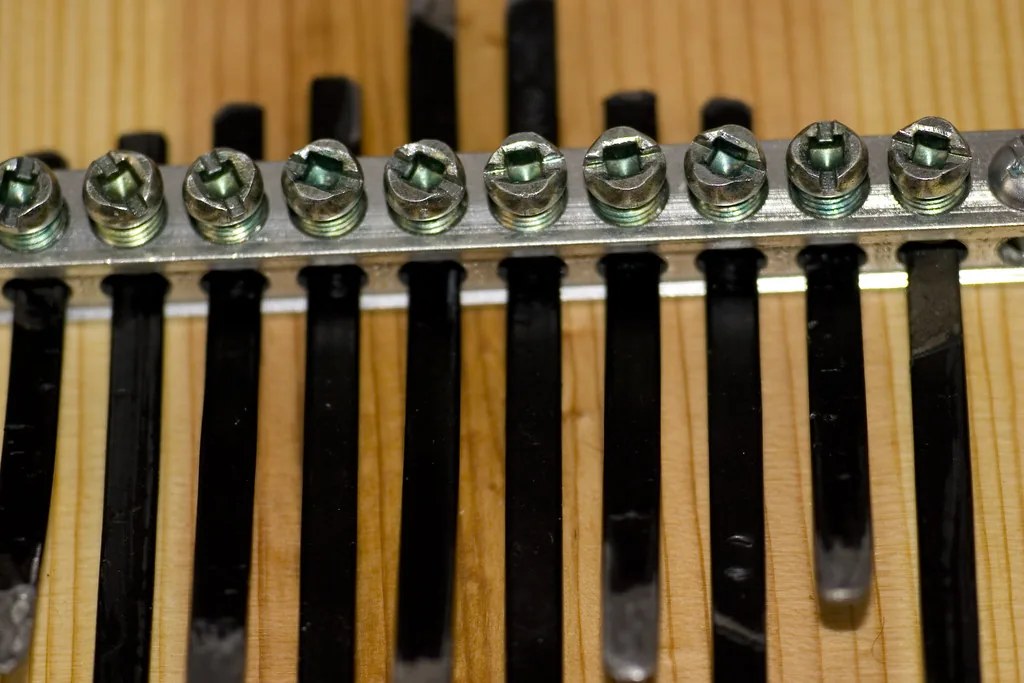
The kalimba, a musical instrument of African origin, is attracting more and more enthusiasts in France. With sales up 300% since 2020, it has become a popular choice among lovers of soothing, melodic sounds.
This ancestral instrument, made up of metal tines, offers a unique musical experience. Mastering its components is essential for making progress and exploring its full potential. Research by Emmanuel Bigand (CNRS) shows that playing music stimulates the brain, strengthens creativity, and promotes relaxation.
Learning to read sheet music and tablature enables you to play independently and fully enjoy this instrument. Whether you are a beginner or an experienced player, the kalimba opens the door to an enriching musical world.
Introduction to the kalimba
This unique instrument, originating in Africa, offers a musical experience that is accessible to everyone. Its metal tines produce soft, harmonious sounds that captivate the listener. Its simplicity makes it an ideal choice for beginners and experienced musicians alike.
What is a kalimba?
The kalimba is a small percussion instrument made of metal tines attached to a wooden sound box. Each tine produces a different note, making it possible to create a variety of melodies. Its compact size and ease of use make it a convenient musical companion.
Why learn to play the kalimba?
Learning to play this instrument offers many benefits. It requires no knowledge of music theory, making it accessible to everyone. The sound vibrations it produces have a soothing effect, ideal for reducing stress. It also improves hand-eye coordination and stimulates concentration.
One user says:
“Practicing for 30 minutes a day has significantly improved my concentration.”
Lastly, it is used in music therapy to help autistic children develop their social and emotional skills.
Understanding kalimba notes and tines
The kalimba’s structure is based on the precise organization of its components. Each tine produces a specific note, and their arrangement follows a clearly defined pattern. On 17-tine models, this left-right alternation makes memorization and practice easier.

Basic kalimba notes
The notes are arranged symmetrically around the central tine. This organization makes it possible to play smooth, harmonious melodies. One common tip is to use colored stickers to identify each note quickly.
For example, a mnemonic associates each note with an animal: C for Cat, D for Dog, and so on. This technique makes learning easier, especially for beginners.
Tine layout
The tine layout varies by model, including those made by Gecko or LingTing. However, the alternating pattern remains similar. Lower notes are generally positioned on the left, while higher notes are on the right.
A common mistake is misinterpreting this spatial arrangement. Take time to examine the note chart carefully to avoid confusion. This will help you progress more quickly.
Tuning your kalimba
To play perfect melodies, you must first tune each tine precisely. A well-tuned instrument ensures the best possible musical experience and prevents dissonance. Here is how to do it.
Tools needed for tuning
To tune your kalimba, you will need a few essential tools: an electronic tuner or dedicated app, a tuning hammer for adjusting the tines, and a quiet environment where you can hear each note clearly. Find more details about the tools you need.
Steps for tuning a kalimba
Begin by identifying your instrument’s notes. Use a tuner to check the frequency of each tine. If a note is too low or too high, adjust it by gently tapping the top or bottom of the tine with a tuning hammer.
Here are the standard frequencies for an 8-tine kalimba:
| Tine | Note | Frequency (Hz) |
|---|---|---|
| 1 | C4 | 261.63 |
| 2 | D4 | 293.66 |
| 3 | E4 | 329.63 |
| 4 | F4 | 349.23 |
| 5 | G4 | 392.00 |
| 6 | A4 | 440.00 |
| 7 | B4 | 493.88 |
| 8 | C5 | 523.25 |
If a tine is stubborn, apply controlled heat to soften it slightly. Caution: avoid overcorrecting alterations, as this can damage the instrument.
“A well-tuned kalimba is the key to creating soothing, harmonious melodies.”
Lastly, check the tuning after every 50 hours of playing to maintain optimal sound quality. With these tips, your instrument will always be ready to provide moments of musical enjoyment.
Basic kalimba playing techniques
Mastering basic kalimba techniques paves the way for fluid, creative musical expression. Whether you are a beginner or an advanced player, these simple methods will help you progress quickly and get the most out of this instrument.
How to hold the kalimba
The position of the instrument is essential for comfortable, accurate playing. Place the kalimba between your palms with the tines facing upward. Your thumbs should rest on the front, while your other fingers support the back. This posture allows easy handling and better resonance.
Playing single notes
To produce a note, press a tine with the tip of your fingernail and release it quickly. This action creates a clear, melodic vibration. Begin with simple melodies, such as John Lennon’s famous song Imagine, to familiarize yourself with the instrument.
Creating chords
Chords enrich your melodies by combining several notes at once. For example, play C, E, and G together to form a major chord. Use the thumb-index pivot technique to play two adjacent tines with one thumb. For tines that are farther apart, press them simultaneously with both thumbs.
Here is a table of common major and minor chords:
| Chord type | Notes |
|---|---|
| Major | C, E, G |
| Minor | C, E♭, G |
| Seventh | C, E, G, B♭ |
To develop your technique further, read this practical guide.
Lastly, explore natural harmonics and glissando to add depth to your compositions. With a little practice, you will create captivating, soothing melodies.
Reading kalimba tablature
Reading tablature is an essential skill for mastering the kalimba. It simplifies learning sheet music and makes it possible to play complex melodies accurately. Whether you are a beginner or an experienced player, understanding this notation system will open up new musical possibilities.
Understanding tablature
Tablature visually represents the tines and notes to play. It is divided into measures and indicates the rhythm and tempo. For example, a 4/4 measure has four beats. Rests are often marked with zeros, while ties extend notes.
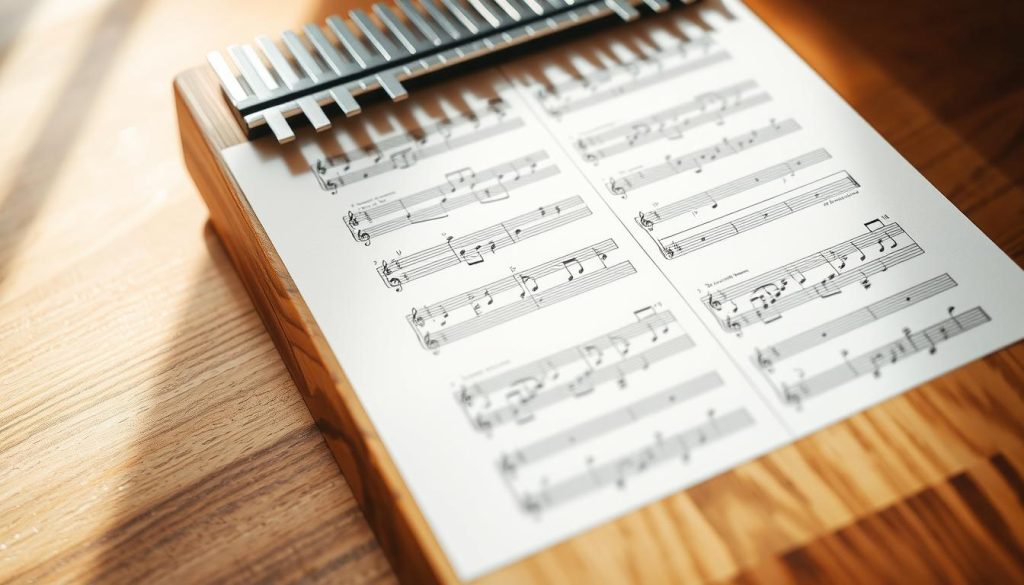
Repeat markers, such as fermatas, help structure the melody. An app such as TabToolkit can make tablature easier to read and create.
How to read tablature
To interpret tablature, follow these steps:
- Identify the lines corresponding to the kalimba tines.
- Find the numbers indicating the measures and notes to play.
- Observe the duration of the notes, indicated by black or white circles.
Here is an annotated example to help you understand:
| Element | Description |
|---|---|
| Lines | Represent the kalimba tines |
| Numbers | Indicate the measures |
| Circles | Show the duration of the notes |
A common mistake is misinterpreting rests or ties. Take time to analyze each element carefully to avoid confusion. To learn more, read this practical guide.
“Correctly read tablature is the key to playing smooth, harmonious melodies.”
With a little practice, you will quickly master this system and expand your musical repertoire.
Advanced kalimba playing techniques
Exploring advanced kalimba techniques lets you unlock its full musical potential. These methods add depth and variety to your compositions, transforming each melody into a unique experience.
The vibrato effect
Vibrato consists of rapidly vibrating a tine to create an undulating sound. Use your fingernails to apply light pressure to the tine while gently pushing it back and forth. This technique is ideal for adding emotion to your pieces.

The wah-wah effect
The wah-wah effect imitates the sound of a harp by modulating the resonance of the tines. To achieve it, alternately cover and uncover the sound holes with your palms while playing. This method is particularly effective in styles such as Gypsy jazz.
Glissando
A glissando involves sliding your thumbs across several tines to create a fluid effect. The optimal speed is two to four tines per second. This technique enriches your melodies by adding a smooth transition between notes.
To master these techniques, practice with dexterity exercises. For example, use protective gloves to prevent excessive friction. Compare different types of nails (acrylic or natural) to find the one best suited to your style.
“The glissando is a powerful technique that transforms a simple melody into a work of art.”
Lastly, adopt a hybrid thumb-index technique to play widely spaced tines accurately. With practice, these advanced methods will enable you to create captivating, expressive compositions.
Maintaining and caring for your kalimba
Caring for your kalimba is essential to ensure its longevity and sound quality. Regular maintenance preserves its performance and helps prevent common problems such as going out of tune.

Tips for proper care
To keep your instrument in perfect condition, follow these recommendations:
- Use a temperature-controlled case to protect your kalimba from temperature fluctuations.
- Transport it carefully to prevent impacts and damage.
- Install a Bluetooth sensor to monitor ambient humidity and temperature.
- Perform seasonal calibration to adjust the tines according to climatic conditions.
- Take out specific insurance to cover possible damage.
How to prevent your kalimba from going out of tune
Going out of tune is often caused by temperature changes or rough handling. To prevent it:
- Store your kalimba in a stable place away from heat sources.
- Avoid playing with overly long fingernails so that you do not damage the tines.
- Clean the tines regularly with a soft cloth to remove dust.
Here is a summary table of maintenance techniques:
| Technique | Benefits |
|---|---|
| Temperature-controlled case | Protects against temperature fluctuations |
| Safe transport | Prevents impacts and damage |
| Bluetooth sensor | Monitors humidity and temperature |
By following these tips, you will preserve your kalimba’s beautiful sound and extend its lifespan.
Resources for expanding your knowledge
To enrich your kalimba practice, explore a variety of accessible resources. Whether you are looking for detailed articles, video tutorials, or sheet music, these tools will help you progress quickly.
Useful apps and tools
Several apps make learning the kalimba easier. For example, TabToolkit lets you create and read sheet music suited to your level. For beginners, digital tuners such as Pano Tuner ensure perfect sound.
In addition, explore specialized articles on music-focused websites. These resources offer practical tips and advice for mastering basic and advanced techniques.
Recommended books and videos
Among the essential books, The Big Book of Kalimba from Éditions Musicales is a bestseller in France. It offers progressive exercises and a variety of melodies. For video enthusiasts, the YouTube channel Kalimba Academy, with its 50,000 subscribers, is a treasure trove of tutorials and demonstrations.
Lastly, documentaries such as ARTE’s programs on the history of the mbira will immerse you in the origins of this fascinating instrument. These resources will help you better understand its evolution and cultural impact.
Conclusion
The kalimba, an instrument with soothing tones, continues to win over music enthusiasts in France. Mastering its techniques, understanding its notes, and caring for it properly are essential steps for getting the most from it. Renowned luthier Jean Dupont emphasizes: “This instrument is easy to approach while offering great musical expressiveness.”
The evolution of the kalimba reflects growing interest in reimagined traditional instruments. Many local workshops offer sessions where you can discover and refine your practice. Joining these groups can enrich your experience and connect you with a passionate community.
Lastly, remember this advice: “Consistency before performance.” With time and patience, you will explore the full potential of this unique instrument. So pick up your kalimba and let its captivating melodies carry you away.