
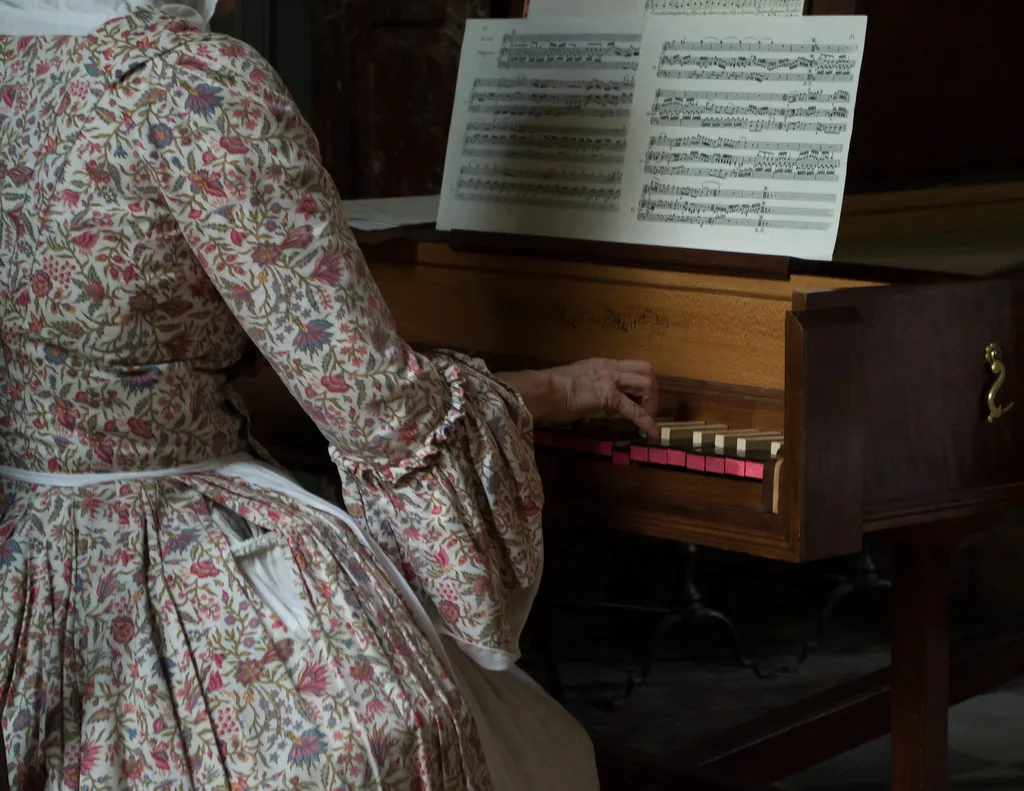
Brief introduction. This overview presents the main features that distinguish these three historic instruments. Its aim is to explain their mechanisms, sound, and role in Western music.
The harpsichord appeared in Italy in the 14th century and dominated the European scene for nearly four hundred years. Its sound is clear and precise, shaping how works from the period are performed.
At the beginning of the 18th century, Bartolomeo Cristofori invented the fortepiano. This mechanism finally made it possible to vary the intensity of the sound according to the force of the touch. To learn more about this development, see the history of the fortepiano.
Understanding these characteristics helps musicians choose the right instrument for the repertoire. Each keyboard has its own identity, from historical precision to modern expressive power.
Origins and Historical Development of Keyboard Instruments
From Flemish workshops to Italian inventors, the evolution of keyboard instruments shaped Western music.
The Rise of the Baroque Harpsichord
In the 14th century, the harpsichord established itself in European courts. The Ruckers family workshops in Flanders refined the instrument and gave it prestige in the 18th century.
Baroque composers such as Rameau then exploited its registers to write dense, refined polyphony.
The Fortepiano Revolution
In 1700, Bartolomeo Cristofori introduced a decisive innovation: felt-covered hammers that allowed dynamic variation.
This technical breakthrough transformed musical practice. Musicians quickly adopted the new instrument for its expressive capacity, which older keyboards lacked.
“The mechanism gave composers an unprecedented vocabulary of dynamics.”
To explore its technical and cultural development in greater depth, see the history and origins of the piano.
Understanding the Difference Between the Harpsichord, Fortepiano, and Piano
From wooden cases to metal frames, construction determines what each instrument can offer.
The mechanism remains the key: one plucks the strings, while the other strikes them. This contrast explains the differences in timbre and performance possibilities.
Range: a modern piano spans 7⅓ octaves. The traditional harpsichord is limited to 4 to 5 octaves. This wider range gives the piano greater harmonic richness and a broader palette.
Composers consequently adapted their writing to the characteristics of each keyboard. The transition from solid wood to a metal frame enabled new forms of sound and dynamic nuance.
- Sound production: plucking versus hammer strikes.
- Timbre: historical clarity versus expressive gradation.
- Choices over time: a reflection of musical taste and technical progress.
For a historical account of the fortepiano and its imperial use, see the fortepiano and the emperor.
Analysis of Sound-Production Mechanisms
Pressing the keys triggers two very different mechanical processes. In one, a jack plucks the string; in the other, a hammer strikes it to vary the intensity.
The Jack and the Plucking of Strings
In a harpsichord, a quill- or leather-plectrum jack plucks each string. The sound is bright, precise, and stable. The wooden soundboard conveys the harmonic clarity characteristic of this instrument.
The Hammer System and Dynamics
The modern piano uses felt-covered hammers. Three strings per note in the treble reinforce the power and harmonic richness of its timbre.
Major innovation: Érard’s double-escapement action, invented in 1821, enabled rapid repetition of notes. This invention transformed virtuosity and concert performance in the 19th century.
- Plucking produces a stable volume.
- Hammers make it possible to vary intensity and volume.
- The wood of the soundboard, often spruce, remains crucial to projection.
Playing Techniques and Musical Expressiveness
Each performer adapts their touch to the instrument’s mechanism and period.
The Art of Touch and the Use of Pedals
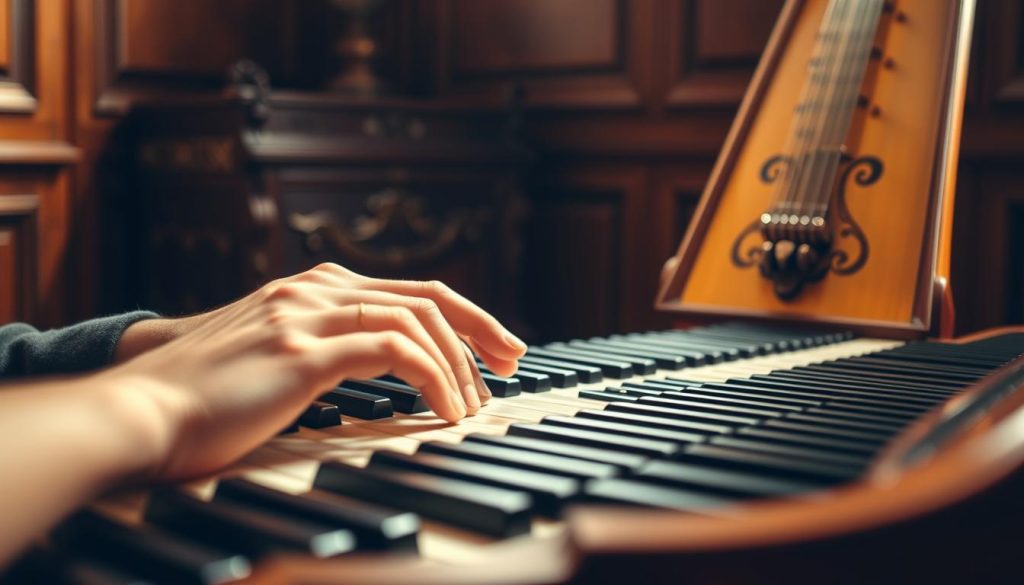
François Couperin codified an art of touch for the harpsichord based on precise articulation and ornamentation. Notes must be clear and detached to compensate for the absence of dynamic variation.
In the 19th century, Chopin formulated a piano technique based on the weight of the arm. This method promotes a singing legato and finely controlled changes in intensity with every keystroke.
Adaptation: musicians modify their phrasing according to the mechanism. Hammer-action keyboards allow connected playing and the use of pedals. Instruments with jacks require period-specific, codified ornamentation.
| Instrument | Touch | Expressiveness |
|---|---|---|
| Harpsichord | Precise articulation, codified ornaments | Limited dynamics, essential ornamentation |
| Fortepiano | Gradual dynamic response | Transition toward legato, early use of pedals |
| Piano | Arm weight, relaxation, fluid legato | Broad dynamic palette, pedals for tone color |
For help choosing an instrument to suit the repertoire and playing practice, see which instrument to choose.
Repertoire and Iconic Composers
Great works of music show how the relationship between composer and keyboard shapes musical form.
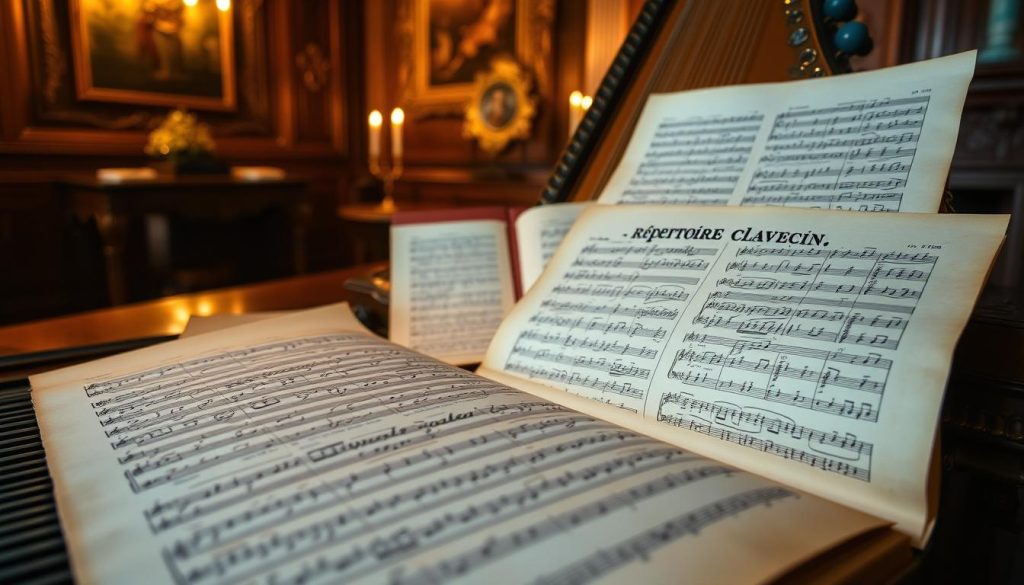
Composers such as Johann Sebastian Bach exploited the precision of the harpsichord. The Goldberg Variations demonstrate a contrapuntal depth that remains a model of clarity and balance.
By contrast, Ludwig van Beethoven transformed the role of the piano. His 32 sonatas use dynamics to explore new colors, tensions, and harmonies.
- The Baroque repertoire favors ornamentation and articulation.
- The 19th century saw the piano become a vehicle for Romantic expression.
- Each instrument imposes constraints that influence the performance and timbre of the works.
To discover other iconic instruments and their place in history, see iconic instruments.
Factors Influencing the Choice of Instrument
Musicians weigh historical authenticity against the demands of the repertoire. This choice combines history, acoustics, and personal taste. It determines both the interpretation and the impact in concert.
Historical Authenticity
Faithfulness to the style often guides the decision. For Baroque works, the harpsichord remains prized in courts and small churches.
Composers such as Scarlatti wrote with a specific mechanism in mind. Respecting that legacy produces a performance closer to the original intention.
Concert-Hall Acoustics
The size of the hall determines the required volume. The modern piano provides the power needed to fill large halls.
In a smaller space, the clarity of a more direct instrument may better serve a piece’s sound and nuances.
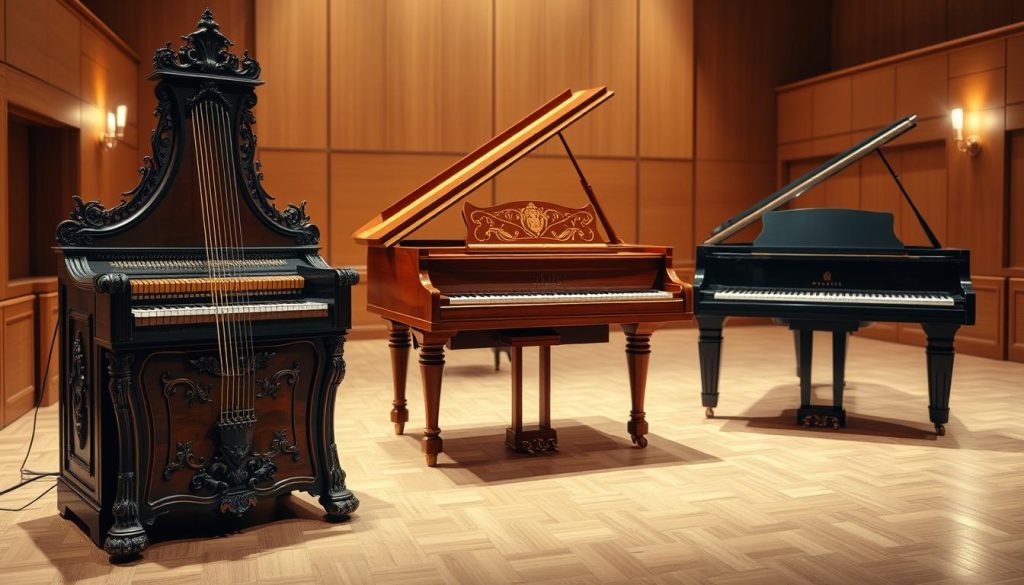
Performer Preferences
The touch and resistance of the keys vary. Some musicians seek subtle articulation; others prefer the crescendo in intensity made possible by hammers.
- Practical choice: innovations in instrument making, whether involving wood or metal, alter the timbre and volume.
- Artistic choice: personal preference guides tone color and playing style.
To explore the history further or choose according to your own playing practice, see the origin of the piano and advice on choosing an instrument.
Conclusion
In conclusion, the evolution of keyboard instruments illustrates a long dialogue between tradition and innovation. The modern piano embodies power and projection, while the historical register favors clarity and finesse. These differences shape the choice of keyboard and guide interpretation.
The history of music shows that instruments have continually redefined expressive possibilities. Historical studies, including the famous piano or harpsichord debate, shed light on these developments and the possible nuances.
Ultimately, choosing an instrument remains an artistic decision. It enriches the interpretation of works and inspires musicians. Preserving this heritage keeps the tradition alive and broadens our understanding of sonic textures.