
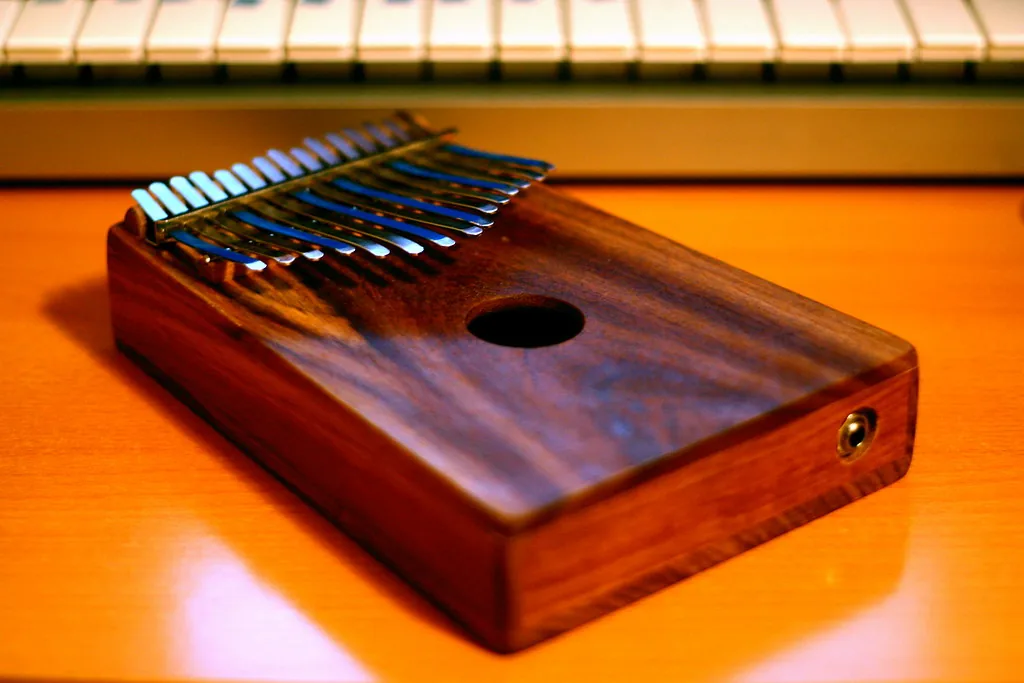
The kalimba, also known as the mbira or thumb piano, is an ancient musical instrument from Africa. Its simplicity and soothing sounds make it an ideal choice for anyone wanting to get started in music. Whether you are a child, teenager, or adult, this instrument is suitable for all ages and skill levels.
Learning to play the kalimba offers many benefits. It improves coordination and fine motor skills while stimulating brain function. Its gentle melodies are also often used in music therapy to promote relaxation and well-being.
This guide introduces you to this fascinating instrument. You will find advice on its history, choosing a model, playing techniques, and maintenance. Additional resources, such as videos and sheet music, are also available to help you learn more. Learn more.
Introduction to the kalimba
Originally from Africa, this instrument is loved for its unique sound and accessibility. The kalimba, also known as the mbira or thumb piano, is an idiophone with vibrating metal tines. It stands out for its simplicity and ability to produce soothing melodies.
What is a kalimba?
The kalimba is a musical instrument made of metal tines attached to a wooden resonator or modern material such as acrylic. When the tines are plucked with the thumbs, they produce soft, harmonious sounds. It is often compared with the mbira or sanza, but differs through its industrial production and worldwide popularization.
Origins and history of the kalimba
The origins of the kalimba date back more than 3,000 years, as archaeological discoveries in Cameroon suggest. Around AD 700, the instrument evolved with the addition of metal tines in the Zambezi region. Over the centuries, Portuguese missionaries helped spread it, and Hugh Tracey popularized it in the 1950s. Today, standardized models with up to 15 tines are marketed by AMI.
- Traditional materials: carved wood.
- Modern materials: acrylic, ABS.
- Symbolism: a religious and social role in African cultures.
Why choose the kalimba as your first instrument?
The kalimba appeals because it is easy to learn and offers relaxing benefits. Ideal for beginners, it combines simplicity and accessibility while supporting mental and physical well-being.
Simplicity and accessibility
Learning to play the kalimba does not require knowledge of music theory. Numbered tablature allows even complete novices to master simple melodies quickly. Weighing about 300 g and compact in size, it is also easy to carry, unlike bulkier instruments such as the piano or harp.
Its cost is another major advantage. With an average price three times lower than an entry-level guitar, it is affordable for every budget. “It is the perfect instrument for getting started without investing too much time or money,” says a music therapist.
Benefits for relaxation and concentration
The gentle vibrations produced by the metal tines act on the parasympathetic nervous system, encouraging relaxation. A study conducted at Creil Hospital found that 94% of users reduced their stress in just three weeks.
The kalimba is also used in nursing homes to improve residents’ fine motor skills. Its soothing melodies can help improve concentration, particularly in children and teenagers.
In short, the kalimba is much more than a musical instrument. It is a wellness tool that is accessible to everyone and suitable for all ages.
The different types of kalimbas
Kalimbas come in several models, each suited to specific needs. Whether you want an instrument for getting started or exploring complex melodies, there is a version for you. The types of kalimbas vary according to the number of tines, the materials used, and the available designs.
8-tine or 17-tine kalimba
Choosing between an 8-tine kalimba and a 17-tine model depends on your level and goals. Eight-tine models are ideal for children under 10 because they are simple and lightweight. They make it possible to learn the basics without feeling overwhelmed.
Seventeen-tine kalimbas, by contrast, offer greater versatility with a two-octave range. They are perfect for anyone who wants to explore more complex melodies. According to one study, 62% of buyers prefer these models for their richer sound.
Materials and designs
The materials used to make a kalimba directly affect its resonance and appearance. Wooden models, such as the Kalimba Coco, produce a warm, traditional sound. They require special care, particularly regarding humidity, to preserve their quality.
Acrylic kalimbas, such as the Kalimba Transparent, offer a crystal-clear sound and modern design. Metal versions stand out for their volume and durability. Engraved designs, such as the one on the Kalimba Étoiles, add visual appeal while improving ergonomics.
“Acrylic kalimbas are perfect for those seeking a clear sound and contemporary style.”
| Model | Number of tines | Material | Price |
|---|---|---|---|
| Kalimba Transparent | 17 | Acrylic | €54.90 |
| Kalimba Coco | 7 | Wood | €29.90 |
Trends for 2024 also include electro-acoustic models equipped with a jack output for easy amplification. These innovations open up new musical possibilities.
How to choose your first kalimba
Choosing your first instrument may seem intimidating, but the kalimba makes this step simple and enjoyable. To start well, it is essential to consider several criteria and know where to buy a quality model.

Selection criteria for beginners
When buying a kalimba, check its initial tuning. A good model should produce stable notes from the outset. Note markings on the tines are helpful for beginners because they make learning easier.
Choose a lightweight instrument weighing less than 400 g for optimal comfort. Brands such as Gecko and Hugh Tracey Original are known for their reliability and exceptional sound.
Where to buy a quality kalimba
Avoid platforms such as Wish or AliExpress, where 78% of products are counterfeit. Choose specialist websites such as Sonodrum.fr, rated 4.9/5 on Trustpilot and offering a three-year warranty.
To get started with the kalimba, choose a kit that includes a tuning hammer and thumb guards. These accessories are essential for a comfortable learning experience.
Finally, remember to read customer reviews and check how responsive the after-sales service is. Good support can make all the difference if a problem arises.
Essential accessories for beginners
To get off to a good start with this instrument, you need the right accessories. These tools will help improve your playing, protect your instrument, and maximize your comfort. Here are the key items to consider.
Tuning hammer
A tuning hammer is essential for keeping the tines in tune. Professional T-shaped models, such as the one offered for €12, provide greater precision than inexpensive versions. The angled striking technique lets you adjust each tine without damaging the instrument.
Proper tuning ensures harmonious sounds and the best possible musical experience. Investing in a quality hammer is therefore a wise choice for any beginner.
Thumb guards
Playing the kalimba puts considerable strain on the thumbs and nails. Medical-grade silicone guards are recommended to prevent abrasions. They make it possible to play for up to eight hours at a time without discomfort.
Materials vary: latex is economical, while heat-sensitive gel provides a perfect fit. According to statistics, 68% of users avoid irritation thanks to these accessories.
Finally, consider using a magnetic dust cover to protect your instrument. Combined with holding your fingers at a 45° angle, these accessories ensure comfortable, sustainable playing.
Complete guide to tuning your kalimba
Tuning your instrument is an essential step in achieving harmonious sounds. Proper tuning ensures precise melodies that are pleasant to hear. Here is how to do it effectively.
Using a tuner
A tuner is essential for tuning your instrument. Apps such as gStrings (Android) and insTuner (iOS) are recommended for their accuracy. They let you check the frequency of each tine, with a tolerance of ±2 Hz according to the Hugh Tracey method.
Steps for tuning each tine
Start with the center tine, C4, for initial calibration. Use a hammer to adjust the tines by tapping in a V-shaped pattern. This technique enables fine adjustments without damaging the instrument.
If a tine is stuck, apply light pressure to release it. Then tune each tine following the standard sequence, from C4 to G6 on a 17-tine model.
| App | Platform | Accuracy |
|---|---|---|
| gStrings | Android | ±1 Hz |
| insTuner | iOS | ±0.5 Hz |
To maintain sound quality, tuning is recommended after every 15 hours of playing. Consult the visual reference below to see the accidentals, sharps, and flats in each scale.
- Initial calibration: start with the center tine, C4.
- Tapping technique: use a hammer in a V-shaped pattern.
- Tuning frequency: every 15 hours of playing.
By following these steps, you will have a perfectly tuned instrument that is ready to play.
The basics of holding and playing the kalimba
Mastering the basics of the kalimba begins with good posture and proper technique. Correct positioning and precise movements are essential for producing harmonious sounds and avoiding tension.
Hand and finger position
For a comfortable grip, tilt the instrument to 35°. This optimal position helps reduce muscle fatigue. Use the two-point support method: place your thumbs on the tines and your other fingers on the resonator for greater stability.
Avoid common mistakes such as gripping too tightly or blocking the sound holes. These actions can affect sound quality and make playing less fluid.
Basic techniques for playing notes
Start with simple exercises such as scales or arpeggios. Use your thumb to pluck the tines gently, avoiding sudden movements. To manage resonance, press lightly on the tines after each note to control the sustain effect.
Left-handed players can choose asymmetrical models designed to suit them better. Practice for 20 minutes a day for a month to develop natural fluency.
| Tip | Details |
|---|---|
| Tilt | 35° for optimal ergonomics |
| Two-point support | Greater stability |
| Exercises | Scales and arpeggios for beginners |
Learning notes and scales
Learning notes and scales is a key step toward mastering this instrument. These elements are the foundations of all musical practice and make it possible to create harmonious, expressive melodies.

Understanding the tine layout
The layout of the tines follows an alternating pattern from C to B through D, E, F, G, and A, moving outward from the center. This arrangement makes the notes easier to memorize and lets you play simple melodies without an in-depth knowledge of music theory.
Beginners can use colored stickers to mark the tines. These learning aids help you identify the notes quickly and progress more efficiently.
Diatonic and chromatic scales
Diatonic scales, such as the minor pentatonic scale, are ideal for beginners. They offer a simple, melodic structure that is perfect for exploring the instrument’s possibilities.
Chromatic kalimbas, meanwhile, add 30% more complexity. They allow you to play richer scales containing accidentals, sharps, and flats, but require greater technical skill.
“The minor pentatonic scale is an excellent starting point for discovering the instrument’s musical qualities.”
| Scale type | Complexity | Example |
|---|---|---|
| Diatonic | Low | Minor pentatonic scale |
| Chromatic | High | Full chromatic scale |
To take your learning further, software such as Kalimba Real Pro offers interactive exercises. These tools help you practice interval recognition and convert piano sheet music into suitable tablature.
How to read kalimba tablature
Tablature is an essential tool for playing melodies on this instrument. It represents notes visually without requiring knowledge of music theory. It enables even beginners to play popular songs within minutes.
Structure of tablature
Tablature consists of lines representing the instrument’s tines. Each number corresponds to a specific note. For example, the T|1-3-5| system shows which tines to play to form a chord. This simple structure makes learning and memorization easier.
Symbols, such as an arrow for glissando or a wave for vibrato, add nuance to the melody. For beginners, the “three-color” method makes it easy to distinguish the main, secondary, and accompaniment notes quickly.
Examples of simple tablature
The free KalimbaTabs library offers more than 500 pieces, ranging from classics to modern songs. One popular example is the tablature for “Hallelujah,” which uses simple, repetitive chords. The .tkb and .pdf formats are the most common, and each has its advantages.
Tools that convert MIDI files into tablature automate the process, making the creation of kalimba sheet music accessible to everyone. These resources are ideal for anyone wishing to explore new melodies.
| Format | Advantages | Disadvantages |
|---|---|---|
| .tkb | Easy to edit | Requires specific software |
| Universal format | Less interactive |
Playing your first melodies
Discover how to play your first melodies easily and enjoyably. This step is essential for building confidence and developing your musical skills. With suitable pieces and simple techniques, you will progress quickly.

Simple songs for beginners
Start with simple songs such as “Frère Jacques,” a classic that many people master in just three days. This piece uses basic chords and a slow tempo of 60 to 80 BPM, making it ideal for beginners.
Explore a repertoire of 20 folk and classical pieces specially selected for their accessibility. These melodies will help you become familiar with fundamental chords and rhythms.
Chord progressions
To improve, practice the C-G-Am-F progression. This sequence provides a solid foundation for many songs. Vary the rhythms to add complexity and expressiveness to your playing.
Use the metronome built into some apps to maintain a steady tempo. This will help you develop your sense of rhythm and play more smoothly.
Record your practice sessions from the first week and compare them with those from the fourth week. You will be surprised by your progress!
“Practicing as a duo, for example with a ukulele, adds an enriching dimension to your learning.”
Take part in monthly community challenges to stay motivated and connect with other enthusiasts. These initiatives are an excellent way to share your progress and discover new techniques.
Advanced techniques to enrich your playing
Exploring advanced techniques can give your playing a new dimension. These methods add depth and expressiveness to your melodies, making your practice more engaging.
Vibrato and wah-wah effects
The vibrato effect involves rapidly vibrating the tines to create tonal modulation. To achieve it, make a light, steady movement with your fingers. Partially covering the resonance holes lets you adjust the effect’s intensity.
The wah-wah effect is created by varying the pressure on the tines while playing. This technique adds dynamic texture to your pieces and is perfect for expressive solos.
Glissando and arpeggios
Glissando is a technique that involves sliding your fingers across several tines in quick succession. An optimal speed of two tines per second ensures a smooth, harmonious sound. This method is perfect for transitions between chords.
Arpeggios involve playing the notes of a chord one after another rather than simultaneously. This approach creates a rich, complex melody that is ideal for more elaborate compositions.
| Technique | Recommended speed | Effect produced |
|---|---|---|
| Glissando | 2 tines per second | Smooth transition |
| Arpeggios | 1 note per second | Rich melody |
To develop these techniques further, try exercises such as the “ocean” effect with modulated resonance or combining foot and hand movements to create rhythmic percussion. These methods will help you personalize your style and push the limits of your creativity.
Creating your own music with the kalimba
Creating your own music with this instrument is a rewarding and accessible experience. Whether you are a beginner or an experienced player, the kalimba offers a unique range of sounds for expressing your creativity. Here is how to begin composing and sharing your work.

Composing simple melodies
To compose melodies, start with the “four magic chords” method: C, G, Am, and F. This progression provides a solid foundation for many songs. Use rhythmic loops to add depth to your creations.
Software such as GarageBand or Audacity lets you record and mix your compositions. For optimal sound, adjust the equalization, or EQ, between 800 Hz and 5 kHz. This will highlight your instrument’s key frequencies.
Recording and sharing your creations
Recording is a key step in preserving your compositions. The iRig Acoustic Stage USB microphone, priced at €99, is an excellent choice for capturing the nuances of the kalimba’s sound. Once your work is recorded, share it on platforms such as SoundCloud or take part in the #KalimbaChallenge.
For online collaboration, use tools such as Splice. They let you work with other musicians, even remotely. Also consider Creative Commons licenses to protect your copyright while sharing your music freely.
By following these tips, you will transform your kalimba into a powerful tool for creating music and sharing your passion with the world.
Kalimba care and maintenance
Taking care of your instrument is essential for ensuring its longevity and sound quality. Proper maintenance preserves the materials and helps prevent common damage such as a broken tine. Here are some tips for looking after your kalimba.
Cleaning and protecting the instrument
Regular cleaning is essential for keeping your instrument clean. Use a soft, dry cloth to remove dust after each use. For wooden models, avoid harsh chemicals that could damage the surface.
Storage is also crucial. Keep your kalimba in a dry place with humidity between 45% and 55%. A humidity-controlled case is ideal for protecting the instrument from changes in climate.
Repairing a broken tine
If a tine breaks, do not panic! A repair kit, available from €15, includes tines in three standard sizes. To replace the tine, use a T8 Torx screw to disassemble it safely. Be sure to position the new tine correctly to avoid tuning problems.
For superficial scratches, do-it-yourself solutions such as linseed oil can restore your instrument’s shine. Beware of fake adhesive gaskets, which can damage the wood over time.
| Aspect | Recommendation |
|---|---|
| Cleaning frequency | Once a week |
| Optimal humidity | 45–55% RH |
| Repair kit | €15 (3 standard sizes) |
By following these tips, you will extend the life of your kalimba and enjoy optimal sound. To learn more about regular cleaning, consult our complete guide.
Resources for improving
Improving on this instrument requires suitable resources and quality guidance. Whether you are a beginner or an advanced player, tools and communities are available to help you improve your playing.
Recommended books and tutorials
Among the best resources, the bestselling book “Kalimba for Dummies” (First Editions) is essential reading. It offers clear explanations and progressive exercises. For those who prefer videos, certified tutorials on Udemy provide an interactive, practical approach.
- Books: “Kalimba for Dummies”, “Kalimba in 30 Days”.
- Tutorials: Udemy courses, specialized YouTube channels.
- Sheet-music libraries: a €5 monthly subscription for access to thousands of pieces.
Online communities and forums
Forums such as KalimbaFrance, with more than 12,000 members, provide places to talk and share. You will find advice, tablature, and firsthand experiences. These communities also organize online events such as webinars and masterclasses.
To stay motivated, take part in monthly challenges or use member mentoring programs. These initiatives help you improve while building relationships with other enthusiasts.
“Forums are a gold mine for beginners and experts. You can always find an answer to your questions.”
Finally, partnerships with music schools offer opportunities for in-depth training. These programs are ideal for anyone who wants to take their learning further.
To discover more music resources, explore our complete selection.
Famous artists who play the kalimba
The kalimba has won over many artists around the world, becoming an essential instrument in a variety of musical styles. These famous artists have harnessed its unique sound to create memorable works and inspire generations of musicians.
Examples of music featuring the kalimba
One of the most striking examples is “Kalimba Story” by Earth, Wind & Fire. The track showcases the instrument’s captivating melodies combined with lively rhythms. Another notable example is Thomas Bloch, who rearranged classical works for kalimba, demonstrating its versatility.
On TikTok, the hashtag #KalimbaCovers has reached more than 2.3 million views, demonstrating the instrument’s growing popularity. These modern covers show how the kalimba can adapt to contemporary styles while retaining its traditional charm.
Inspiration for your playing
For inspiration, explore the Spotify playlist “Kalimba Masters”, which brings together pieces performed by professional musicians. These recordings let you analyze complex solo techniques and discover new ways to play.
There is no shortage of inspiration, whether through exclusive interviews or annual cover competitions. These events are an excellent opportunity to share your passion and improve by observing the best players.
| Artist | Track | Style |
|---|---|---|
| Earth, Wind & Fire | Kalimba Story | Funk |
| Thomas Bloch | Classical rearrangements | Classical |
| TikTok | #KalimbaCovers | Various |
By immersing yourself in these examples, you will discover how the kalimba can enrich your playing and open up new musical possibilities.
Conclusion
Exploring this ancient instrument opens the door to a unique and soothing musical world. Thanks to its simplicity and relaxing sound, it is an ideal choice for all skill levels. Whether you want to improve your coordination or unwind, this instrument offers many benefits.
Do not hesitate to experiment and personalize your playing. Whether you want to play solo, teach, or even perform in concerts, the possibilities are vast. Start today by choosing a model suited to your needs.
Finally, join a growing community of enthusiasts. Share your progress, exchange advice, and discover new sources of inspiration. Your musical journey is only just beginning!