

Modular synthesizers are increasingly valued for their analog sound and the control they provide over tone. However, knowing how to use them to their full potential is crucial. This guide explores the practical applications of modular sound synthesis. It also examines the components and techniques that will help you explore this fascinating world and unleash your unlimited creative potential.
The modular music system has undergone a revolution since the 1960s. The first commercial modular synthesizer was released in 1963. These instruments became increasingly popular, even surpassing the digital synthesizers of the 1980s. Their sound-production flexibility and customizability make them perfect tools for musicians. They enable unlimited exploration of sonic textures and sound experimentation.
Their scalability and wide variety of modules make them essential electronic music tools. Modular synthesizers are used in every genre, from electronic music to rock. Their hands-on approach and sound quality make them excellent choices for musicians. They provide complete flexibility and control over sound production.
What is a modular synthesizer?
A modular synthesizer is a unique electronic instrument. It consists of modules that work together to create a variety of sounds. Each module has a specific function, providing extensive flexibility and numerous customization options.
Interconnected modules
The modules in a modular synthesizer, such as oscillators and filters, are connected by cables. These connections allow musicians to create custom sound-synthesis configurations. They can therefore explore the endless possibilities offered by these interconnected modules.
| Key modules | Functions |
|---|---|
| Oscillators | Basic sound generators |
| Filters | Modify the harmonics of sounds |
| Amplifiers | Control volume and dynamics |
| Modulators | Apply modulation (tremolo, vibrato, etc.) |
This flexible interconnection between modules enables unlimited sound customization. Artists can therefore create unique, original sounds through modular synthesis.
Flexibility and customization
Choosing a modular synthesizer opens the door to unprecedented flexibility and customization. Unlike traditional synthesizers, a modular synthesizer lets you shape your sound exactly as you wish.
This flexibility of modular synthesis allows you to add, remove, or modify modules. This provides access to unlimited creative potential. Every addition or adjustment helps create a unique sound, making the modular synthesizer an extension of your artistic expression.
Instrument customization is essential with a modular synthesizer. You control your synthesizer’s configuration and can therefore create original sounds. This synthesizer scalability opens up unlimited possibilities for exploring new sonic directions.
“With a modular synthesizer, every creation is a unique exploration—a true sonic signature.”
The modular synthesizer is suitable for everyone, whether you are an experienced musician or an enthusiastic beginner. It allows you to push the boundaries of your creativity and bring your boldest ideas to life.
The benefits of a modular synthesizer
Choosing a modular synthesizer means choosing the freedom to create without limits. These instruments provide incredible flexibility and customization. They allow musicians to discover unexplored sonic territories. Each module has a specific function, offering countless possibilities for connections and sound creation.
The main benefit of a modular synthesizer is the ability to design your own custom instrument. It differs from traditional synthesizers by offering complete customization. You can personalize the arrangement of the modules and create unique sounds. This freedom allows artists to break free from constraints and explore sound without limits.
- Flexibility and instrument customization
- Endless sound-creation possibilities
- Freedom of artistic expression
- Progressive learning and mastery of the modules
The modular synthesizer is perfectly suited to musicians of all levels. It helps develop creativity and enrich one’s sonic world. It is a tool for exploration and artistic fulfillment.
Understanding the key components
Oscillators, filters, amplifiers, and modulators are essential parts of a modular synthesizer. They make it possible to create unique sounds. Understanding their functions is crucial to using your instrument to its full potential.
Oscillators: the sound source
Oscillators are the first elements to produce sound. They offer different waveforms, such as sine or square waves. This creates the basic timbre.
Filters: shaping the sound spectrum
Filters modify the sound by adjusting frequencies. They can attenuate or emphasize certain parts of the sound. This changes its timbre.
Amplifiers: controlling volume
Amplifiers regulate the sound’s volume. They work with envelopes to vary the volume. This adds dynamics to the sound.
Modulators: adding movement
Modulators add movement to the sound. They use LFOs or envelopes to animate it. This creates interesting textures.
Understanding these elements is essential to using a modular synthesizer effectively. It allows you to get the most out of the instrument.
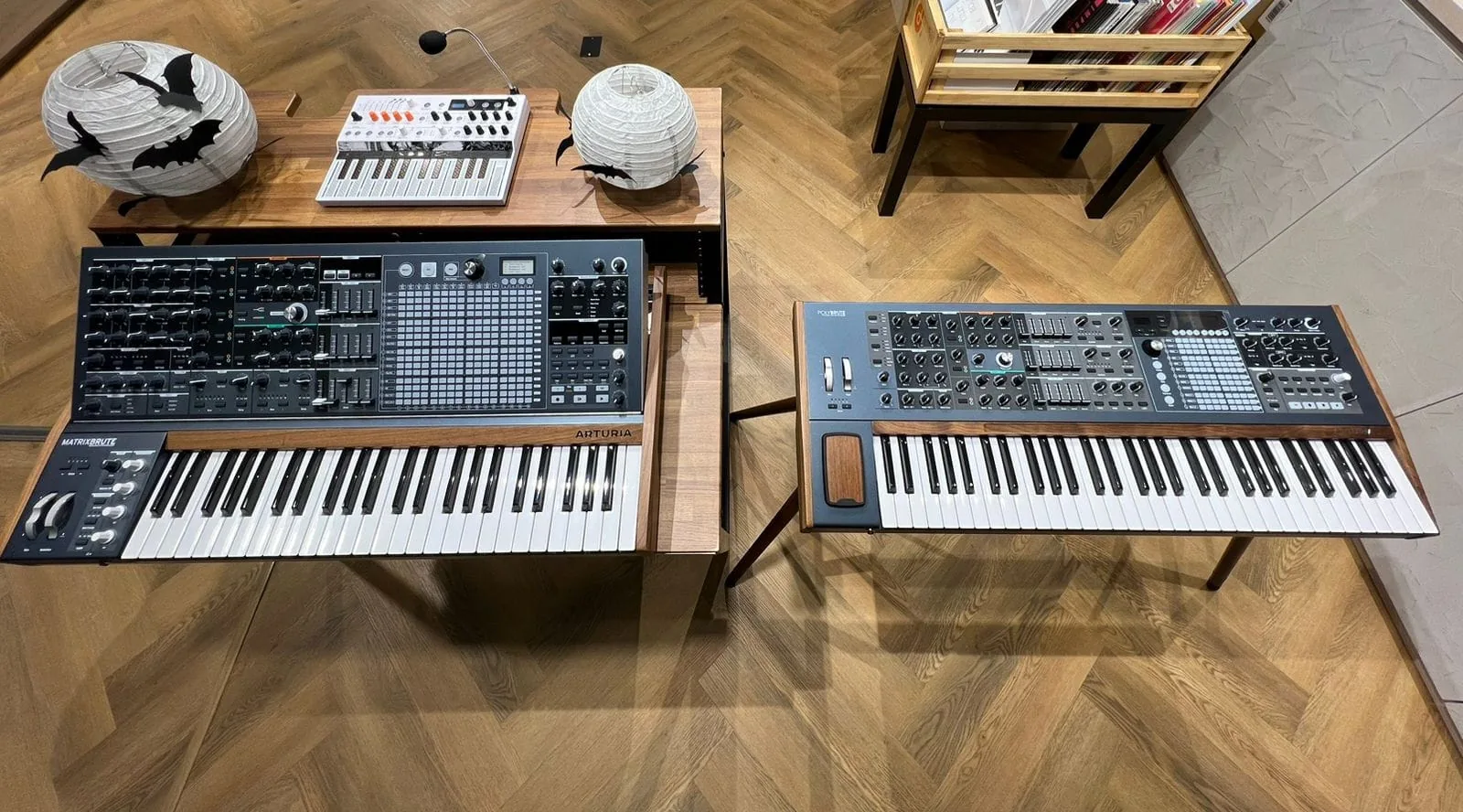
| Component | Role | Examples |
|---|---|---|
| Oscillators | Generation of the basic sound | Sine, square, and triangle waves |
| Filters | Modification of the sound spectrum | Low-pass, high-pass, band-pass |
| Amplifiers | Volume control | Amplitude envelopes |
| Modulators | Addition of movement and variation | LFOs, envelopes |
By combining these components creatively, it is possible to produce unique sounds. The modular synthesizer thus becomes a valuable tool for musicians.
In-depth sound exploration
Choosing a modular synthesizer is a major step toward sound exploration, experimentation, and innovation. Every adjustment or module connection creates new possibilities. It is an endless journey through the world of synthesis—a quest for new sonic ideas.
With a modular synthesizer, the musician becomes a true creator. They shape their instrument to realize their musical dreams. In-depth sound exploration becomes exciting and reveals unexpected creative potential.
“Every new module connection or adjustment made on a modular synthesizer has the power to unleash a genuine explosion of musical inspiration.”
The modular synthesizer makes it possible to discover new textures and create unique soundscapes. It provides an unlimited field for sound exploration. Musicians can thus push the boundaries of their creativity and undertake bold experiments.
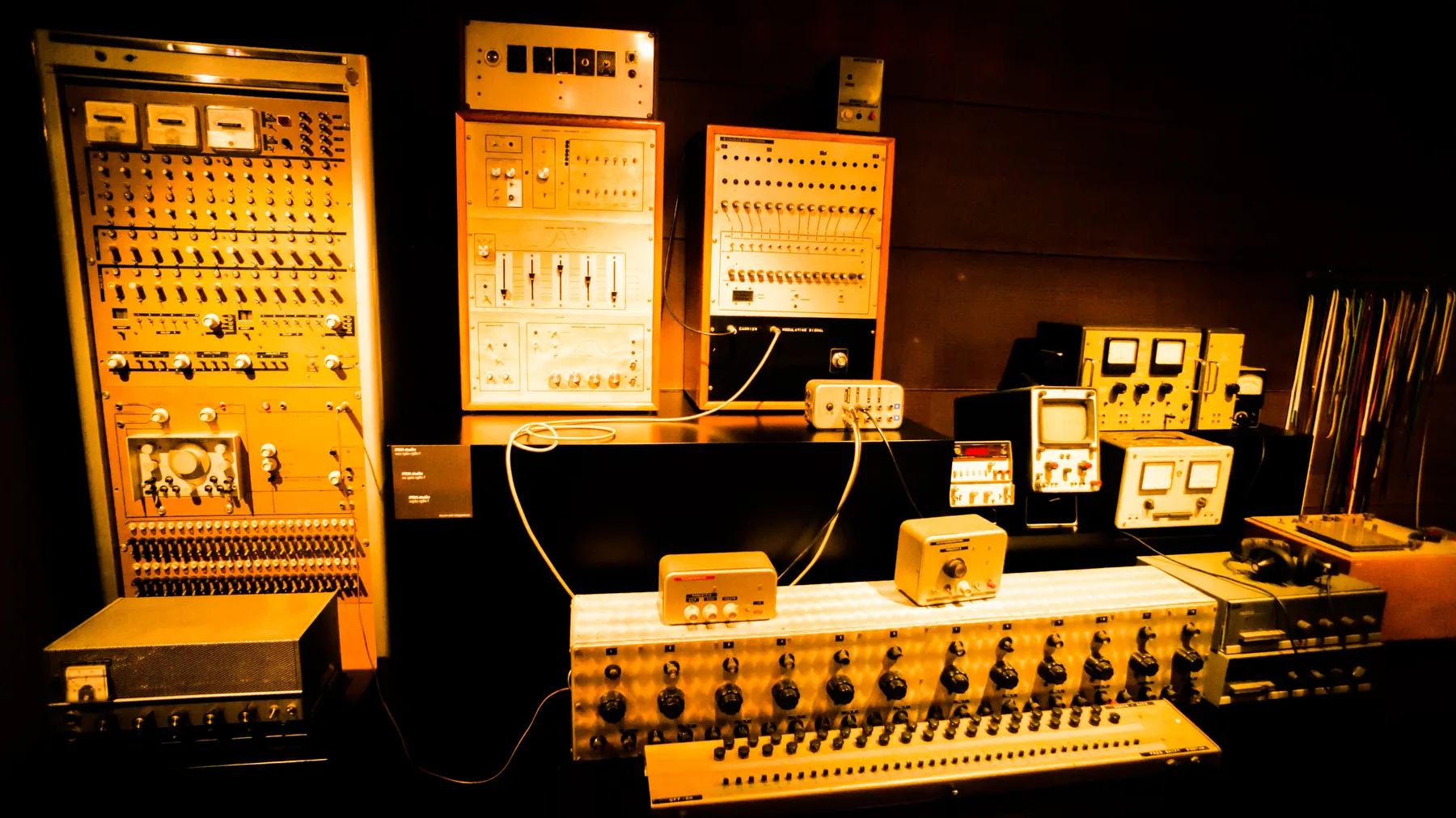
In-depth sound exploration with a modular synthesizer is a journey of creative discovery for passionate musicians. It is also a means of sonic innovation.
Conclusion
Choosing a modular synthesizer means choosing freedom and creativity. This unique instrument allows musicians to create their own sound. They can explore new territories and push the boundaries of music.
The modular synthesizer is more than a simple tool. It is an extension of artistic expression. It encourages experimentation and innovation.
It is perfectly suited to musicians of all levels. Whether you are a beginner or an expert, it opens the door to a rich sonic universe. By learning to use its components, you can bring your boldest ideas to life.
The end of this modular-synthesizer adventure is only the beginning. Let your creativity speak. Explore the instrument’s possibilities and push the boundaries of music. Your modular synthesizer reflects your artistic vision and stands ready to accompany you on your adventures.
FAQ
What is a modular synthesizer?
What are the benefits of a modular synthesizer?
What are the main components of a modular synthesizer?
How can you explore the creative potential of a modular synthesizer?
Sources
- https://artsandculture.google.com/story/agUh-zsKII1HOQ
- https://www.pcc.edu/ccog/muc/201/
- https://www.mathematik.uni-marburg.de/~thormae/lectures/mmk/mmk_5_1_eng_web.html
- https://web.uvic.ca/~aschloss/course_mat/MU307/MU307%20Labs/Lab3_BUCHLA/Suzanne%20Ciani/Pinch_Trocco.pdf
- https://www.csun.edu/~dwh50750/IntroToMusicTech/Ch11-synthesis_model.html
- https://pdm.lsupathways.org/3_audio/2_synthsandmusic/1_lesson_1/envelopes/
- https://web.mit.edu/6.101/www/s2017/projects/dominikm_Project_Final_Report.pdf
- https://cmtext.com/synthesis/chapter4_synthesis_concepts2.php
- https://mural.maynoothuniversity.ie/id/eprint/14193/1/JT_application.pdf
- https://www.moma.org/explore/inside_out/2015/03/10/sounds-from-outer-space-the-moog-at-moma/
- https://webarchive.ars.electronica.art/en/archiv_files/19922/E1992b_021.pdf
- https://pages.github.coecis.cornell.edu/tc575/tc575_rm722_raf269/index.html
- https://www.musicradar.com/music-tech/software-apps/fantastic-free-plugins-and-how-to-use-them-full-bucket-fb-3300
- https://sirismm.si.edu/EADpdfs/NMAH.AC.0640.pdf