
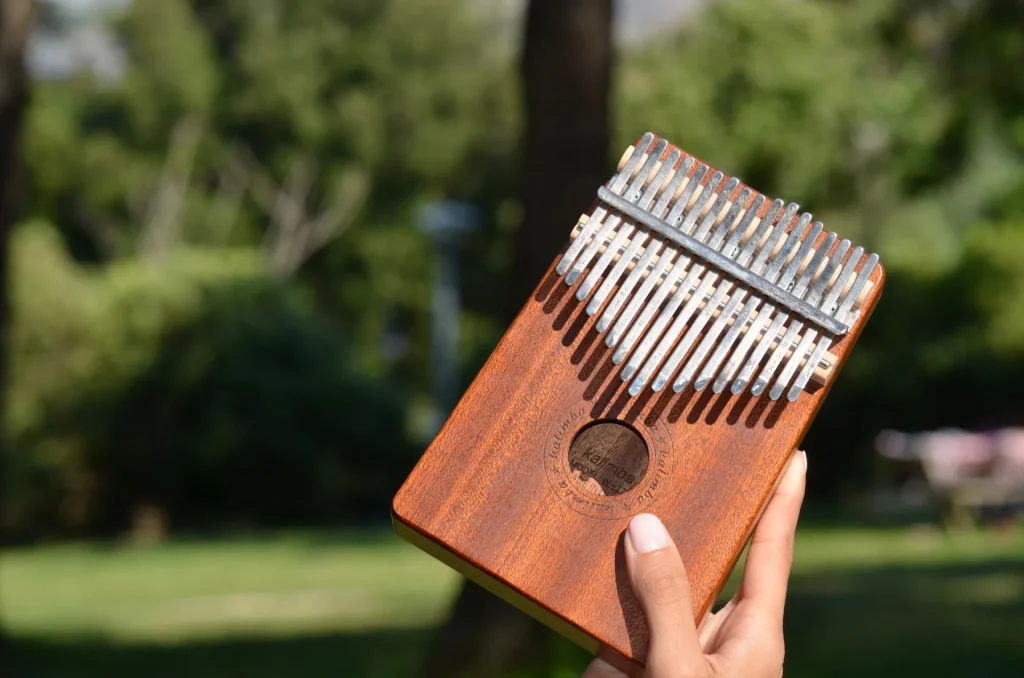
The kalimba, an ancient musical instrument, is increasingly used to accompany moments of relaxation and concentration. Its simplicity and soothing melodies make it an ideal tool for meditation.
The sound vibrations produced by the kalimba have scientifically proven effects on reducing stress and improving well-being. This article shows you how to incorporate this instrument into your daily practice.
You will discover advice on choosing suitable melodies, basic playing techniques, and tips for creating a space that encourages relaxation. Whether you are a beginner or an experienced player, the kalimba is accessible to everyone.
Introduction to the kalimba as a meditation instrument
Originating in Africa, this instrument produces unique sounds that encourage relaxation. The kalimba, also known as a thumb piano, is part of Southern Africa’s cultural heritage. With its metal tines and wooden resonator, it produces crystal-clear melodies that calm the mind.
What is a kalimba?
The kalimba is an African instrument distinguished by its “starry sky” shape. Its naturally tuned metal tines vibrate to create soft, harmonious sounds. Compact and portable, it is easy to carry, making it an ideal companion for moments of relaxation.
Why use the kalimba for meditation?
The kalimba’s sound vibrations generate alpha waves that promote relaxation. A yoga teacher explains:
“The kalimba helps me create a serene atmosphere for my sessions. Its soothing sounds promote concentration and relaxation.”
Compared with other instruments such as Tibetan singing bowls or the handpan, the kalimba stands out for its simplicity and accessibility.
To learn more about the history and characteristics of this African instrument, read our complete guide.
Choosing the right melodies for meditation
For an optimal relaxation experience, the choice of melodies plays a key role. The sounds you produce with your instrument directly influence your state of mind. The right selection can transform your session into a moment of deep relaxation.

Characteristics of a soothing melody
The ideal melodies for meditation have a slow tempo, generally between 60 and 80 BPM. They often use pentatonic scales, which create harmonious, soothing intervals. The C major scale is an excellent choice for beginners because it offers simple notes that are pleasant to the ear.
Beginners should focus on repetitive sequences of three to five notes. This makes practice easier and allows you to concentrate on your breathing. Apps such as “Smart Kalimba” can help you practise effectively.
Examples of pieces suitable for meditation
Some compositions are particularly well suited to relaxation music. For example, “Weightless” by Marconi Union is often cited for its calming effects. You can also adapt classics such as “Hallelujah” or film themes such as the Harry Potter theme, using tablature available online.
Finally, remember the importance of tuning your instrument regularly. A tuner will help you maintain accurate, harmonious notes, which are essential for successful practice.
Basic techniques for playing the kalimba
Mastering the basics of the kalimba is essential for fully exploring its musical potential. Whether you are a beginner or want to refine your playing, these tips will guide you step by step.
How to hold and handle the kalimba
Hand position is crucial for playing correctly. Place your thumbs on the metal tines while wrapping your fingers around the body. This technique allows you to produce clear, harmonious sounds.
Be careful not to block the resonance holes on the back of the instrument. This ensures optimal vibration and a rich sound. For a comfortable grip, use silicone nail protectors during extended sessions.
The first notes to learn
Start at the centre of the instrument, usually with the note C. This is an excellent foundation for exploring the other notes. Practise ascending and descending scales to become familiar with the pitches.
A simple sequence such as C–E–G can create a hypnotic bass line that is ideal for relaxation. To deepen your knowledge, read this complete learning guide to playing the kalimba.
| Note | Position | Tip |
|---|---|---|
| C | Centre | Start with this note to become familiar with the instrument. |
| E | To the right of C | Ideal for creating simple harmonies. |
| G | To the right of E | Completes the C–E–G sequence. |
Creating an atmosphere conducive to meditation
Meditation becomes deeper when the atmosphere is carefully prepared. A harmonious space and suitable sounds promote an optimal state of relaxation. Here is how to optimise your surroundings for a successful practice.
The importance of your surroundings
A dedicated meditation corner can transform your experience. Use comfortable cushions, soft lighting, and plants to create a calming atmosphere. These elements help you reach a state of mindfulness more quickly.

Using the kalimba to accompany your breathing
The kalimba can perfectly synchronise your sounds with your breathing. Inhale on the note C and exhale on the note G. This simple technique strengthens the connection between body and mind.
For a deeper effect, use the holes on the back of the instrument to create vibrato. Cover them lightly as you exhale to modulate the sounds. This method, known as “wah-wah,” enriches your practice.
- Set up a space with accessories such as an anti-vibration stand and a portable recorder.
- Combine the kalimba with Tibetan singing bowls to enrich the sound frequencies.
- Practise for 10 minutes every day to improve your breathing and concentration.
“Since I started using the kalimba to synchronise my breathing, my sessions have become deeper and more soothing.” – User testimonial
Kalimba meditation song ideas
Exploring melodies suited to the kalimba can enrich your relaxation practice. Whether you are a beginner or an advanced player, this instrument offers a varied sonic palette to accompany your moments of relaxation.

Simple melodies for beginners
To get started, choose pieces with simple note sequences. Compositions such as “Om Mani Padme Hum” or “Gymnopédie No. 1” are ideal. These melodies use pentatonic scales, which are perfect for creating a soothing atmosphere.
You can find free tablature on platforms such as YouTube, particularly on the Tuto Kalimba channel. These resources will guide you step by step so that you can play the kalimba with ease.
More complex compositions for advanced players
Once you have mastered the basics, explore progressions that use glissando or seventh chords. These techniques add depth to your playing. Incorporate triple-metre rhythms to vary the patterns and enrich your experience.
Personalise your melodies by experimenting with micro-intervals. This allows you to create unique sounds suited to your style. For inspiration, explore Spotify playlists dedicated to therapeutic kalimba music.
| Piece | Level | Tip |
|---|---|---|
| Om Mani Padme Hum | Beginner | Ideal for deep relaxation. |
| Gymnopédie No. 1 | Beginner | Uses simple, repetitive notes. |
| Seventh-chord glissando | Advanced | Adds complexity to your playing. |
Conclusion
The sound journey offered by this unique instrument opens the door to deep relaxation. The benefits of this practice are scientifically proven, with cortisol reductions of up to 25%. A recent study confirms these positive effects on well-being.
Feel free to experiment without imposing technical constraints on yourself. Use accessories such as a tuning hammer or tuning apps to optimise your experience. Share your creations on dedicated forums and draw inspiration from other enthusiasts.
To deepen your knowledge, take part in our free webinar on advanced techniques. This event will help you reach a state of even deeper relaxation through this fascinating instrument.