
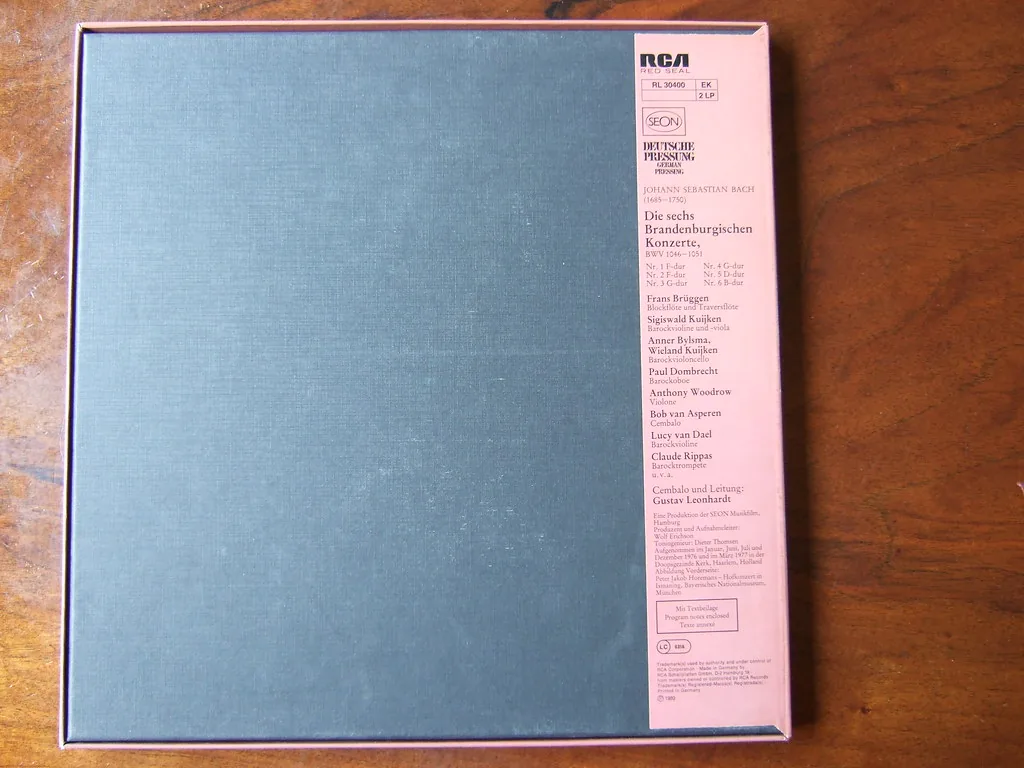
The harpsichord remains at the heart of early music, both for its accompanying role and its polyphonic richness.
Interviewed at the Sablé Festival, harpsichordist Élisabeth Geiger stresses the importance of tuning in revealing this instrument’s distinctive qualities.
Trained at the Strasbourg Regional National Conservatory, she has performed with renowned ensembles such as Le Concert Spirituel, demonstrating the technical precision required.
This plucked-string instrument offers unique clarity. It connects the orchestral voices and illuminates the basso continuo.
To learn more, consult a detailed article on the harpsichord, covering its history, construction and uses.
History and origins of the harpsichord
The origins of this instrument date back to antiquity, when the monochord was already used in music education.
Monochord ancestors
The Greeks and Romans used simple models to study pitch.
These early tools laid the theoretical foundations that later influenced keyboard construction.
Growth during the Renaissance
During the 16th century, Italian workshops developed the modern mechanism. Plucked-string keyboards gradually took the lute’s place in aristocratic courts.
The Ruckers dynasty of Antwerp became distinguished in the 17th century for the quality of its instruments, which circulated throughout Europe.
- Ancient origins with the monochord.
- Technical development in 16th-century Italy.
- The influence of the Ruckers in the 17th century.
- 18th-century refinements in construction to meet composers’ expectations.
The Latin world saw the emergence of the first keyboard works. Musicians of the period sought a new clarity through plucked strings and a more complex instrumental form.
To explore the history of the harpsichord further, consult this detailed resource.
Baroque harpsichord: role, sound and repertoire
For many composers, including Bach and Domenico Scarlatti, this instrument remained a preferred creative tool.
At the time, it became essential for providing the basso continuo and maintaining the ensemble’s harmonic stability.
The harpsichordist very often acted as the conductor’s assistant, guiding the pulse and ensuring rhythmic cohesion.
“The practice of tuning reveals the unique personality of each instrument.”
Unlike the piano, dynamics do not depend on the pressure applied to the keys. This demands extremely precise finger technique.
- Polyphony used by Bach and Scarlatti to create complex textures.
- Simultaneous use of gentle and brilliant sonorities to enrich the tonal palette.
- Often played by the composer, it provides an overview of the orchestral writing.
| Function | Advantage | Comparison with the piano |
|---|---|---|
| Basso continuo | Harmonic support | The piano does not provide the same polyphonic clarity |
| Accompaniment | Rhythmic guidance | The piano’s touch allows greater dynamic nuance |
| Composition | Polyphonic perspective | The piano facilitates contrasts, but offers less consistency of texture |
Mechanism and construction of the instrument
Beneath the keyboard lies a delicate mechanism inherited from 18th-century workshops.
The mechanism is based on the jack: when the key is pressed, it rises, carrying a plectrum that plucks the string. This plectrum was traditionally cut from the shaft of a feather. The quality of the quill and the adjustment of the jack determine the precision of the attack.
In the 18th century, makers added Venetian-swell systems to obtain more gradual nuances. These devices were intended to bring the instrument closer to the piano’s greater dynamic range.
“Fine adjustment transforms a simple string into a clear, brilliant voice.”
Practical characteristics
- The strings are plucked by a quill: the sound remains uniform regardless of the pressure applied.
- Each key corresponds to a specific metal string, a testament to mechanical ingenuity.
- Harpsichordists choose more or less flexible adjustments to better control the tactile response.
| Component | Function | Musical impact |
|---|---|---|
| Jack | Pluck the string | Precision of attack |
| Quill (shaft) | Plectrum material | Clarity and brilliance of the notes |
| Venetian swell (18th century) | Gradual nuances | Dynamic effects similar to those of the piano |
The central role of the basso continuo
The basso continuo forms the rhythmic heart that unites the bass lines with the upper voices.
This practice brings together instruments such as the cello, viola da gamba, theorbo and harpsichord. Together, they build the harmonic foundation of period music.
The harpsichordist often improvises chords from a figured bass. Before the concert, they prepare harmonic choices with the other musicians.
Very often, the harpsichordist acts as a driving force, influencing the rhythm, pulse and cohesion of the ensemble. They must also adapt their playing to the density of the other instruments.
“Basso continuo demands both precision and freedom in the service of the melody.”
| Function | Participants | Musical impact |
|---|---|---|
| Harmonic foundation | Cello, viol, theorbo, harpsichord | Provides stability and guides the harmonies |
| Rhythmic impetus | Harpsichordist and continuo group | Defines the tempo and pulse |
| Ornamentation | Harpsichordist | Adds nuance during recitatives |
For more on the historical context and this instrument’s place in music, consult the role of the harpsichord in music.
The French harpsichord school
Under Chambonnières’s influence, the French harpsichord tradition acquired its own character in the 17th century. Performers favored delicacy of touch and precision in ornaments.
The style luthé
The style luthé imitates lute playing through arpeggiated chords and notes inégales. This approach gives the keyboard strings a distinctive gentleness.
French harpsichordists use these techniques to create an intimate, singing style. The quality of ornamentation plays a major role.
Unmeasured preludes
In the 17th century, unmeasured preludes introduced complete rhythmic freedom. This free form demands great artistic sensitivity.
Many character pieces, often named after images or dances, circulated throughout Europe. They influenced numerous musicians and form a central part of the national repertoire.
| Element | Characteristic | Musical impact |
|---|---|---|
| Style luthé | Arpeggiated chords, notes inégales | Intimate sound, close to the lute |
| Unmeasured preludes | Rhythmic freedom | Expressive sensitivity required |
| Dances (pavane, galliard) | Popular forms | Models for many pieces |
The influence of the Italian masters
Girolamo Frescobaldi embodies the revolution in 17th-century keyboard playing. His toccatas and ricercars served as models for European composers.
Italian harpsichords are distinguished by a light mechanism that encourages a lively attack. The metal strings produce a clear, incisive tone suited to free-form pieces such as the canzona and fantasia.
In the 16th century, the earliest keyboard writings laid the foundations of expressive virtuosity. The works demanded great technical mastery, prompting makers to improve their instruments.
This school attracted pupils from across Europe. Italian influence extended to both construction and musical aesthetics. Encounters and exchanges fostered a shared practice.
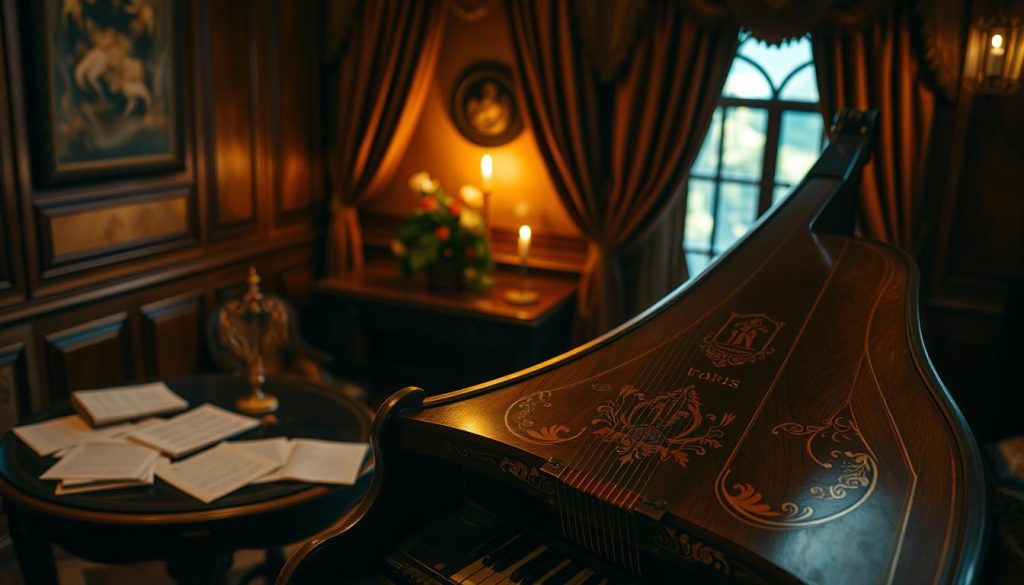
“Formal freedom and clarity of sound make Italian pieces a stimulating challenge for every performer.”
To explore these connections between France and Italy, discover a recent Italian encounter.
The German tradition and counterpoint
Johann Jakob Froberger’s synthesis united Italian and French influences to forge a suite form that became a model in Germany.
In the 17th century, German composers favored rigorous counterpoint. This approach shaped keyboard music and imposed structural clarity.
The region’s instruments often shared techniques with the organ. This connection changed the way composers wrote for strings and keyboards, encouraging robust polyphonic textures.
Many free-form pieces, such as toccatas, allowed room for invention, while the formalized suite remained a central part of the corpus.
“Counterpoint becomes the framework where motifs and developments intersect.”
- Froberger established the suite form, inspiring many composers.
- The fusion of styles enriched 17th-century German music.
- Johann Sebastian Bach brought this contrapuntal language to its peak.
The great figures of the Baroque repertoire
Major composers transformed keyboard practice in the 18th century. Their works demand technical mastery and sensitivity to ornamentation.
Johann Sebastian Bach
Bach elevated the art of counterpoint. The Goldberg Variations are often cited as a pinnacle of the harpsichord repertoire.
These pieces require the utmost precision in the articulation of notes. They also offer a complete vision of form and harmony.
François Couperin
Couperin wrote L’Art de toucher le clavecin, an essential manual for harpsichordists. In it, he explains ornaments, touch and the meaning of tempos.
His many ordres display great expressive quality. They create atmospheres that are often serene or melancholy.
Domenico Scarlatti
Scarlatti revolutionized the keyboard sonata. His pieces employ virtuosic effects and harmony that was sometimes daring for its time.
The large number of sonatas demonstrates the creative vitality of this period. Playing these works requires a subtle understanding of ornamentation and basso continuo.
- Summary: these masters form the heart of the keyboard corpus.
- Importance: their works often serve as reference points for today’s harpsichordists.
The harpsichord in the Baroque orchestra
Often placed at the heart of the orchestra, the harpsichordist weaves connections between the bass parts and upper voices.
This harpsichord serves as a sonic bridge. Its spectrum illuminates the lines while supporting the bass. The keyboard helps establish the pulse and ensure harmonic clarity.
Placed at the center, the instrument facilitates communication between strings and winds. The musician must read several parts and adjust countermelodies in real time.
- The harpsichord plays a central role as a harmonic and rhythmic bond between sections.
- The plucked strings provide rhythmic precision that preserves cohesion.
- As a basso continuo instrument, it supports the other instruments and stabilizes the ensemble.
- The harpsichordist’s versatility enables them to prepare opera reductions and perform orchestral lines.
“In the orchestra, the harpsichord becomes a driving force that defines the energy level and collective pulse.”
For a study of orchestral practice, consult this resource, which complements the approach described here.
Technical evolution and the transition to the piano
At the end of the 18th century, the arrival of the fortepiano profoundly changed musicians’ expectations. This instrument offered a wider dynamic range than the traditional harpsichord.
Makers tried to modernize the harpsichord to meet changing public tastes. They extended its range, added stops and experimented with different materials.
Quill plectra were sometimes replaced with leather or buff hide. These experiments sought to soften the attack and imitate the piano’s touch.
- Expansion of the range in the 18th century to provide greater nuance.
- Experiments: leather and hide to alter the attack.
- Pursuit of dynamic effects that the harpsichord cannot naturally produce.
Despite these efforts, the piano asserted its expressive superiority. The new instruments offered a more pronounced gradation of sound and appealed to composers and salon audiences alike.
“The keyboard remains remarkably precise, even as its use recedes before the piano’s great expressive potential.”
This transition marks the end of an era in which the harpsichord dominated European courts, and highlights craftspeople’s constant pursuit of improvement.
The contemporary revival of interest in the harpsichord
The rediscovery of early sources has returned this instrument to the center of contemporary musical practice. Since the 1950s, festivals, conservatories and record labels have revived interest in historically informed playing.
Musicians today seek an authenticity that favors the use of period instruments or modern copies. Plucked strings offer a distinctive clarity prized in 18th-century works.
Renowned makers—Pleyel, Hoffmann & Kühne, Zuckermann Harpsichords—provide high-quality instruments. Professional harpsichordists favor these models for their precision and reliability.
The orchestral harpsichord is regaining its place in ensemble concerts and solo recitals. Many young performers include the instrument in their projects, enriching the French musical landscape.
“The presence of an early instrument transforms listening and renews interpretation.”
| Aspect | Musical effect | Example |
|---|---|---|
| Authenticity | Faithful interpretation | Historically informed concerts |
| Modern construction | Stability and durability | Pleyel, Zuckermann |
| Audience appeal | Renewal of programs | Festivals and recordings |
Conclusion
This early instrument continues to illuminate today’s concerts and teaching practices. Its presence recalls a living history shaped by craftspeople, composers and performers.
The basso continuo shows how central it remains to harmonic balance. Its polyphonic texture and rhythmic precision offer a unique expressive palette, distinct from that of the piano.
The rediscovery of the repertoire has enabled a true artistic revival in France and elsewhere. Whether listening to a solo harpsichord piece or an ensemble, this instrument remains an unrivaled vehicle for emotion and virtuosity.