
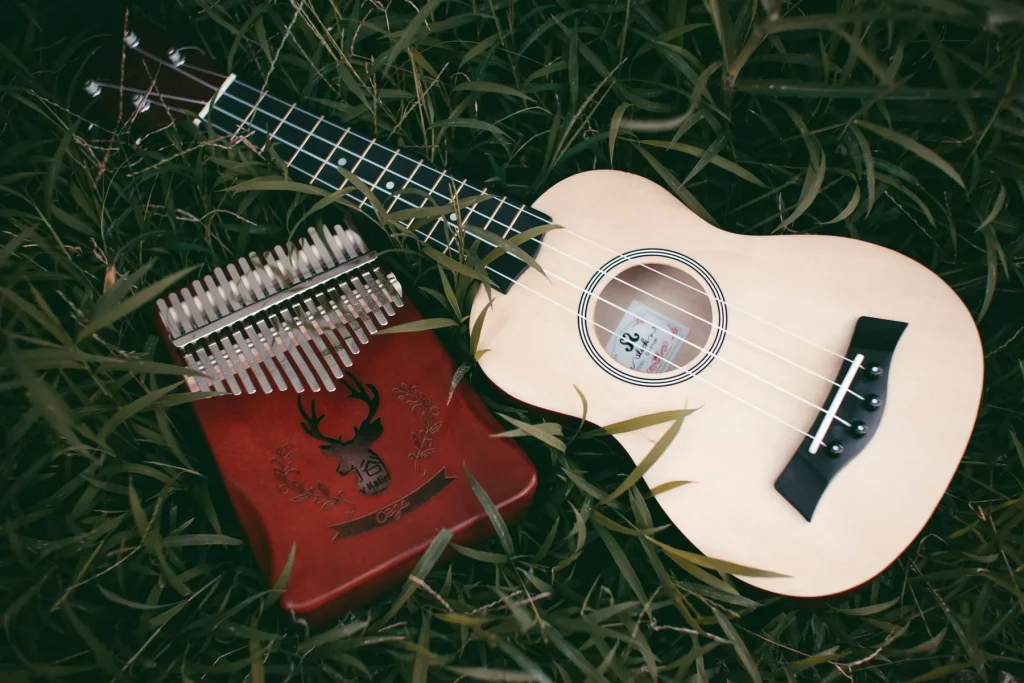
The kalimba, a fascinating instrument, has its roots in Africa. Documented in Zimbabwe since the 1950s, it is often called the thumb piano because of its unique playing method. This small object, steeped in history, has become a cultural symbol far beyond its continent of origin.
Thanks to figures such as Andrew Tracey, the kalimba has traveled around the entire world. Its sound, combining notes reminiscent of the xylophone and harp, makes it a versatile musical tool. Today, it serves as a bridge between ancestral rituals and contemporary stages, captivating international artists such as Angélique Kidjo and Thomas Mapfumo.
With ancestors dating back more than 3,000 years, the kalimba continues to inspire musical creation. Its impact, amplified by globalization, shows how an instrument originating in Africa can transcend borders and eras.
Introduction to the kalimba: a unique instrument
This instrument, with its metal tines and wooden body, is a true musical gem. The kalimba, also called a thumb piano, is an idiophone that produces sounds through the vibration of its tines. Compact and easy to carry, it generally measures between 10 and 30 cm and has between 5 and 20 tines.
Unlike the traditional mbira, which often has between 17 and 25 tines, the kalimba is lighter and more accessible. Its ergonomic design makes it intuitive to handle, ideal for beginners and experienced musicians alike. To learn more, you can explore the kalimba in detail.
In the 1950s, Hugh Tracey played a key role in the modern standardization of this musical instrument. His Alto model, with 17 tines and C-major tuning, remains a benchmark. Thanks to premium materials such as mahogany for the body and stainless steel for the tines, the kalimba offers a rich, lasting sound.
The origins of the kalimba: a history spanning thousands of years
Let us delve into the deep roots of this captivating instrument. The kalimba as we know it today traces its ancestors to ancient instruments such as the mbira and the sanza. Used for more than 3,000 years, these instruments have played a central role in the ceremonies and rituals of many African cultures.

The kalimba’s ancestors: mbira and sanza
The mbira, which originated in Zimbabwe, is often associated with Bira spirit-possession rituals. It was used to communicate with the Mhondoro spirits, thereby embodying a sacred function. The sanza, meanwhile, is distinguished by its bamboo tines, a feature that sets it apart from the metal mbira.
Although similar in design, these two instruments reflect varied traditions and uses. Their evolution demonstrates the ingenuity of African craftspeople, who adapted their creations to the needs of their communities.
The evolution of the kalimba through the centuries
Over the centuries, the kalimba has undergone major transformations. Bamboo tines were replaced by metal ones in the nineteenth century, improving durability and sound quality. This innovation allowed the instrument to grow in popularity and adapt to new settings.
Ndebele craftspeople also contributed to this evolution by adding a resonating body, amplifying the sound and enriching the musical experience. These changes made the kalimba a portable and versatile instrument capable of crossing eras and borders.
- Sacred function: used in Bira spirit-possession rites in Zimbabwe.
- Technical comparison: sanza with plant-based tines and metal mbira.
- Historical transition: colonial adaptation into portable forms.
- Social role: oral transmission of historical epics through music.
- Major innovation: the addition of a resonating body by Ndebele craftspeople.
Kalimba construction and characteristics
The kalimba’s design is based on harmony between materials and acoustics. Both simple and sophisticated, this instrument combines natural and technical elements to produce enchanting sounds.
Materials used: wood and metal tines
Wood plays a central role in making the kalimba. Species such as African kiaat, with a density of 800 kg/m³, are favored for their acoustic properties. Dried for at least two years, this material ensures exceptional durability and sound quality.
The tines, meanwhile, are made of metal, generally spring steel. Their thickness, ranging from 1.5 to 3 mm, directly affects the range and tone. For example, an 8 cm tine produces a C3 note, illustrating the precision of this design.
The resonating body and its importance
The resonating body is a key component that amplifies the kalimba’s sound. Its size and shape, often decorated with crescent-moon-shaped sound holes, determine the sound level, which ranges from 60 to 75 dB. This innovation, added by Ndebele craftspeople, enriches the musical experience.
Modern models, such as those made by Gecko Kalimbas, incorporate electroacoustic technology with a JFET preamp. These advances enable versatile use, combining tradition and innovation. To learn more, you can explore the kalimba in detail.
Kalimba playing techniques
Mastering the kalimba calls for both a technical and intuitive approach. Although seemingly simple, this instrument offers a rich sound palette through its varied playing methods. Whether you are a beginner or an experienced player, understanding these techniques will allow you to use its full potential.
Holding and playing the kalimba
The position of the instrument is essential for playing smoothly. Hold it at a 45° angle to your body, placing your thumbs on the tines. This posture produces clear, precise vibrations. Keep your hands relaxed to prevent muscle fatigue.
Different playing techniques
The kalimba offers several methods for creating unique melodies. The basic technique involves plucking the tines with your thumbs to produce gentle, harmonious notes. For fast arpeggios, try double thumbing, which involves alternating movements of both thumbs.

Numbered tablature is an excellent tool for learning new melodies. It makes sheet music easier to read, even for beginners.
Tuning the kalimba
Tuning is crucial to maintaining the instrument’s sound quality. Use a brass tuning hammer to adjust the tines. Standard C-major tuning suits most styles, but you can experiment with alternative modes, such as the minor pentatonic scale for blues or the Hijaz mode for an Arab-Andalusian touch.
| Aspect | Details |
|---|---|
| Position | 45° angle to the body |
| Techniques | Plucking, double thumbing, tablature |
| Tuning | Standard C major, minor pentatonic, Hijaz |
| Maintenance | Retune every 50 hours of playing |
The kalimba in contemporary music
Today, the kalimba has become a key element of the contemporary music scene. Once reserved for traditional rituals, this instrument has found a place in varied genres ranging from pop to electronic music. Its unique timbre and versatility make it a favorite tool among modern artists.

Integrating the kalimba into various musical genres
The kalimba has successfully adapted to current musical trends. In 2023, according to Billboard, 12 pop tracks incorporated the instrument into their arrangements. Producers even use MIDI samples through software such as KalaVST Pro to create innovative sounds. Effects pedals such as the Strymon BigSky add expansive reverberation, further enriching productions.
Milky Chance’s hit “Kalimba Story,” with more than 32 million streams, perfectly illustrates this integration. Its success shows how the kalimba can blend into modern melodies while retaining its essence.
Modern artists and the kalimba
Many international artists have embraced the kalimba. Burna Boy, for example, collaborated with the Kalimba Jazz Quartet, fusing Afrobeat with traditional sounds. The instrument is also taught at prestigious institutions such as the École Normale de Musique de Paris, demonstrating its growing importance.
A pioneer in the use of the kalimba, Bobby McFerrin incorporated the instrument into his album “Beyond Words.” To learn more about his influence, discover his unique journey.
The kalimba continues to conquer the world, with sales on Thomann increasing by 400% since 2020. This enthusiasm shows that despite its ancient roots, the instrument remains more relevant than ever.
The kalimba in music therapy and relaxation
With its soothing sounds, the kalimba has become a popular tool for relaxation and therapy. Its gentle, harmonious vibrations offer a unique sensory experience, ideal for reducing stress and promoting well-being.

The relaxation benefits of the kalimba
A clinical study showed that using the kalimba reduces salivary cortisol levels, a marker of stress, by 37%. Twenty-minute sessions at 432 Hz, a frequency recognized for its soothing effects, are often recommended. These protocols are particularly effective for calming the mind and improving concentration.
The “KalimbaMem” program, introduced in residential care homes for dependent older people, uses this instrument to combat anxiety among older adults. The results are promising, with a notable improvement in mood and quality of life.
Using the kalimba in music therapy
In music therapy, the kalimba plays a key role in post-stroke rehabilitation. It helps restore coordination between the thumb and index finger, which is essential for fine movements. Parent-and-child workshops offered by Psya Clinics also strengthen family bonds through interactive sessions.
SounD’Opt therapeutic kalimbas, which are ISO certified, are specially designed for these purposes. Their ergonomic KalmCare support makes them easier to hold, even for people with limited mobility. Renowned hospitals such as Necker use the TheraKalim model in their care programs.
Conclusion: the kalimba, a bridge between tradition and modernity
Recognized by UNESCO as a living cultural treasure in 2022, this instrument continues to fascinate. With annual growth of 15% in Europe, it is establishing itself as a rapidly expanding musical heritage.
Technological innovations, such as Bluetooth-connected models, are redefining its use. Educational initiatives such as the KalimbaKids program in 200 schools ensure that it is passed on to new generations.
In the age of artificial intelligence, automatically generated compositions are opening up new possibilities. Introductory workshops with virtuoso Sékou Diabaté are available for those wishing to discover its potential.
With more than 50 million units sold since 1960, this instrument remains a bridge between families and cultures while adapting to modernity.