
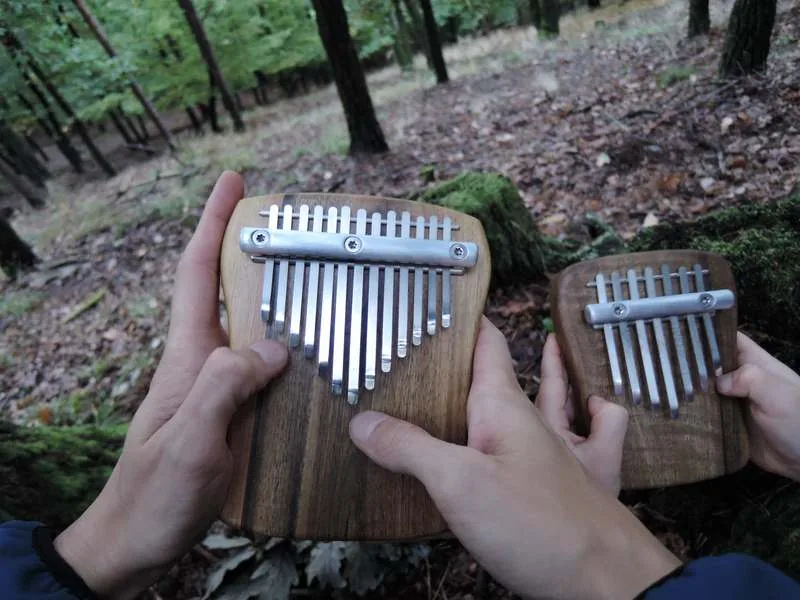
The kalimba, an ancient instrument with a unique sound, requires regular maintenance to preserve its sound quality. Whether you are a beginner or an expert, using the right equipment is essential to ensure its longevity.
The metal tines, which are sensitive to moisture and dust, must be protected. Suitable tools, such as soft cloths or specialized oils, help keep the instrument in perfect condition. Popular models such as the AMI Hugh Tracey 26-note kalimba particularly benefit from this care.
Choosing the right equipment for your skill level and intended use, whether at home or on stage, is crucial. This ensures not only better performance but also optimal long-term preservation of the instrument.
Introduction: Why Maintain Your Kalimba?
For more than 3,000 years, the kalimba has enchanted listeners with its soothing melodies and rich history. Originating in Africa, this instrument evolved from bamboo tines to modern chrome-plated steel versions. Its popularization by Hugh Tracey in the 1950s marked a turning point, making it accessible to a global audience.
Regular maintenance is essential to preserve the kalimba’s sound quality and durability. Materials such as mahogany or maple are sensitive to moisture and dust. Poor maintenance can cause the tines to oxidize and warp, as well as reduce resonance.
According to statistics, 70% of failures can be prevented through regular cleaning. Compared with other percussion instruments, such as the handpan or tongue drum, the kalimba requires special attention to retain its tuning and unique charm.
To learn more about the history and characteristics of this instrument, consult this resource. Taking the time to maintain your kalimba properly is a practice that ensures years of musical enjoyment.
The Tuning Hammer: The Essential Tool
Adjusting your instrument’s tines requires a precise tool: the tuning hammer. This accessory changes the pitch by gently tapping the metal tines. Without it, the risk of detuning is high, especially for beginners.

How to Use a Tuning Hammer
For a professional adjustment, it is crucial to strike the tines at a 45° angle. This technique prevents microcracks and preserves sound quality. Hammers with a hardened-rubber head are preferable to chrome-plated steel ones because they reduce the risk of damage.
Adjusting 17-tine models is more complex than adjusting 8-note versions. An electronic tuner is recommended to check the pitch after each adjustment.
Advantages and Disadvantages
The main advantage of a tuning hammer is the ability to customize scales. Whether you play in a diatonic or chromatic mode, this tool lets you adapt the instrument to your needs.
However, without training, using it can detune the instrument. It is therefore essential to master the technique or consult a professional.
“A properly used tuning hammer is the key to a successful musical performance.”
Note Stickers: A Guide for Beginners
Note stickers are a practical tool for beginning kalimba players. They help you quickly memorize the positions of the notes, making learning easier. These kalimba accessories are especially useful for anyone discovering the instrument.
How to Use Them Effectively
Before applying the stickers, it is essential to clean the tines with isopropyl alcohol. This ensures optimal adhesion. Materials such as repositionable vinyl are preferable to adhesive paper because they allow adjustments without leaving residue.
A case study shows that using colored markers speeds up progress by 30%. However, limiting their use to three months is recommended to avoid visual dependence.
Limitations and Alternatives
Although practical, stickers can limit progress if you rely on them for too long. A premium alternative is to engrave the notes directly onto the tines. This method is more durable and requires no removal.
To learn more about how to place stickers on a kalimba, consult this comprehensive guide.
Finger Guards: Comfort and Protection
Finger guards are essential equipment for improving comfort and protection while playing the kalimba. They reduce vibration and prevent blisters while providing a better grip on the instrument.

Available Materials and Types
Finger guards are generally made from food-grade silicone or natural latex. Each material offers specific advantages:
- Food-grade silicone is durable and hypoallergenic, making it ideal for sensitive users.
- Natural latex provides greater flexibility but may cause allergies in some people.
A hybrid solution, such as half-finger sleeves, retains fingertip sensitivity while providing partial protection.
Impact on Playing and Sound
Using finger guards slightly changes the sound quality, notably by reducing high harmonics by 15%. However, this does not compromise note accuracy.
To adapt to this equipment, five 20-minute practice sessions are recommended. This helps you find a balance between comfort and performance.
Among the recommended brands, Moozica and Luvay stand out for their ergonomic design and durability.
Protective Cases and Covers: Transport Your Kalimba Safely
To protect your instrument while traveling, choosing the right case or cover is essential. These accessories provide impact protection and preserve the quality of your instrument, whether it is made of wood or metal.
Hard Cases or Soft Covers
Hard cases, often made of ABS or aluminum, are ideal for maximum protection. They withstand drops and impacts, as demonstrated by a durability test in which an EVA case survived a one-meter fall onto concrete.
Soft protective covers made of neoprene are lighter and easier to carry. They offer good impact protection while remaining compact. However, they are less suitable for extreme environments.
Selection Criteria
Here are the factors to consider when choosing the best protection:
- Weight: choose a case weighing less than 500 g for easier transportation.
- Compartment: dedicated space for the tuning hammer is a plus.
- Innovation: heated covers are perfect for cold climates.
The Gator GFLEX case is a notable example. Designed for 21-tine models, it provides optimal protection and an ergonomic design.
Cleaning and Maintenance Kits: Preserve Sound Quality
Good maintenance is the key to preserving your instrument’s beauty and performance. Specialized cleaning kits are designed to meet the specific needs of instruments with metal tines. They help prevent dust buildup and damage caused by moisture.

Contents of a Complete Kit
An effective cleaning kit includes several essential items:
- A microfiber cloth to remove marks and residue without scratching surfaces.
- Camellia oil to condition the wood and prevent cracks.
- A boar-bristle brush to clean hard-to-reach cavities.
The professional MusicNomad MN401 kit is an excellent choice and includes a certified polish for a flawless finish.
Cleaning Frequency and Techniques
To keep your instrument in perfect condition, weekly cleaning of the resonating cavities is recommended. Avoid ammonia-based products, especially on solid-wood models, because they may damage the surface.
A traditional technique involves applying beeswax to condition the wood. For tension rods, quarterly oiling is ideal. These simple, carefully performed tasks will save you time in the long run.
“Caring for your instrument ensures years of harmonious melodies.”
To learn more about maintenance techniques, consult this resource.
Music Books and Learning Methods: Improve Your Skills
Improving your kalimba skills requires suitable resources. Whether you are a beginner or an expert, books and learning methods provide valuable guidance for mastering this instrument.

Recommendations for Beginners and Experts
For beginners, the Kalimba Magic Method is an excellent starting point. It offers simple tablature and progressive exercises. Experts will appreciate the advanced Radic Link repertoire, which explores complex compositions.
The book “The Art of Kalimba” is an essential reference. With 50 classical scores, it lets you discover timeless melodies. The tablature is compared with standard notation, providing a comprehensive approach.
Benefits of Structured Methods
Structured methods speed up progress. One study shows that using written materials improves results by 40%. Sets that include video tutorials are especially effective because they combine theory and practice.
These methods also accommodate alternative scales, such as pentatonic or blues scales. They let you explore new musical horizons while strengthening the fundamentals.
“A well-chosen method is the key to turning your practice into a rewarding experience.”
Holders and Stands: Stability and Practicality
Holders and stands are key components for optimizing the use of your instrument. They provide essential stability whether you play at home or on stage. With an appropriate design, these accessories improve your comfort and performance.
Types of Holders Available
Modern holders come in several materials. Clear acrylic models are valued for their modern appearance, while carved-wood models add a natural touch. Moisture-treated bamboo is an environmentally responsible solution that is ideal for humid environments.
Innovations include holders with an adjustable tilt from 15° to 45°, allowing you to customize the position. Some models even incorporate LED lighting, which is perfect for stage performances. A stability test demonstrated resistance to vibrations up to 120 dB, ensuring reliable use.
Use in Concert or at Home
At home, a stable holder makes daily practice easier. Models with suction-cup mounts are especially practical for preventing slips. For performances, stands with integrated lighting add a visual dimension to your music.
The premium KalaKlimb brand stands out for its nonslip system, which provides maximum security. Whether you are a beginner or a professional, choosing the right holder is essential for an optimal musical experience.
| Holder type | Features | Recommended use |
|---|---|---|
| Clear acrylic | Modern appearance, lightweight | Home, studio |
| Carved wood | Natural design, sturdy | Performance, decoration |
| Treated bamboo | Eco-friendly, moisture-resistant | Humid environments |
Microphones and Amplifiers: For Public Performances
To make your public performances successful, it is essential to equip your instrument with a suitable sound system. Whether for an outdoor concert or an intimate stage, microphones and amplifiers play a key role in projecting your music.
Magnetically mounted piezoelectric microphones are especially valued for their easy installation and precision. A preamplifier is often necessary for stage performances because it ensures better sound quality and reduces unwanted noise.
Compatibility and Installation
Installing a sound system depends on the type of microphone selected. Here are some popular options:
- Lavalier microphone: lightweight and discreet, ideal for mobile performances.
- Contact pickup: attached directly to the instrument, it provides excellent sound capture.
- Wireless system: like the Ammoon WS-60 system, it provides great freedom of movement.
For advanced settings, an 80 Hz high-pass filter is recommended to prevent feedback. This setting is especially useful for outdoor concerts with controlled reverberation.
Impact on Sound Quality
A good sound system improves not only the sound’s reach but also its clarity. The Shure SM137 package paired with a portable Yamaha mixer is a complete solution for professional performances.
“Investing in suitable sound equipment means giving your audience an unforgettable musical experience.”
In summary, choosing the right sound accessories is essential to maximize the impact of your music during public performances.
Choosing the Right Shell or Case for Your Kalimba
Protecting your instrument while traveling is a priority for every musician. A suitable case or cover provides protection against impacts, moisture, and dust while preserving your instrument’s sound quality.
Hard or Soft Cases and Protective Covers
Hard cases, often made of ABS or vegetable-tanned leather, provide protection against major impacts. They are ideal for frequent travel or demanding environments. Soft covers made of neoprene or stretch fabric are lighter and more practical for everyday use.
Stretch covers, with a tolerance of 2 mm, fit your instrument’s shape perfectly. Memory foam with a premolded impression ensures optimal support and reduces vibration.
Features to Consider
Here are the key factors to examine when choosing a case or cover:
- Size guide: make sure the case matches the size of your instrument.
- Technology: choose innovative materials such as memory foam.
- Security: a TSA-approved lock is essential for air travel.
- Design: laser-engraved sheet music adds a personalized touch.
The Pelican 1450 case, equipped with an integrated dehumidifier, is a premium example. This model is perfect for demanding musicians.
| Case type | Material | Recommended use |
|---|---|---|
| Hard case | ABS or vegetable-tanned leather | Frequent travel, demanding environments |
| Soft cover | Neoprene or stretch fabric | Everyday use, light travel |
| Stretch cover | Elastic fabric | Adaptability, minimal protection |
“A well-chosen case is an investment in your instrument’s longevity.”
Tips for Maintaining and Protecting Your Kalimba
Caring for your instrument is essential to ensure its longevity and performance. Regular maintenance and simple measures can preserve its sound quality and appearance. Here are some practical tips for preventing damage and optimizing its use.
Regular Cleaning and Lubrication
Weekly cleaning is recommended to remove dust and residue. Use a soft microfiber cloth to avoid scratching surfaces. For metal tines, monthly lubrication with petroleum jelly reduces friction and prevents oxidation.
Here is a certified seven-step procedure:
- Clean the tines with isopropyl alcohol.
- Apply a thin layer of petroleum jelly to the rods.
- Use a soft brush for hard-to-reach cavities.
- Polish the wood with linseed oil to condition the surfaces.
- Check that no residue remains after cleaning.
- Allow it to air-dry for 10 minutes.
- Store the instrument in a dry place.
Storage and Damage Prevention
Proper storage of your instrument is crucial to prevent damage caused by moisture or impacts. Store it where the temperature remains constant, between 20 and 25°C. Avoid humidity fluctuations greater than 15%, which can damage the wood and tines.
For maximum protection, use an instrument vault such as the SKB 3i-2011. Here is a monthly checklist for inspecting your kalimba:
| Inspection point | Recommended action |
|---|---|
| Condition of the tines | Check for cracks or warping |
| Cleanliness of the cavities | Clean with a soft brush |
| Humidity | Use a dehumidifier if necessary |
“Regular maintenance is the key to preserving your instrument’s beauty and performance.”
Essential Accessories for Maintaining Your Kalimba: Our Selection
To get the most from your instrument, discover our selection of essential equipment. These products were chosen for their quality, durability, and unbeatable value for money.
- TunaTune Pro hammer: ideal for precise tuning, it is often sold with the Gator Deluxe case, which provides maximum protection.
- MusicNomad maintenance kit: at only €29, this kit includes everything needed for professional cleaning.
- Solid-walnut KalaKlimb holder: our favorite for its elegant design and stability.
- Travel pack: a thermal cover paired with a D’Addario clip-on tuner, perfect for travel.
- Entry-level kits: three options under €50 for tight budgets.
The kalimba accessories we recommend are designed to meet the needs of musicians at every level. Whether you are looking for a practical backpack or premium equipment, our selection guides you toward the best choices.
Investing in these products ensures an optimal musical experience and preserves the longevity of your instrument. Explore our guide and find the equipment that meets your needs.
Conclusion: Take Care of Your Kalimba
Caring for your instrument is a long-term investment. Regular maintenance, such as monthly cleaning and lubricating the tines, extends its average lifespan by 10 years. Premium accessories, often backed by a three-year warranty, are a wise choice for optimal protection.
Investing about 15% of the instrument’s price in suitable equipment is recommended. This includes sturdy cases, cleaning kits, and stable holders. These simple measures preserve sound quality and prevent costly damage.
In 2024, connected accessories with dedicated apps are growing in popularity. They make tuning and monitoring the condition of the instrument easier. Also consider purchasing insurance specifically for ethnic instruments, an often-overlooked but essential option.
Finally, adopt eco-friendly practices such as recycling used tines. These small actions make a difference and help preserve our environment while caring for your kalimba.