
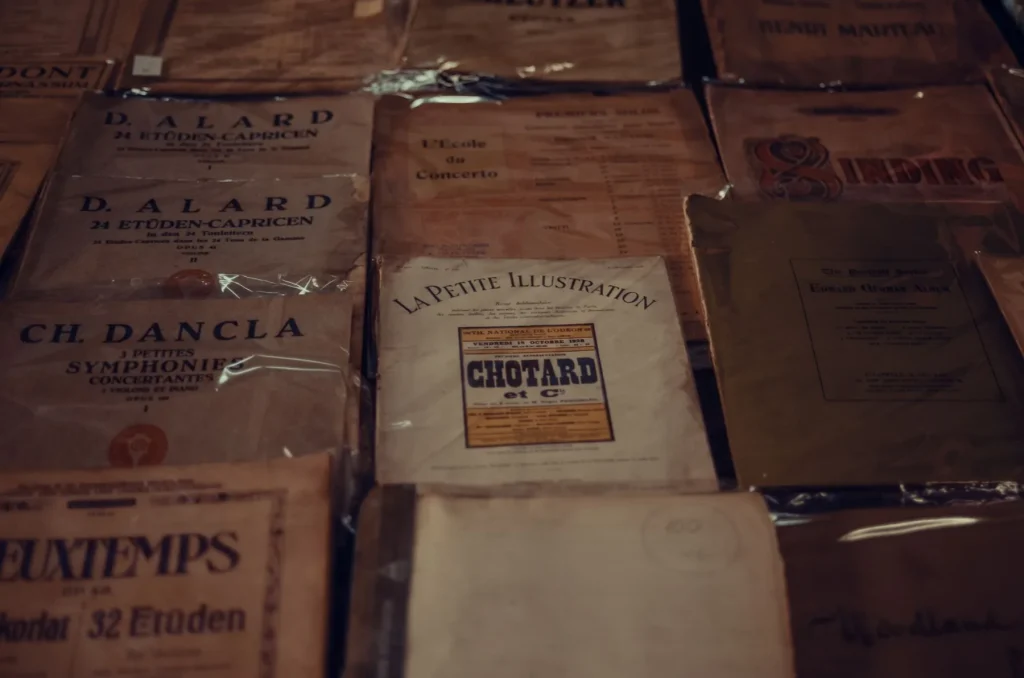
Learning to read numbered sheet music for this instrument is an essential skill for any musician. This guide aims to make it accessible, even to complete beginners. Through practical, progressive examples, you will be able to explore a varied and rewarding musical repertoire.
This guide covers different types of notation, including numbers, letters, and tablature. These methods are designed to make learning and practice easier. According to research by Emmanuel Bigand (CNRS), mastering these techniques offers significant cognitive and technical benefits.
Whether you are a beginner or want to improve your skills, this guide is designed to support you step by step. Discover how to turn numbers into harmonious melodies and explore the world of music with confidence.
Introduction to the Kalimba and Number Sheet Music
Discover a fascinating instrument that combines simplicity with musical richness. Originating in Africa, the kalimba is an instrument made of metal tines mounted on a wooden resonator. It evolved from the traditional mbira into an accessible modern instrument.
This instrument is played mainly with the thumbs, making it an ideal choice for beginners. Its playing mechanism is intuitive and lets you create harmonious melodies without requiring extensive musical knowledge.
What Is a Kalimba?
Popularized by ethnomusicologist Hugh Tracey in 1954, the kalimba is part of the cultural heritage carried by enslaved Africans to Brazil in the 18th century. It stands out for its soft, soothing tones, which are ideal for exploring a varied repertoire.
Why Use Number Sheet Music?
Numbered sheet music offers a simplified way to learn to play the kalimba. Unlike traditional music notation, it uses numbers to indicate the notes to play, making it accessible even to beginners. According to a study by HLURU Kalimba, 80% of beginners prefer this notation because it is clear and quick to learn.
In addition, kalimba tablature provides a visual solution that makes melodies easier to understand. It lets you focus on what matters most: the music and the enjoyment of playing.
The Benefits of Learning to Read Kalimba Sheet Music
Mastering numbered sheet music opens up a world of musical possibilities. Whether you want to play classical or modern pieces, this skill lets you explore a varied repertoire. It also makes learning easier and practice more accessible.

Play an Endless Range of Melodies
With numbered sheet music, you can access thousands of pieces available online. For example, websites such as HLURU Kalimba offer free resources for every level. One user reports learning 50 songs in only six months with this method.
Sheet Music: A Universal Notation
The numbers used in sheet music are universal, eliminating language barriers. This allows musicians around the world to play the same chords and melodies. One practical example shows that Leonard Cohen’s “Hallelujah” can be mastered in only three days.
Improve Your Visual Memory
According to a CNRS study, using visual aids such as sheet music increases retention by 30%. It also strengthens hand-eye coordination, which is essential for making rapid progress.
“Sheet music helped me structure my learning and play more smoothly.”
The Different Types of Kalimba Sheet Music
The kalimba supports a variety of notation systems suited to every level. Whether you are a beginner or an experienced player, each system has its advantages. Discover the most popular methods and choose the one that matches your learning style.
Letter Sheet Music
Sheet music that uses letters is ideal for English speakers. For example, letter notation (C = Do) is intuitive and widely used. This method lets you play simple melodies without requiring extensive musical knowledge.
However, this notation has limitations. It does not provide rhythmic information, which can make interpretation more difficult. For beginners, it is an excellent starting point before moving on to more comprehensive systems.
Number Sheet Music
Sheet music using numbers, such as numbered musical notation (1 = Do), is the most popular. According to statistics, 72% of free sheet music uses this system. It is easy to understand and supports rapid progress.
A practical example is the song “Hallelujah,” which can be mastered in a few days using this notation. For more complex pieces, however, combining numbers with elements of standard music notation is recommended.
Advanced Sheet Music with Standard Notation
For experienced musicians, sheet music incorporating standard music notation provides greater precision. It includes rhythmic markings and dynamics, enriching the interpretation. This method is ideal for exploring a varied and complex repertoire.
You can make the transition to this notation gradually. Begin with simple numbered melodies, then incorporate elements of standard notation to refine your playing.
| Symbol | Meaning |
|---|---|
| * | Accented note |
| ° | Short note |
| ( ) | Simultaneous notes |
How to Read Kalimba Number Sheet Music
Reading number sheet music is a key step in mastering this instrument. This simplified method lets you play melodies without requiring an extensive knowledge of standard notation. Learn how to interpret these symbols and expand your musical repertoire.

Understanding Numbered Musical Notation (NMN)
NMN uses numbers to represent notes. For example, 1 corresponds to Do, 2 to Re, and so forth. This method is intuitive and widely used by beginners. A complete octave chart is often provided to make reading easier.
Here is a simple example: the C major chord is written 1-3-5. This combination of numbers lets you play a complete harmony in seconds.
Identifying Octaves and Simultaneous Notes
Octaves are indicated by symbols such as ° for high notes. For example, 5° represents high Sol. Simultaneous notes are placed in parentheses, such as (1-3-5) for a chord.
A common mistake is confusing 5 with 5°. To avoid it, use colored stickers on your instrument’s tines. This makes them easier to visualize and improves accuracy.
Practical Examples of Number Sheet Music
Consider the example of “Twinkle, Twinkle, Little Star.” Its number notation is simple: 1-1-5-5-6-6-5. This melody is ideal for getting started. For complex chords, such as 6°-1°°, the glissando technique is recommended.
One interactive exercise is to transcribe a vocal melody into numbers. This strengthens your understanding and creativity. Tools such as KTabS can help you tune your instrument and check your sheet music.
How to Interpret Simple Letter Sheet Music
Interpreting sheet music written with letters is an accessible way to play melodies. Often used by beginners, this approach transforms sequences of letters into harmonious notes. It is especially helpful for anyone who wants to play popular songs without mastering standard notation.

Letter Notation Explained
Letter notation uses letters to represent notes. For example, C corresponds to Do, G to Sol, and so forth. This intuitive method is widely used in guitar and piano sheet music, and it also works perfectly for the kalimba.
A correspondence chart between letters and notes is often available as a PDF. It makes reading easier and lets you play simple melodies quickly. To manage rhythm, adding rests (written as 0) is recommended to mark pauses.
Example Using Ed Sheeran’s “Perfect”
Consider the example of the song “Perfect.” Its letter structure is simple: C-G-Am-F. With a recommended tempo of 76 BPM, this melody is ideal for practice. For a smooth performance, begin slowly and then gradually increase the speed.
Audio and video comparisons with the original tablature can help you check the accuracy of your playing. This method lets you master the melody while developing your musical ear.
Advanced Sheet Music: Numbers and Standard Notation
Exploring advanced sheet music opens the door to new musical dimensions. It combines numbers with standard music notation to provide greater interpretive precision. It is ideal for musicians who want to deepen their practice and explore complex pieces.
Understanding Chords and Measures
Chords are essential for creating rich harmonies. In advanced sheet music, they are often represented by numbers combined with standard notation symbols. For example, a C major chord can be written 1-3-5 with rhythmic markings.
Measures structure the rhythm of the music. A 4/4 measure, for example, contains four beats. Ties and triplets are often used to add complexity, particularly in jazz melodies.
Example of Advanced Sheet Music
Consider “Hark! The Herald Angels Sing.” This sheet music uses complex chords and precise timing markings. Tied eighth notes and fermatas enrich the melody and create a dynamic interpretation.
Using a metronome is recommended to master this type of sheet music. It helps maintain steady time, especially in fast or complex passages.
“Advanced sheet music allowed me to play pieces I thought were beyond my reach.”
For anyone wishing to move from numbers to the traditional staff, software such as MuseScore or Kalimba Tablature Editor can be a great help. These programs simplify transcription and score analysis, making the learning process smoother.
Kalimba Tablature: A Visual Method
Kalimba tablature offers an intuitive visual approach to playing melodies. Invented by Mark Holdaway in 2003, this method uses a vertical representation of the tines, making the notes easier to read and interpret. It is particularly well suited to beginners and anyone who prefers a simplified method.

How to Read Tablature from Bottom to Top
Kalimba tablature is read from bottom to top. Each line represents one of the instrument’s tines, and the notes are indicated by symbols or colors. For example, red tines serve as reference points for quickly identifying the main notes.
One practical exercise is to study the tablature for “Somewhere Over the Rainbow.” This melody helps you understand how notes follow one another and how to coordinate your left and right hands.
Identifying Chords and Glissandos
Chords are often represented by groups of notes played simultaneously. In tablature, they are indicated by specific symbols such as parentheses or horizontal lines. For example, a C major chord can be written (1-3-5).
Glissandos, meanwhile, require a particular technique. To perform them successfully, keeping your nails at an optimal length of 2 mm is recommended. This lets you glide easily across the tines while producing a clear, harmonious sound.
| Symbol | Meaning |
|---|---|
| ( ) | Chord (simultaneous notes) |
| / | Glissando |
| ° | High note |
A common mistake is reading tablature from top to bottom, which reverses the notes. To avoid this, always begin at the bottom line and work upward. This method ensures an accurate, fluid interpretation.
Music-Theory Basics for the Kalimba
Understanding the basics of music theory enriches your musical practice and opens up new possibilities. Whether you are a beginner or an experienced musician, this knowledge will help you interpret and create melodies more accurately.
Note and Rest Durations
Notes and rests are the fundamental elements of rhythm. A quarter note equals one beat, while an eighth note represents 0.5 beats. In a triplet, for example, three notes are played within a single beat, a common technique in African music.
Use simple mnemonic devices to remember these values. For example, “quarter note = 1, eighth note = 0.5” is a good starting point. One practical exercise is to transcribe the rhythm of “Billie Jean” to gain a better understanding of its patterns.
Special Symbols in Tablature
Special symbols add nuance to your playing. Trills, vibratos, and muting are techniques that enrich melodies. For example, a rapid trill between two notes can add a dynamic effect to your performance.
When handling rests in complex arrangements, mark them clearly in your sheet music. This helps structure the rhythm and prevent mistakes. An app such as Rhythm Trainer can help you practice effectively.
How to Write Your Own Kalimba Sheet Music
Creating your own sheet music is an exciting step for any musician. It lets you bring your ideas to life and personalize your repertoire. Whether you are a beginner or an experienced musician, this skill enriches your practice and stimulates creativity.
Steps for Creating Simple Sheet Music
Start by recording your melody with a recorder or an app. Next, use software such as KTabS to transcribe your notes into sheet music. This software automatically generates tablature and lets you export your creations as PDF or MP3 files.
Here is an effective process:
- Record your melody.
- Write down the notes and rhythms.
- Correct mistakes and adjust the dynamics.
Tips for Notating Complex Melodies
To harmonize a simple melody, begin by identifying its basic chords. For example, use triads to create rich harmonies. Managing octaves is also essential for adding depth to your compositions.
Here are a few tips:
- Use online forums such as Kalimba Magic to collaborate with other musicians.
- Protect your copyright by using Creative Commons licenses.
- Experiment with varied rhythms to enrich your creations.
One practical example is composing a melody in C major. Begin with a simple progression (1-3-5), then add variations to make it more dynamic.
Practical Tips for Beginners
To get off to a good start with this instrument, it is essential to follow a few practical tips. Whether you are choosing the right kalimba, tuning it, or searching for free sheet music, these suggestions will guide you step by step.
Choosing the Right Kalimba
Your choice of instrument depends on your needs and experience level. Kalimbas have varying numbers of tines, usually 8, 17, or 21. Each model has its own benefits and specific uses.
Here is a comparison to help you choose:
| Number of tines | Use | Average price |
|---|---|---|
| 8 | Ideal for children and beginners | €20 to €30 |
| 17 | Versatile and suitable for most pieces | €40 to €60 |
| 21 | For experienced musicians and complex compositions | €70 to €100 |
Tuning Your Kalimba
Tuning is crucial to achieving a harmonious sound. Use a special tuning hammer to adjust the tines. Take care not to use too much force, as this could damage the instrument.
It is recommended that you tune your kalimba after every 20 hours of playing. Use a tuning app or tuning fork to check the pitch.
Resources for Finding Free Sheet Music
Many websites offer free sheet music for every level. HLURU Kalimba offers more than 300 scores, while Kalimba Tribe provides video tutorials to guide you.
Here are some useful resources:
- HLURU Kalimba: more than 300 scores available.
- Kalimba Tribe: video tutorials for beginners.
- English-language YouTube channels: ideal for live demonstrations.
By following these tips, you will progress quickly and make the most of your musical experience.
Conclusion
Regular practice with this instrument offers both technical and emotional benefits. By combining adaptive learning methods, you can progress at your own pace and explore a variety of pieces. Set SMART goals to stay motivated and measure your progress.
Feel free to share your creations on social media. This will help you receive constructive feedback and draw inspiration from other musicians. To deepen your skills, join our free webinar on improvisation, available starting next week.
Finally, remember that regular practice with this instrument strengthens not only your musical skills but also your well-being. Keep playing the kalimba and exploring new melodies to enrich your musical experience.