
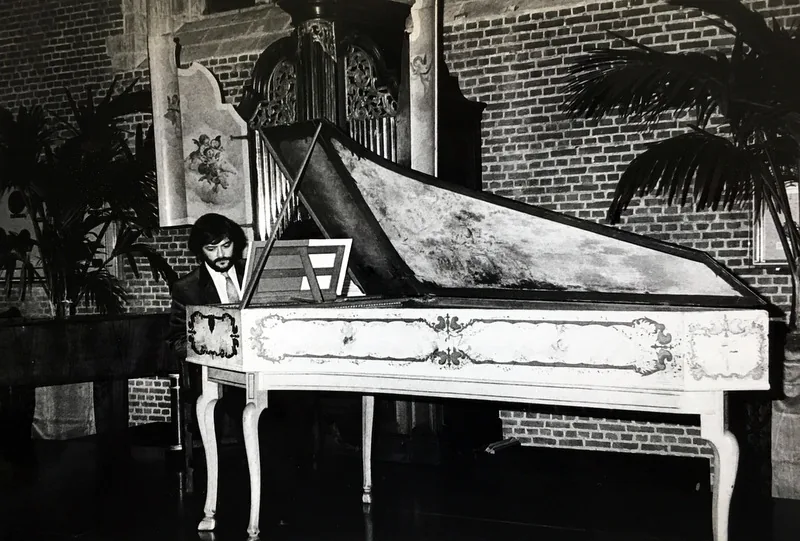
Choosing an instrument involves more than simply looking at its price. Its origin, condition, and the reputation of its maker all influence its final value.
Our workshop, located at 16 rue Gigodot, 69004 Lyon, welcomes visitors to view a carefully selected range suitable for every level.
For personalized advice, call Pascal Roy at +33 6 80 01 37 53. An appointment gives you an opportunity to examine the materials, mechanism, and state of preservation.
Understanding pricing requires a careful analysis of the components and craftsmanship. Whether you are a beginner or a professional, expert guidance can help you choose between a recent instrument and an older one.
To learn more about monthly rental offers and their terms, visit our dedicated page: monthly rentals.
Understanding the price of a new, used, or rental harpsichord
To understand how much an instrument costs, you need to examine its model, condition, and construction.
Specific figures: a 1991 Neupert spinet had a new price of €13,048 and sells used for around €6,450. A Sassmann Étude 45 harpsichord in very good condition sells for around €2,850.
The length of the case affects resonance and therefore the price. A longer case provides greater projection, which often results in a higher price.
When purchasing, check the keyboard and the stability of the structure. The instrument’s overall condition determines whether it will require repairs.
“Secure delivery protects the keyboard and mechanism during transport.”
- Advantage: used harpsichords remain an economical option if they are in very good condition.
- Advice: choose insured delivery to preserve the instrument’s value.
To discover recent models and compare prices, visit our dedicated page: new instrument offers.
The key criteria that determine your instrument’s value
The craftsmanship and materials used play a decisive role in estimating the value of a musical instrument.
The influence of craftsmanship and materials
Martine Argellies, a maker since 1981, points out that the quality of the strings and the precision of the handwork increase an instrument’s value.
Concert models, such as the 1974 Zuckermann (€12,750), use fine woods and meticulous finishes to produce a superior sound.
Mechanical condition and plectrum replacement
Maintaining a very good mechanical condition sometimes requires replacing the plectra with Delrin plectra. This operation preserves the clarity of the notes.
The 1999 Gérard Fonvieille harpsichord, sold for €9,850, demonstrates how keyboard complexity and length influence the price.
The importance of compass and registers
The length of the case and the number of notes on the keyboard provide information about the instrument’s historical and technical value.
An instrument in good condition has a sound structure, tuned strings, and a serviced mechanism that ensures very good playability.
| Criterion | Impact on value | Example |
|---|---|---|
| Handcrafted construction | High — wood, decoration, handwork | Martine Argellies, maker since 1981 |
| Mechanical condition | Medium to high — jacks, plectra | Replacement of the plectra with Delrin plectra |
| Compass and length | High — projection and notes | Gérard Fonvieille 1999 — €9,850 |
| Concert use | Very high — fine materials | Zuckermann 1974 — €12,750 |
Choosing between buying and renting as a beginner or advanced player
Trying several instruments before investing remains the best way to make progress. A rental plan with a trial option allows you to evaluate the touch, mechanism, and range of tones without making an immediate commitment.
The advantages of renting with a trial option
Affordability: a digital model such as the Roland C50 is available for €49 per month, making it ideal for beginners who want to compare several keyboards.
Playing comfort: recent deliveries, such as the one made by Jacques Magnette on October 28, 2022, often include accessories that ensure excellent comfort during concerts.
Reliability: replacing the plectra with Delrin plectra ensures that the mechanism remains in very good condition for students.
- Check the model’s length and number of notes before choosing a trial.
- Concert instruments require regular maintenance: string replacement and a complete service.
- Professional delivery protects the instrument and ensures that it arrives in very good condition.
“A trial allows you to check whether the keyboard and strings meet your expectations before making a purchase.”
To compare offers and arrange a workshop trial, visit Bauer Musique to find solutions suited to musicians in France.
Conclusion
Choosing an instrument requires a methodical approach. Its value depends on its craftsmanship, materials, mechanism, and overall condition. Very good maintenance ensures greater longevity.
Investing in quality harpsichords provides a rich and consistent musical experience. The ability to test them before purchase helps you compare their touch and tone.
When assessing the final price, take the technical features and state of preservation into account. Always favor a harpsichord in very good condition that can accompany you throughout your artistic journey.