
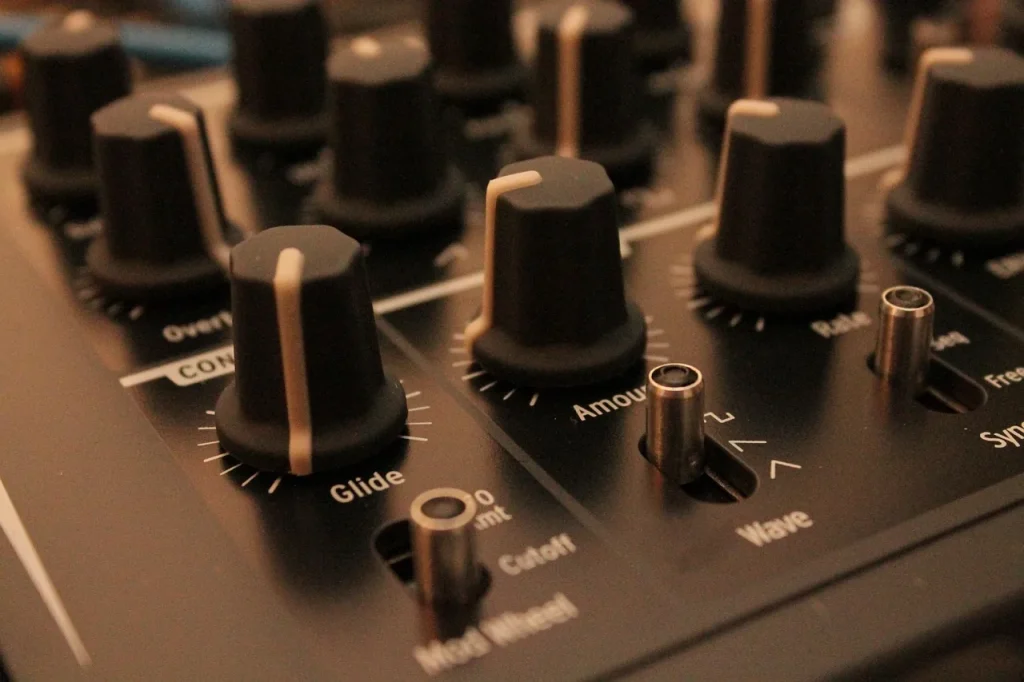
The Roland synthesizer is essential for performing, recording, and creating. We have selected the best models for you. Each synthesizer has unique features.
This will help you choose the model that is perfect for you. You will discover what each synthesizer can do.
Introduction to Iconic Roland Synthesizers
Roland synthesizers are essential to electronic music. Since 1972, Roland Corporation has left its mark on the industry. With cult synths, vintage synths, and analog synthesizers, the brand has transformed music. The Juno-60, TB-303, and Jupiter-8 have become legendary Roland synths.
The Importance of Synthesizers in Electronic Music
Synthesizers are crucial to electronic music. They make it possible to create new sounds and push musical boundaries. Through subtractive synthesis, additive synthesis, and other techniques, Roland synthesizers enrich electronic music.
Why Choose Roland?
Roland is renowned for the quality of its synthesizers. They are valued for their sound, versatility, and reliability. Roland synths are highly regarded by many musicians. The TB-303 and Juno-106 remain in high demand, demonstrating Roland’s impact on electronic music.
Criteria for Selecting the Best Roland Synthesizers
Choosing the best Roland synthesizer requires considering several criteria. Sound quality, versatility, ergonomics, and connectivity are essential. High-end Roland synthesizers offer rich sound and an intuitive interface. Professional musicians greatly appreciate their creative features.
Versatile Roland synthesizers stand out for their ability to fit into different musical setups. Professional Roland synthesizers are known for their build quality and reliability. Value for money is crucial for many musicians.
| Criterion | Importance |
|---|---|
| Sound quality | Essential for a rich and immersive musical experience |
| Versatility | Makes it possible to explore a wide range of styles and sounds |
| Ergonomics | Makes interaction and musical creation easier |
| Connectivity | Ensures seamless integration into a larger musical setup |
| Value for money | Determines the product’s affordability and value |
Models such as the TB-303, Jupiter-8, Juno-106, and SH-101 are highly sought after. They offer unique sounds and an outstanding playing experience. These Roland synthesizers have become highly valued tools for creating music.
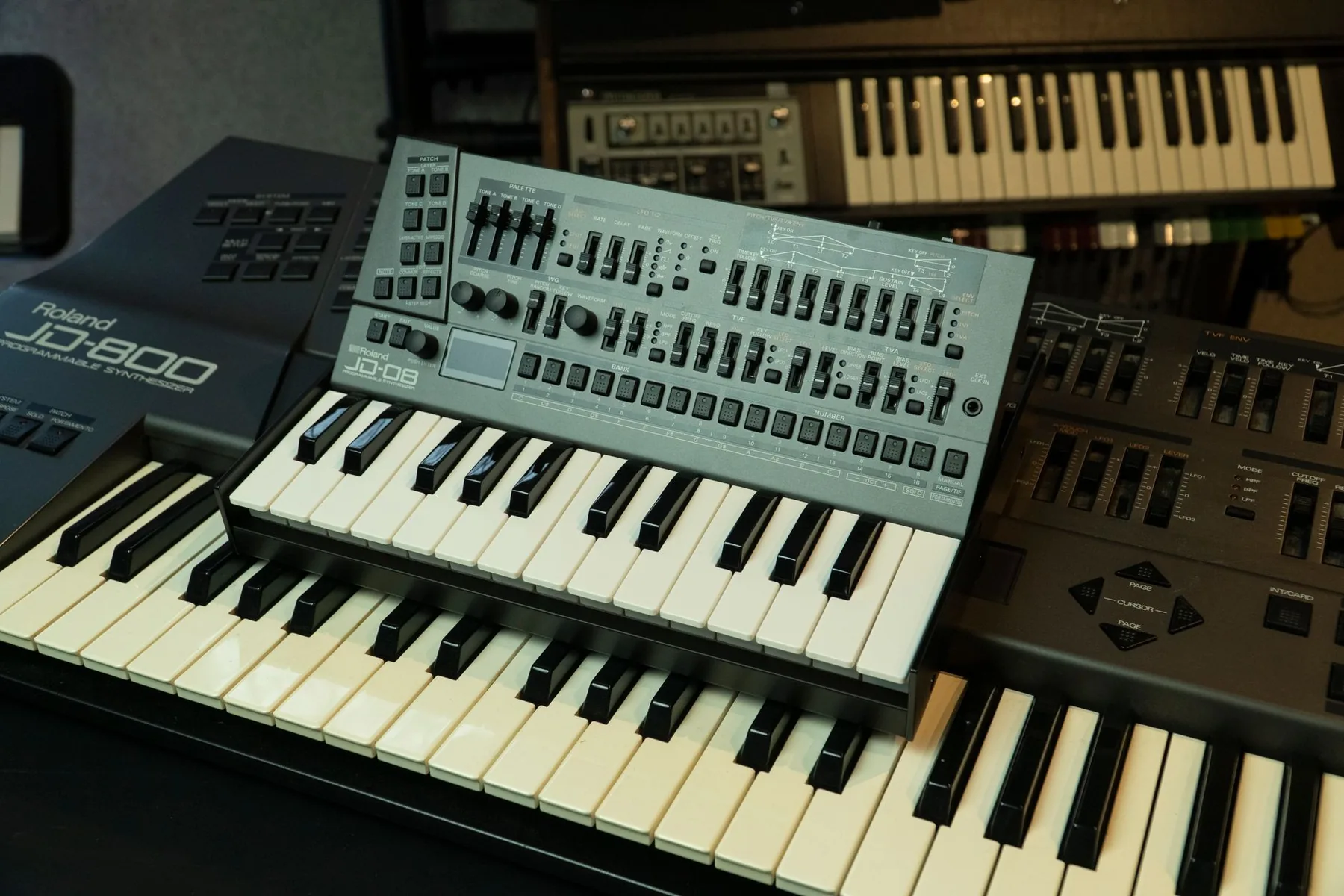
“Roland synthesizers are iconic instruments renowned for their sound quality and versatility. They have played a crucial role in the evolution of electronic music.”
Top 5 Roland Synthesizers for Musicians
The world of synthesizers is vast and exciting. It is home to many legendary models that have shaped the history of electronic music. Roland synthesizers stand out for their unique sound, versatility, and impact on the music scene. Here are the five best Roland synthesizers for musicians.
Roland TB-303: The Icon of Electronic Music
The Roland TB-303 is a symbol of electronic music. Its acid tone has shaped the house and techno genres. It is perfect for creating groovy bass lines.
Roland Jupiter-8: The Benchmark for Analog Synthesizers
The Roland Jupiter-8 is a legendary analog synthesizer. It is prized for its rich, warm sound. It is considered one of the best analog synthesizers of its era.
Roland Juno-106: The Smoothness of Analog Synthesizers
The Roland Juno-106 is an analog synthesizer from the 1980s. It is valued for its intuitive interface and warm sound. It is perfect for creating atmospheric pads and captivating melodies.
Roland SH-101: The Versatility of Analog Synthesizers
The Roland SH-101 is a versatile analog synthesizer. It generates massive sounds through its three internal sound generators. It is ideal for creating powerful bass lines and punchy leads.
These four Roland synthesizers have become cult instruments. Musicians value them for their unique sound, versatility, and impact on electronic music. They deserve a prominent place in your musical arsenal, whether you are a beginner or an experienced musician.
Combining Several Roland Synthesizers
Many famous artists use several Roland synthesizers in their studios. This expands their musical creativity. It gives them a complete creative arsenal and allows them to harness the full power of Roland synthesizers.
Famous Artists’ Setups
For example, Jean-Michel Jarre uses a JD-XA, a TR-8, and a TB-3. This allows him to create unique sounds. The band Depeche Mode chooses a SYSTEM-8 and a JD-XA for its albums.
| Artist | Roland Synthesizer Setup |
|---|---|
| Jean-Michel Jarre | JD-XA, TR-8, TB-3 |
| Depeche Mode | SYSTEM-8, JD-XA |
These combinations give artists great flexibility. They can create unique sounds and performances.
“Combining several Roland synthesizers offers unmatched creative freedom, allowing artists to push the boundaries of their music.”
Analog vs. Digital: Which Synth Should You Choose?
The debate between analog and digital is ever-present in the world of synthesizers. Roland analog synthesizers are known for their warm sound. They are perfect for creating organic textures. Digital synthesizers, meanwhile, are highly versatile and flexible.
Hybrid synthesizers attempt to combine both approaches. Choosing an analog, digital, or hybrid synthesizer depends on your tastes, the music you want to make, and your budget.
- Analog synthesizers, such as Roland models, are perfect for rich electronic music. They have a warm, organic tone.
- Digital synthesizers are highly versatile. They offer many options for programming and modulating sound.
- Hybrid synthesizers offer a warm sound. They also benefit from digital features.
“Choosing between an analog, digital, or hybrid synthesizer is a personal decision. It depends on your sound preferences and musical goals.”
Whether you choose an analog, digital, or hybrid synthesizer, Roland offers an exceptional range of instruments. Let your senses guide you toward the Roland synthesizer that suits you best.
Conclusion
Roland synthesizers are true icons of electronic music. Their rich, organic sound, intuitive ergonomics, and versatility are unmatched. These legendary models inspire musicians around the world.
Whether you are looking for an analog, digital, or hybrid synthesizer, Roland has what you need. The Roland range offers numerous options for stimulating your musical creativity.
By choosing a Roland synthesizer, you will have the ideal tool for bringing your compositions to life. Whether it is a classic or modern model, these synths will help you create unique sounds.
Their heritage and ability to adapt to current trends make them an essential choice. Roland synthesizers are indispensable for electronic musicians eager to push the boundaries of their creativity.
FAQ
What makes Roland synthesizers so good?
Which Roland synthesizer models are iconic?
What criteria should you consider when choosing a good Roland synthesizer?
How do artists use Roland synthesizers in their setups?
What is the difference between an analog synthesizer and a digital synthesizer?
Source Links
- https://www.encyclopedia.com/science/encyclopedias-almanacs-transcripts-and-maps/synthesizer-music-0
- https://sirismm.si.edu/EADpdfs/NMAH.AC.0640.pdf
- https://online.berklee.edu/help/en_US/hardware/2072776-different-types-of-keyboard-instruments
- https://aes.org/community/technical-council/richard-c-heyser-memorial-lecture-series/memorial-lecture-at-121st-julius-o-smith-iii-history-and-practice-in-digital-sound-synthesis/
- https://www.musicradar.com/news/best-synthesizers
- https://www.factmag.com/2016/09/15/14-most-important-synths/
- https://ww1.namm.org/node/51563
- https://www.roland.com/global/products/v-synth_gt/
- https://www.masterclass.com/articles/types-of-pianos
- https://www.roland.com/global/products/jd-xa/
- https://producerhive.com/buyer-guides/synthesizers/prophet-6-vs-rev-2/
- https://blog.landr.com/best-synthesizer/