
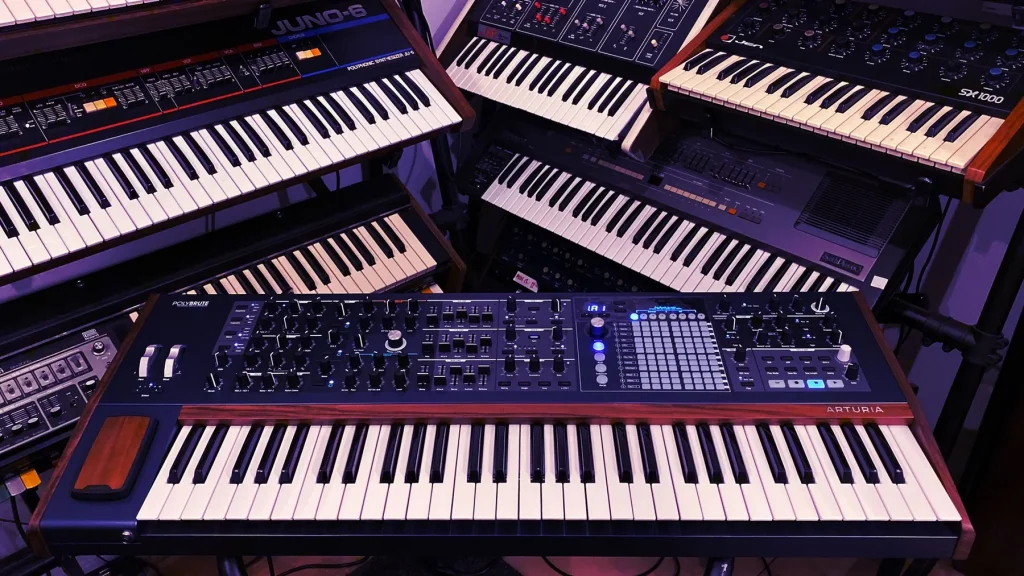
Welcome to our synthesizer buying guide. If you are a beginner or professional musician looking for a new instrument, you probably know how difficult it can be to find the right synthesizer for your needs and budget. With so many options available on the market, it is easy to feel overwhelmed.
That is why we created this buying guide to help you choose a synthesizer that meets your musical needs. We will examine the essential features to consider, the best synthesizer brands, and models suited to beginners and professionals. We hope this guide will help you make an informed choice and find the ideal synthesizer for you.
Essential features to consider
Choosing a good synthesizer requires considering several key factors. To make the best choice for your needs, here are the most important features to consider:
| Feature | Description |
|---|---|
| Number of keys | The number of keys can range from 25 to more than 80. Models with more keys generally offer more features and control options, but they are also more expensive and take up more space. |
| Synthesis methods | There are several sound-synthesis methods, including subtractive synthesis, additive synthesis, and granular synthesis. Each has advantages and disadvantages, but modern synthesizers often provide several methods to meet different needs. |
| Sound quality | Sound quality is an essential criterion to consider. The best synthesizers deliver rich, clear, and precise sounds, along with a wide range of sound modulation and control options. |
| Built-in effects | Built-in effects are modules that add depth and color to your sound. Modern synthesizers often offer a wide range of built-in effects, such as reverb, chorus, and delay. |
| Connectivity options | Connectivity options are important for musicians who want to integrate their synthesizer into their production workflow or stage setup. Common options include MIDI, USB, and CV/Gate connections, as well as audio inputs and outputs. |
By keeping these features in mind, you will be able to choose a synthesizer that best meets your needs. However, it is also important to consider your experience level, musical preferences, and budget before making a final choice.
Comparison of the best synthesizer brands
When choosing a synthesizer, the brand is just as important as the features. In this section, we will examine the leading synthesizer brands available on the market and help you find the one that suits you best.
| Brand | Description |
|---|---|
| Korg | Korg is a Japanese synthesizer brand known for its innovative, high-quality products. Korg offers a wide range of synthesizers for beginners and professionals alike. |
| Yamaha | Yamaha is a Japanese synthesizer brand with a long tradition of manufacturing musical instruments. Yamaha offers a wide variety of synthesizers suited to every skill level and application. |
| Moog | Moog is an American synthesizer brand known for its unique sound and premium products. Moog synthesizers are often used by professional musicians and famous bands. |
| Nord | Nord is a Swedish synthesizer brand focused on producing premium instruments for professional musicians. Its synthesizers are known for their exceptional sound quality and ease of use. |
There are, of course, other popular brands worth mentioning, such as Roland, Arturia, and Novation. Each brand has its own strengths and weaknesses. What works for one musician may therefore not suit another. Thoroughly research the brands that interest you and read reviews from other musicians before buying.
Ultimately, your choice of brand will depend on your needs and budget. It is important to consider the quality, reputation, and product range offered by each brand before making a decision.
Remember that the brand is only one aspect of buying a synthesizer and that it is also important to examine the features and capabilities of each product.
Synthesizers suited to beginners
If you are new to the world of synthesizers, it is important to find a model that is easy to use and understand. Beginner synthesizers should have user-friendly features, such as clearly labeled controls and an intuitive interface. Here are our recommendations:
| Synthesizer | Features | Price |
|---|---|---|
| Korg Volca Keys | Three-voice synthesizer with a built-in sequencer. Includes an analog filter, reverb, and delay. | Approximately €150 |
| Novation MiniNova | 37-key synthesizer with more than 250 built-in sounds and effects. It also includes a microphone for recording samples. | Approximately €350 |
Choosing the right beginner synthesizer may seem intimidating, but by keeping the important features and affordable options in mind, you can easily find a synthesizer suited to your skill level.
Synthesizers suited to professionals
Professional musicians need more advanced synthesizers with more sophisticated features to meet their performance and music-production needs. Here are some of the best synthesizers for professionals:
| Model | Main features | Price |
|---|---|---|
| Yamaha Montage 8 | FM-X sound-synthesis technology, AWM2 Motion Control Synthesis, 88 keys, and 128-voice polyphony | Approximately €3,500 |
| Moog One | Three analog synthesis engines, 61 keys, 48-voice polyphony, and 3 filters in series | Approximately €9,000 |
| Korg Kronos | Nine different synthesis engines, more than 16 GB of samples, 88 keys, and 200-voice polyphony | Approximately €3,000 |
These synthesizers offer cutting-edge features for advanced music production. However, they can be expensive and difficult for beginners to use. Professionals are therefore advised to take the time to understand each synthesizer’s features before making their choice.
Conclusion
In conclusion, choosing a good synthesizer involves considering several factors, such as essential features, synthesizer brands, skill level, and, of course, budget.
We hope this buying guide and our advice have helped you better understand the different options available on the market and choose a synthesizer that meets your specific needs. Feel free to explore the different brands, models, and their features, and take the time to familiarize yourself with your new instrument.