
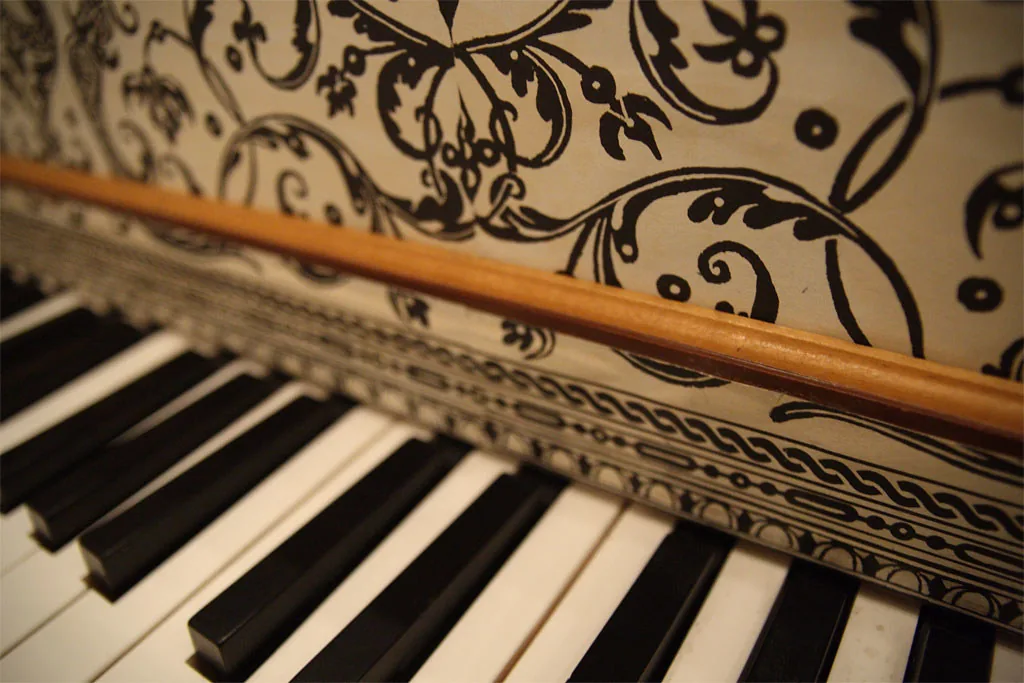
La Maison du Clavecin offers a complete solution that makes this historic instrument more accessible. We provide carefully maintained instruments to ensure an authentic touch and consistent reliability.
Our teams help students and professionals choose the model best suited to their repertoire. A good instrument improves playing quality and encourages rapid progress.
You receive personalized support when renting a high-quality instrument that is ready for daily use. Advice on adjustments, selection by musical style and technical assistance are included to ensure a worry-free experience.
Trust our expertise to find the instrument that will support your artistic projects in France.
Why choose harpsichord rental: prices and practical advice
For a conservatory student, renting an authentic instrument makes it easier to develop technique correctly from the outset. La Maison du Clavecin offers historically faithful copies as well as modern spinets, all regularly serviced in the workshop.
Practicing on a real instrument improves your playing. The mechanical resistance of the strings and mechanisms develops proprioceptive reflexes more effectively than electronic keyboards.
Our range includes fortepiano-style models and spinets designed to meet the needs of a school or conservatory. Each instrument is prepared to ensure stable tuning and accurate notes.
- Access to well-maintained instruments without a substantial initial investment.
- Regular servicing to preserve sound quality and touch.
- Plans designed to remain affordable for the intended budget.
To monitor your progress and benefit from personalized guidance, visit our page devoted to learning support.
The importance of touch and proprioception for musicians
Touch shapes a musician’s relationship with every note, far beyond technique alone. Feeling the mechanical resistance helps control the attack and duration of notes. This is essential for performing Baroque music authentically.
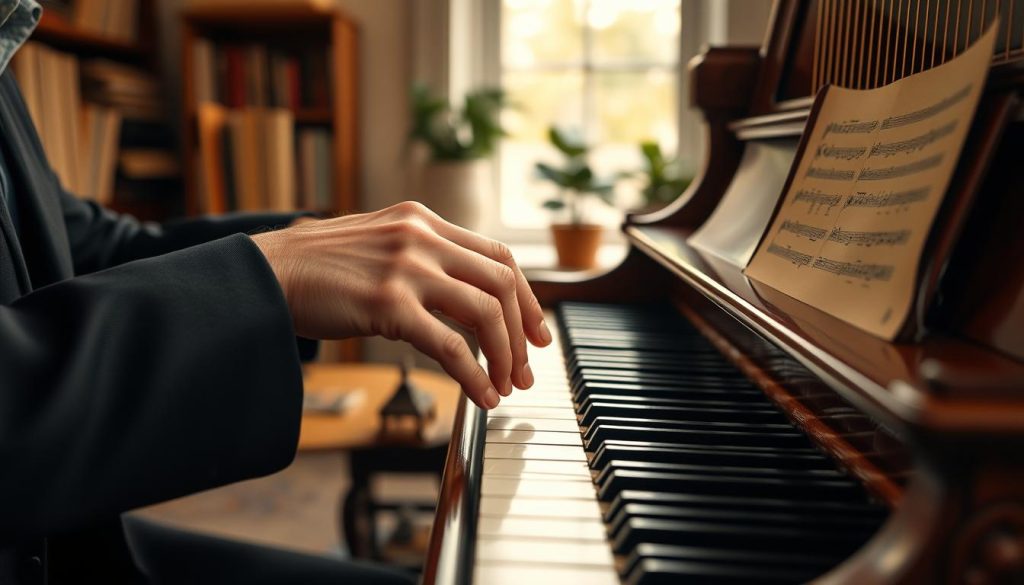
Proprioception arises from direct contact between the plectra and the strings. It makes it possible to shape dynamics and adjust the attack of ornaments. A wooden instrument provides tactile feedback that digital keyboards cannot faithfully reproduce.
The pedal action and the sensation of the mechanism beneath the feet affect coordination. The jacks respond differently depending on string tension. The musician therefore develops precise reflexes for every note.
- Regular tuning stabilizes listening and proprioception.
- Precise pedal technique is essential for complex ornaments.
- Practicing on a real instrument sharpens muscle memory and movement.
To practice these tactile elements on other instruments and with other techniques, see this practical tutorial.
Our selection of instruments for every type of player
We offer a carefully selected range that meets the needs of students as well as the requirements of soloists.
Instruments for students and conservatories
Our collection includes high-quality instruments suitable for schools and conservatories. The Couchet School Flemish harpsichord, made in 2017, provides a stable touch for daily practice.
Adjustments maintain tuning and note accuracy. The dimensions are documented to make installation in a classroom easier.
Models for concert performers
Artists can rent prestigious models. The five-octave Italian harpsichord after Cresci (2019) is suitable for recitals and recordings.
Each instrument is available at A=440 or A=415 and features stops that provide rich tonal colors. Options with a buff stop and buff-stop pedals make it possible to explore a variety of timbres.
| Model | Year | Compass | Pitch | Use |
|---|---|---|---|---|
| Couchet School | 2017 | 4 octaves | 440 / 415 | School / conservatory |
| Italian after Cresci | 2019 | 5 octaves | 440 / 415 | Concert / recording |
Understanding the technical features of harpsichords
Examining the keyboard compass and materials reveals the tonal strengths of an instrument intended for the stage or teaching.
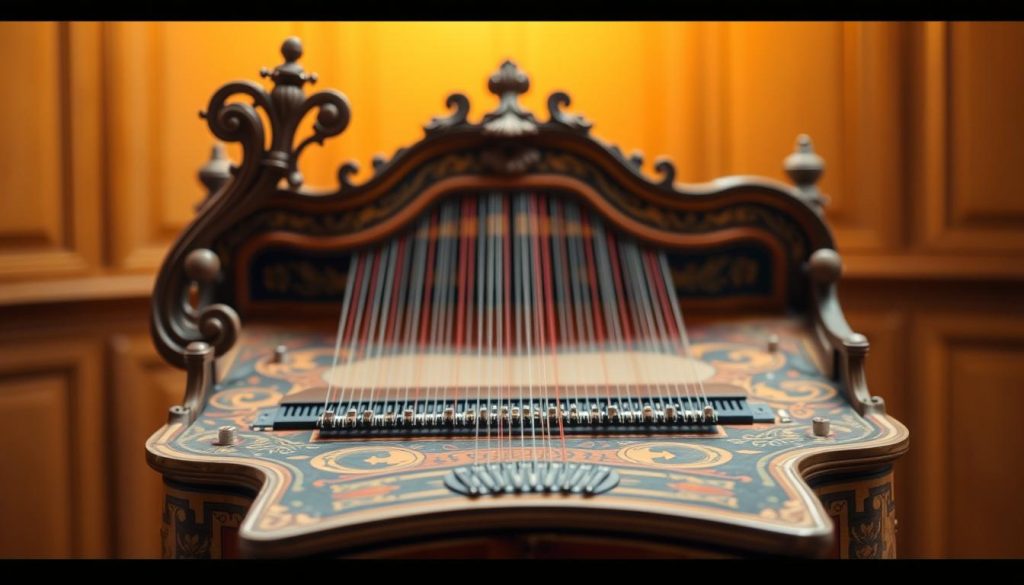
The compass is measured in octaves and available notes. It determines the possible repertoire and the instrument’s ergonomics for the performer.
Modern Delrin plectra offer excellent durability and a tone similar to that of wooden plectra. They reduce wear without altering the historic tonal character.
Adjustable pitch (440 or 415 Hz) remains crucial when tuning with other instruments. Remember to check this setting for your concerts.
“Size and construction influence resonance more than appearance.”
- Dimensions: affect projection and space requirements.
- Spinets: compact and suitable for small spaces without sacrificing touch.
- Technical choice: the plectra, compass and pitch determine suitability for professional use.
| Feature | Impact | What to check |
|---|---|---|
| Compass (octaves) | Repertoire covered | Number of available notes |
| Plectra | Durability & tone | Delrin or wood |
| Pitch | Tuning compatibility | 440 / 415 Hz |
For an accurate estimate and information about an instrument’s history, consult this useful resource: how much a harpsichord is worth.
The benefits of high-quality jacks and plectra
The precision of the components directly affects the clarity of each note’s attack.
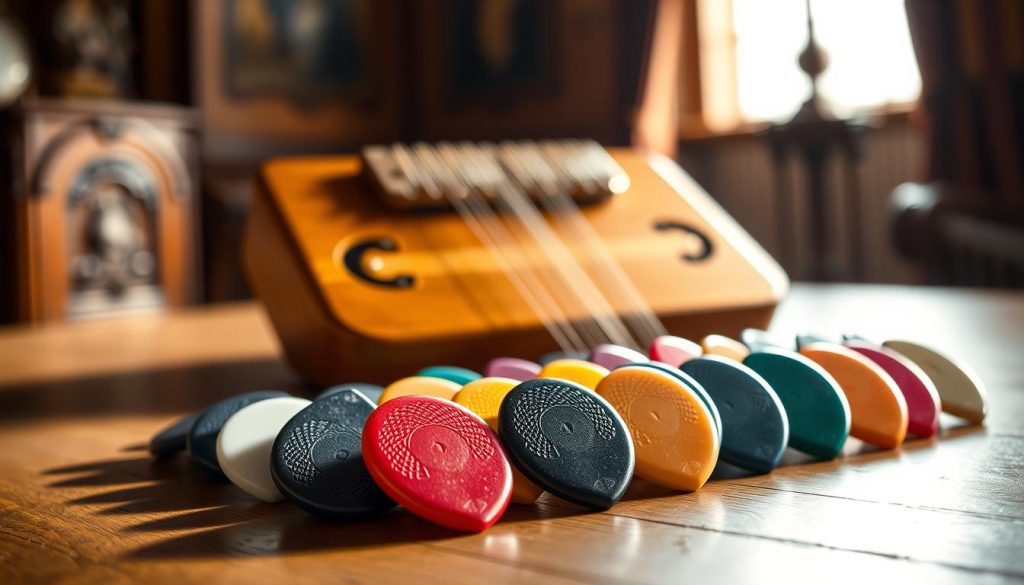
Delrin plectra provide consistent action. They prevent frequent breakage and give the buff stop a uniform response. Precise adjustment of the plectra optimizes note activation.
The role of Delrin plectra
These plectra ensure consistent tension and reduced wear. The result is cleaner playing and greater tuning stability over time.
Maintaining wooden jacks
Wooden jacks maintained by Thomas Murach in the workshop provide the mechanical precision required for smooth pedal action.
- Precision: the jacks ensure an even attack across the notes.
- Durability: regular maintenance extends the sound quality of every spinet or wooden instrument.
- Workshop service: our workshop corrects any tuning or jack problem to protect your daily practice.
| Component | Benefit | Recommended action |
|---|---|---|
| Delrin plectra | Stable buff-stop action | Fine adjustment in the workshop |
| Wooden jacks | Mechanical precision | Servicing by Thomas Murach |
| Spinet | Compact and responsive | Regular maintenance of the legs and strings |
To explore more educational resources devoted to pianos and keyboards, visit the best website for learning piano.
Choosing pitch and compass to suit your repertoire
Your choice of pitch and number of octaves determines the repertoire you can play. A compass of four to five octaves is sufficient for most Baroque and Classical works.
Check the 440 / 415 pitch to ensure you are in tune with your partners. An unsuitable setting makes ensemble work more difficult.
Instruments with buff-stop pedals provide additional tonal colors. They make it easier to perform varied works and enrich the playing experience.
The combination of wooden jacks and Delrin plectra provides a precise tactile response. This helps players master the nuances of pedal technique and achieve clear attacks.
Finally, check the dimensions and ergonomics, especially for a compact spinet. Suitability for the space and for the musician’s feet ensures comfortable practice.
| Criterion | Recommended option | Impact |
|---|---|---|
| Compass | 4–5 octaves | Covers the standard repertoire |
| Pitch | 440 / 415 Hz | Ensemble tuning compatibility |
| Stops | buff-stop pedals | Tonal versatility |
| Materials | wooden jacks + Delrin plectra | Tactile response and durability |
Monthly rental rules and guarantees
Monthly rental comes with a clear framework to protect both the instrument and the renter. We require a security deposit in the form of an uncashed check and proof of personal liability insurance to cover any damage. These measures are intended to preserve the condition of the instruments throughout the loan period.
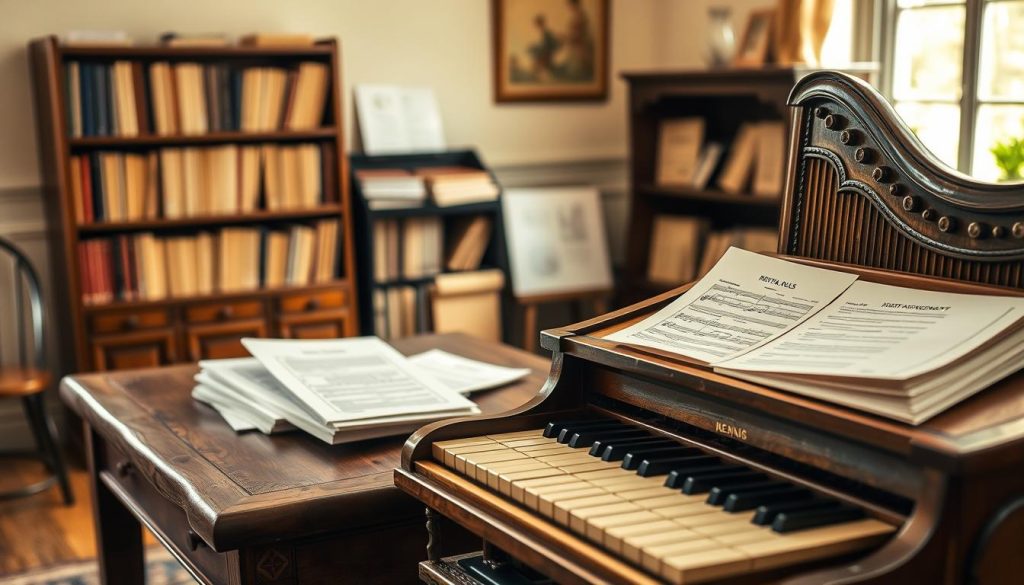
Security-deposit and insurance requirements
The security deposit is retained until the instrument is returned and is used to cover any necessary repairs. The insurance certificate must state that it covers the instrument and transportation costs if technical work is required.
Maintenance and precautions:
- The contract includes rules for maintaining the jacks and protecting the plectra from temperature fluctuations.
- Instruments, whether a harpsichord or a spinet, must remain at the renter’s home to ensure their security and stability.
- Rates are transparent and include guarantees concerning technical condition, including a pitch of 440 or 415, as requested.
“A clear contract protects the instrument and reassures the musician.”
| Item | Requirement | Benefit |
|---|---|---|
| Security deposit | Uncashed check | Simple, quick coverage |
| Insurance | Personal liability + instrument coverage | Protection against damage and theft |
| Maintenance | Compliance with rules concerning jacks and plectra | Longer lifespan, stable tuning |
| Location | Instrument kept at home | Acoustic stability and security |
| Rates | Clearly displayed | No hidden charges for the user |
Delivery and on-site maintenance arrangements
Each move is planned according to the instrument’s dimensions to ensure safe, trouble-free installation.
Transportation rates: maximum flat fee of €175. Reduced rate of €40 within 60 km of Saint-Michel-l’Observatoire or the Burgundy branch. Beyond that distance, €0.40 per additional kilometer.
On-site service: our technicians tune the instrument and inspect its wooden jacks. They check string tension, the condition of the plectra and the stability of the notes.
- Verification of 440 or 415 pitch to ensure tuning ready for pedal playing.
- Consideration of the dimensions of a spinet or larger instrument to ensure safe installation.
- Transportation available for events (Festival Fête Baroque, Sauternes, December 12–14, 2026).
Good to know: the service includes fine adjustment of the buff stop and its pedals. The octave compass and pitch stability are therefore guaranteed before handover.
Support for artists and prestigious ensembles
Artistic partnerships ensure that our instruments regularly appear on major stages.
We work with Les Arts Florissants, Les Talens Lyriques, Le Concert d’Astrée and Les Musiciens du Louvre. These ensembles use our harpsichords for concerts, recordings and tours.
The workshop prepares each instrument to ensure stable tuning at 440 or 415 and adjusts the mechanisms to provide a precise touch.
Our services cover a broad range: historic models, fortepianos and spinets. We adapt the octave compass to the repertoire and the needs of soloists.
On the stages of the Théâtre des Champs-Élysées, the Philharmonie and Radio France, our technicians provide meticulous maintenance of wooden jacks and plectra.
“A well-prepared instrument transforms the quality of a concert.”
- Service for conservatories, schools and professional tours.
- Buff-stop and buff-stop pedal adjustments on request.
- Technical assistance before every concert or recording.
Availability and waiting-list management
Given the high level of demand, our centralized management ensures fair access to harpsichords and spinets. A transparent waiting list organizes requests according to their date, intended use and model availability.
We regularly expand our collection with new, high-quality models. Every incoming instrument goes through the workshop for a complete inspection: jack adjustment, plectrum checks and examination of the wood.
Before every rental, we confirm the octave compass and 440 or 415 pitch. The dimensions and ergonomics are also checked to ensure that the buff stop and pedals suit the musician.
“Transparency about availability makes artistic planning easier.”
- Simple online registration to join the list.
- Regular updates about new models.
- Systematic technical inspection before handover.
| Point | Action | Benefit |
|---|---|---|
| Waiting list | Chronological allocation | Fair access |
| Preparation | Jacks, plectra, wood | Playing quality |
| Inspection | Compass, octaves, pitch | Musical compatibility |
Visit our website regularly to follow new arrivals and join the list. We contact registered applicants as soon as a suitable instrument becomes available.
Conclusion
In summary, access to a well-maintained instrument profoundly improves the quality of musical practice.
Choosing a model suited to your level and repertoire provides remarkable touch and tone. Our technical expertise ensures personalized support for worry-free use.
To learn more about our plans and options, visit our page devoted to renting an instrument. Feel free to contact our workshop for advice about your final choice.
We are proud to support musicians in France by providing exceptional instruments and professional assistance.