
The harpsichord remains a central instrument in Baroque music and calls for careful research before purchase.
Choosing the right model requires advice from experts who can vouch for its quality and sound condition.
First consider your repertoire and skill level. This will guide your choice between new and second-hand instruments and toward reputable brands.
Specialists offer personalized support with trials, restoration, and warranties. For a reliable selection, consult expert dealers and specialist workshops.
To discover vetted listings and benefit from professional support, explore the dedicated section on Green Musicians, which offers second-hand instruments and support services.
Where can you find a harpsichord for sale?
Identifying models that have been tested through rental often helps you choose with confidence.
Directory of specialist makers
For a reliable instrument, contact reputable makers. Pascal Roy, at 16 Rue Gigodot, 69004 Lyon, offers a selection of harpsichords and spinets. His workshop lets you try several models and assess the touch and notes.
Rent-to-own services
Renting makes an extended trial possible. Jacques Magnette, in B-4920 Aywaille, offers services in France and Belgium. The Sassmann Etude 45 model rents for €59 per month and has a sale price of €2,850.
- Rent-to-own arrangements allow monthly payments to be deducted from the final price.
- Some models have two registers, allowing you to vary the tone and play on different keyboards.
- Check the options (lute registers, transposition) before signing.
| Maker / Service | Location | Offer | Indicative price |
|---|---|---|---|
| Pascal Roy | Lyon | Harpsichords and spinets available to try | Contact the workshop |
| Jacques Magnette | Aywaille (Belgium) | Rent-to-own | €59/month (Sassmann Etude 45) |
| Sassmann Etude 45 | Rental/sale | Two registers, suitable for students | Sale price: €2,850 |
To explore second-hand listings and options in Belgium and France, consult this buying directory.
Essential criteria for choosing the right instrument
First identify the type of music and keyboard range you need.
Range and compass: if your budget is tight, prioritize a G–D compass. This avoids having to transpose the left-hand notes by an octave and makes playing more comfortable.
Registers and versatility: an instrument with two registers (for example, 2 x 8′ or 1 x 8′ + 4′) offers varied tone colors. This helps you work on nuance and adapt to different repertoires.
- Ask your music teacher for advice to confirm your choice of model.
- Choose a local maker: this will keep maintenance costs down and ensure prompt service.
- Check that the sound remains balanced across the full compass and that the bass and treble notes blend well.
- Discuss the total price, including any rental and follow-up service costs.
For more detail on these points, consult the choosing well page, which explains practical tests and comparisons.
Advantages of buying a new harpsichord
Buying new offers rare freedom: you define the voice and feel from the moment you place the order.
Customizing the sound and touch
Complete control. By working with the maker, you choose the string registers and keyboard response.
The Neupert model after J. H. Silbermann, made in 1991, serves as an example: its new price is €13,048.
- A purchase allows you to adapt the registers and action to your repertoire.
- The supplied invoice and stringing plan make maintenance by the maker easier.
- If you are considering renting before making a decision, negotiate a trade-in for your old instrument.
| Criterion | Advantage | Example |
|---|---|---|
| Customization | Adjustment of touch and registers | Neupert after J. H. Silbermann |
| Transparency | Detailed invoice and stringing plan | Ease of maintenance |
| Value | Material quality and longevity | New price: €13,048 |
To compare brands and refine your choice of model, also consult the best piano brands and ask a specialist for advice.
Tips for buying a second-hand model
A methodical inspection reduces the risk of unpleasant surprises when buying second-hand. Begin with a thorough visit: listen, touch, and ask for the instrument’s history.
Checking the action
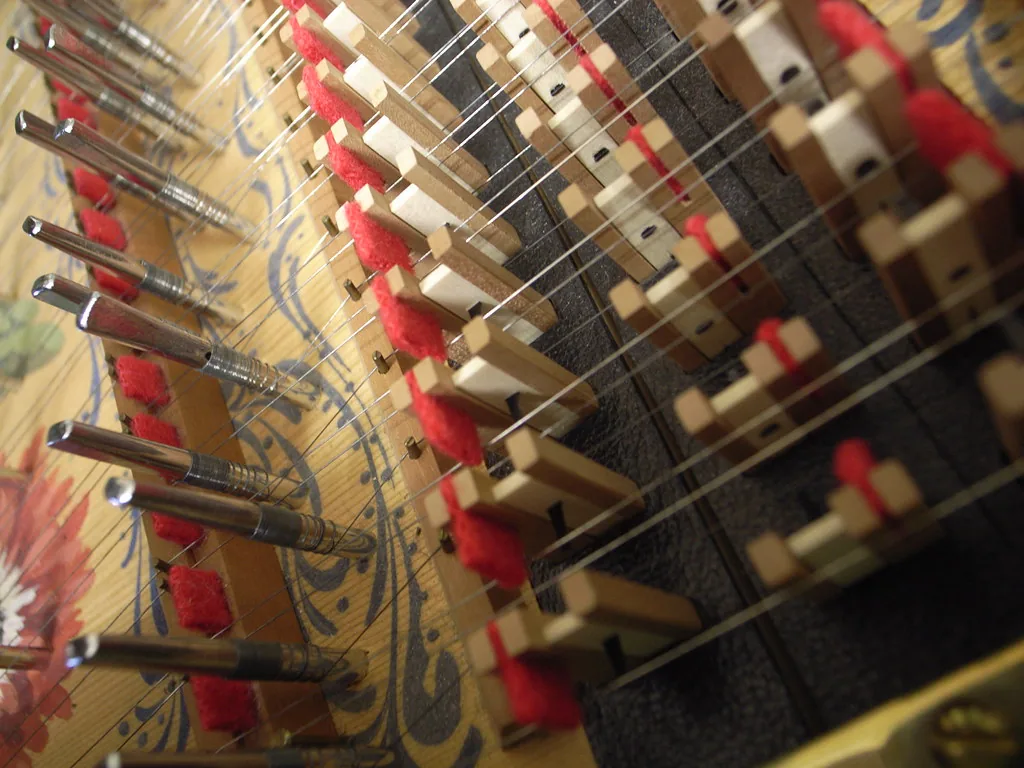
Test each keyboard and play every note. Look for stuck keys or temperamental jack registers.
Bring in a maker if the mechanism seems uneven. A professional will identify the adjustments required.
Why the condition of the strings matters
Examine the strings for signs of wear, corrosion, or breakage. Aging strings impair the sound and increase repair costs.
A recent model may offer better stability: the Yves Crétinon spinet (2018) sells for €6,450 and is a good example of modern reliability.
Negotiation and expert advice
Base your negotiations on a repair estimate if necessary. The price should reflect the true condition of the keyboard, registers, and strings.
Renting a second-hand instrument can be a way to test it before making a final purchase. For rare pieces, historical preservation often determines value: the 1620 Ruckers is offered at €12,500.
| Model | Year | Key condition | Indicative price |
|---|---|---|---|
| Ruckers (original) | 1620 | Patinated, historical value | €12,500 |
| Yves Crétinon spinet | 2018 | Recent, stable sound | €6,450 |
| Practical advice | – | Inspect the action and strings | Negotiate based on the estimate |
Conclusion
Before investing, list your priorities: type of register, keyboard compass, and budget. This preparation makes it easier to compare models and prices.
Whether it is a new or second-hand instrument, advice from a maker will help ensure the condition of the strings and the quality of the notes. Renting with an option to buy remains a safe way to test the touch over time.
Check every detail and arrange a trial before payment. For exceptional lots, consult the prestigious sale listing for the green lacquered wood harpsichord to review the stated terms and prices.