
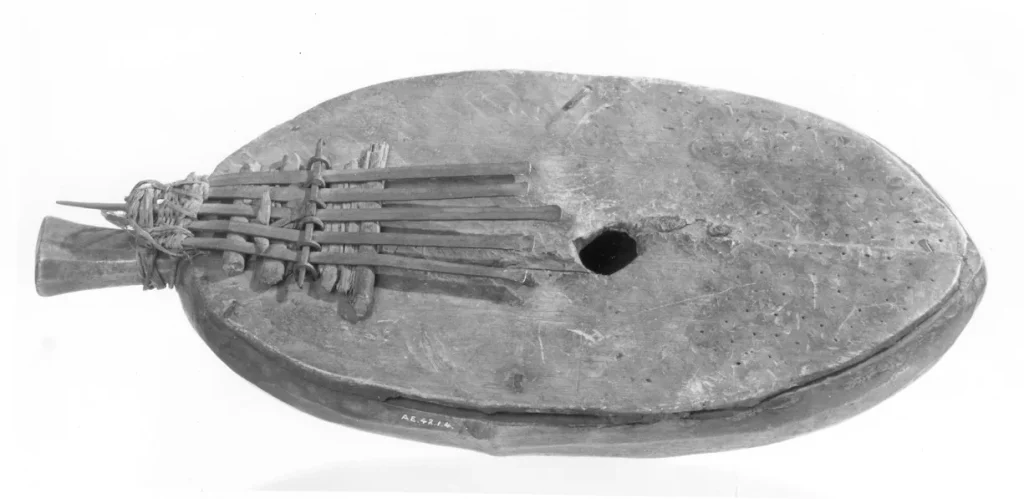
The sanza, an ancestral instrument, is often considered the precursor of the modern kalimba. With a rich history spanning more than 3,000 years, it belongs to the lamellophone family, which is widespread across Africa.
Known by various names depending on the region, such as mbira or likembe, the sanza has played a key role in traditional African music. Its cultural importance extends across the continent, symbolizing a profound musical heritage.
This article explores the origins, evolution, and cultural impact of this fascinating instrument. To learn more about the different varieties of sanza, consult our comprehensive guide.
Introduction to the Sanza: An Ancestral Instrument
The sanza is an ancestral instrument that fascinates listeners with its simplicity and rich sound. Made of metal tines attached to a resonating body, it belongs to the lamellophone family. Often made from hard wood, such as mahogany or acacia, this object is a living testament to human ingenuity.
What Is the Sanza?
The sanza is a traditional lamellophone characterized by its vibrating metal tines. These tines, generally made from recycled metal, are attached to a wooden board. The instrument’s size varies among ethnic groups, ranging from 6 to 25 tines. A resonator, often a calabash, amplifies the unique sound produced by this instrument.
The Sanza in African Culture
In many African communities, the sanza plays a central role in music and rituals. It is used to communicate with ancestors, particularly among the Shona. This instrument is also present during rites of passage and tribal councils, symbolizing a profound spiritual connection.
“The sanza is much more than an instrument; it is a voice connecting the past to the present.”
| Instrument | Number of tines | Materials | Use |
|---|---|---|---|
| Sanza | 6 to 25 | Wood, metal | Personal, ceremonial |
| Mbira | 22 to 28 | Wood, metal | Spiritual, musical |
| Marimba | Variable | Wood | Musical |
The Historical Origins of the Sanza
The roots of the sanza reach deep into a history spanning thousands of years. This instrument, the ancestor of the kalimba, has endured through the ages while retaining its essence. Its earliest traces date back more than 3,000 years, highlighting its importance in African culture.
The Earliest Archaeological Evidence
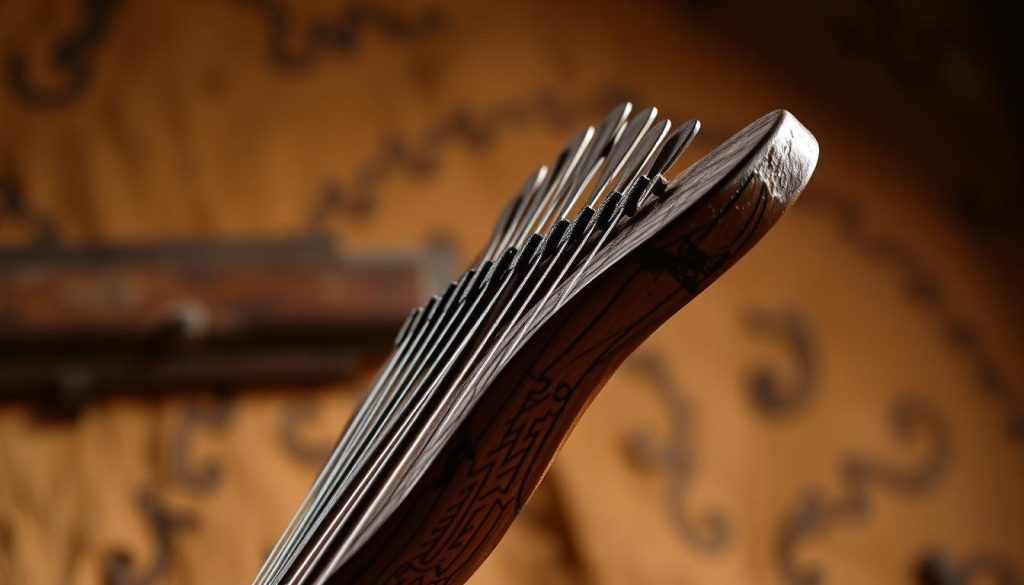
Remains of bamboo sanzas dating from 1000 BCE have been discovered in Cameroon. These artifacts attest to the ingenuity of early craftspeople. Analysis of discoveries in West Africa reveals an early mastery of the available materials.
Over the centuries, the instrument evolved. The transition to metal in the seventh century in the Zambezi Valley marked a turning point. This innovation provided greater durability and a richer sound.
The Evolution of the Sanza Through the Centuries
The sanza spread across the continent through trade routes. Displaced populations helped carry it throughout the world. During colonization, materials such as nails and bicycle spokes were adapted for its construction.
“Despite colonial prohibitions, traditional crafting techniques persisted, demonstrating cultural resilience.”
In the sixteenth century, the Portuguese described this instrument with admiration. Father Dos Santos notably emphasized its role in local rituals. This account helped the sanza gain recognition beyond Africa’s borders.
Traditional Sanza Construction
The sanza is made using ancestral techniques passed down from generation to generation. Every stage, from selecting the materials to final assembly, demonstrates unique expertise. Both simple and complex, this instrument is the product of harmony between nature and craftsmanship.
Materials Used
Wood lies at the heart of sanza construction. Craftspeople favor varieties such as mahogany for its resonance and acacia for its durability. The process of selecting and seasoning the wood can take from 6 to 12 months, ensuring optimal quality.
The tines are traditionally forged from spring steel. This metal offers a rich sound and increased strength. Dried calabashes serve as natural amplifiers, adding a unique acoustic dimension to the instrument.
Handcrafting the Instrument
The tines are bent while hot using an ancestral method that requires precision and patience. Each tine is then attached to a wooden board and adjusted to produce the desired notes. Tuning is performed by moving the tines, a meticulous process requiring a trained ear.
Decoration also plays an important role. Craftspeople use materials such as shells or bottle caps to personalize each piece. Passing this expertise down through generations ensures the survival of the craft.
“Every sanza is a work of art, carrying a unique history and soul.”
The Sanza and the Kalimba: A Close Relationship
The kalimba, a modern version of the sanza, arose from a key innovation. Although distinct, these two instruments share a fascinating musical history. Their relationship illustrates how ancient traditions can inspire contemporary creations.
Differences Between the Sanza and the Kalimba
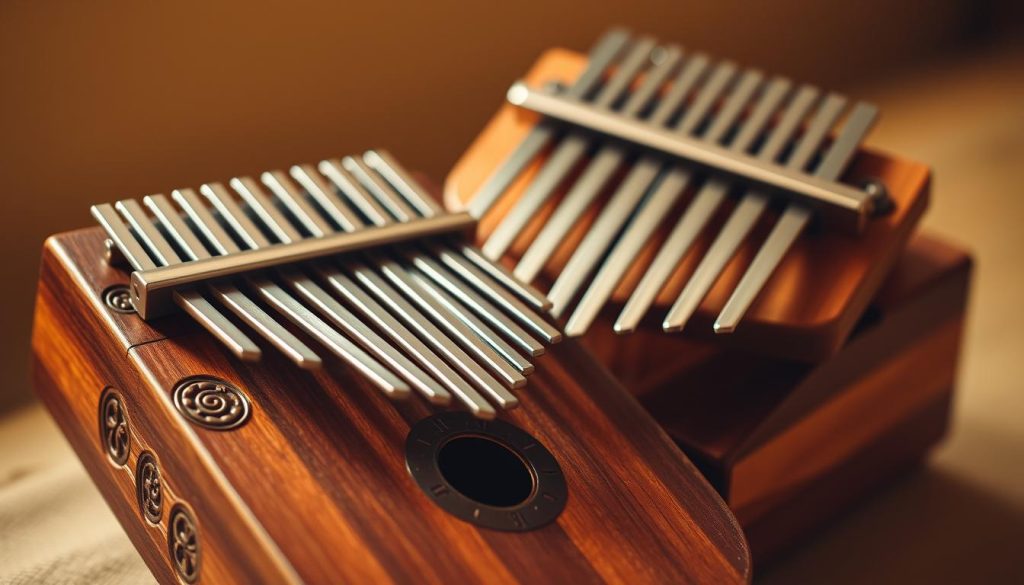
The sanza and the kalimba differ in their construction and use. Often made with local materials, the sanza has a variable number of tines. The kalimba, by contrast, was standardized with a diatonic scale introduced by Hugh Tracey in 1954.
The kalimba’s ergonomics were also improved to make it easier to play. Unlike the sanza, it is often tuned to G major or C major and adapted to Western sheet music.
The Sanza’s Influence on the Modern Kalimba
The kalimba owes much to the sanza, particularly its traditional melodic patterns. Hugh Tracey transformed this ancestral instrument into a version accessible to the general public. Brands such as Gecko and Hokema helped popularize it.
One notable example is the use of the sanza on Paul Simon’s album Graceland. This collaboration highlighted Africa’s musical heritage, strengthening interest in the kalimba.
“The kalimba is a bridge between African traditions and modern music.”
In 2020, UNESCO listed the sanza in recognition of its cultural importance. This recognition encouraged the preservation of traditional crafting techniques while inspiring new creations.
The Cultural Role of the Sanza in Africa
For centuries, this instrument has shaped African cultural life. It is far more than a simple musical object; it embodies a rich and diverse heritage. Its uses range from spiritual rituals and social ceremonies to coded communication.
The Sanza in Traditional Ceremonies
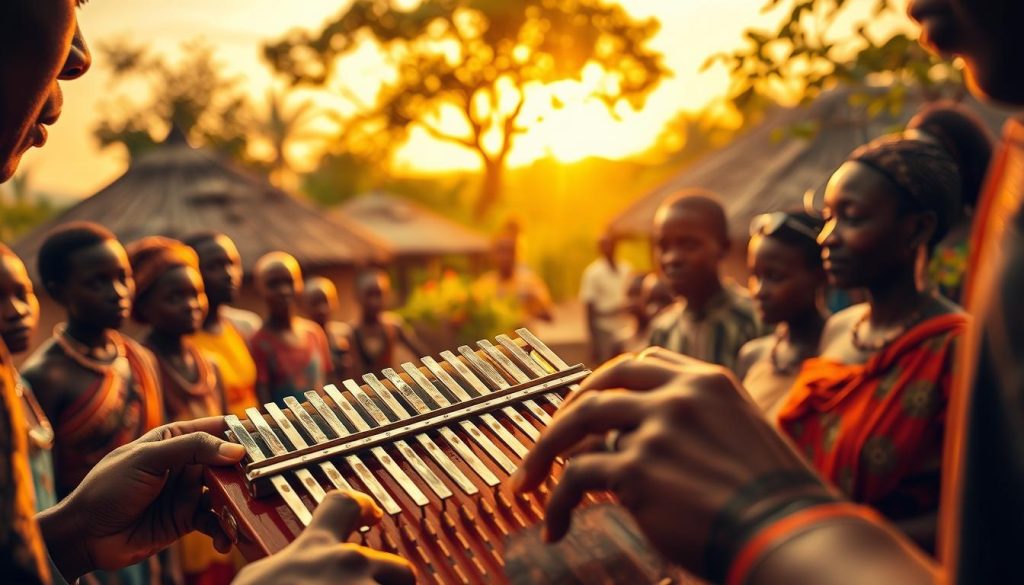
In many communities, including the Zezuru of Zimbabwe, this instrument plays a key role in funeral rituals. It is also used in spiritual-possession ceremonies known as Bira. These practices strengthen the bonds between the living and their ancestors.
The rhythms and harmonics produced by the sanza serve as a bridge between the physical and spiritual worlds. This sacred use demonstrates its importance in traditional African music.
The Sanza as a Communication Instrument
Beyond its musical role, it has also been used as a communication tool. Specific rhythms and coded melodies allow messages to be transmitted over long distances. Among the Shona and Kongo peoples, this instrument has served as a mnemonic system for telling stories or sharing proverbs.
“A sanza without song is like a bow without an arrow.”
During colonization, it became a symbol of cultural resistance. Communities used this instrument to preserve their traditions and identity. Today, it continues to inspire Pan-African movements.
| Role | Community | Function |
|---|---|---|
| Spiritual rituals | Zezuru (Zimbabwe) | Communication with ancestors |
| Coded communication | Shona, Kongo | Transmission of messages |
| Cultural resistance | Various ethnic groups | Preservation of traditions |
The Modern Evolution of the Sanza
Traditional sounds now meet modern technologies. Once reserved for rituals, this instrument now appears in studios and on contemporary stages. Thanks to technical innovations, it continues to captivate musicians around the world.
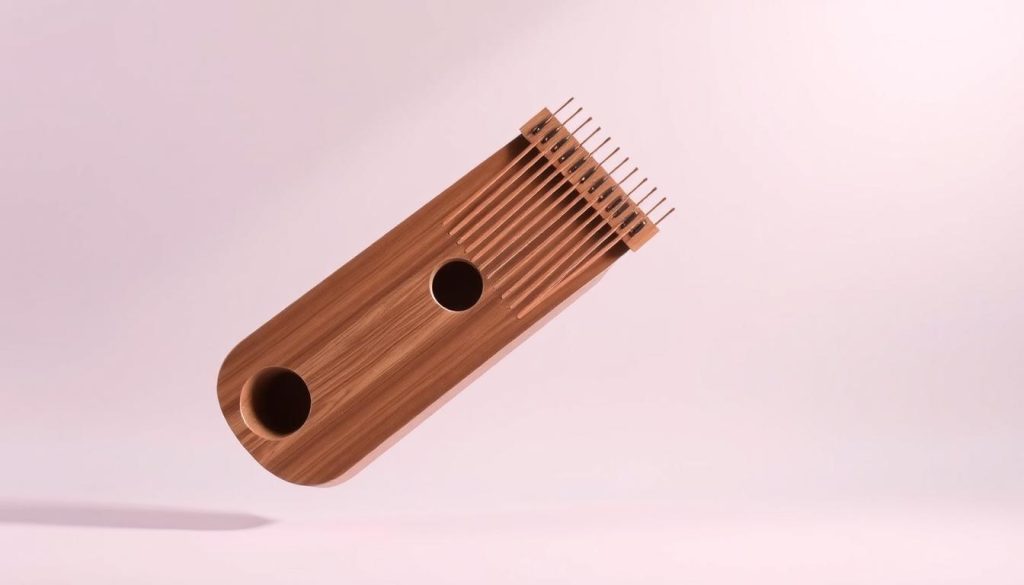
Contemporary Adaptations
The Hugh Tracey brand has played a key role in this transformation. By creating electroacoustic models, it made it possible to amplify this instrument’s unique sounds. Piezoelectric pickups and MIDI systems have been integrated to provide an enhanced musical experience.
The materials have also evolved. Acrylic sometimes replaces traditional wood, providing greater durability. DIY kits and laser-personalization options allow enthusiasts to create their own version.
The Sanza in Contemporary Music
This instrument has established itself in a variety of genres, from electronic to classical music. Artists such as Fakear have incorporated it into their compositions, blending tradition with modernity. Covers of classical pieces played on chromatic models demonstrate its versatility.
Social media has also contributed to its revival. Performance videos and tutorials have sparked renewed interest. Educational projects now use it in music schools, ensuring that it is passed on to future generations.
“The sanza is a bridge between ancestral traditions and modern innovations.”
Conclusion: Rediscovering the Sanza
This ancestral instrument, the bearer of a history spanning thousands of years, continues to inspire today’s musicians. Its journey, shaped by innovations and traditions, demonstrates an invaluable cultural richness. In the face of standardization, preserving it remains a major challenge for future generations.
For curious musicians, reliable sources such as the Institute of Forgotten Music offer a valuable guide. The choice of materials and construction techniques directly influences the sound quality and durability of the instrument.
The future of the sanza looks promising thanks to technological hybridization and growing academic recognition. Modern sheet music and contemporary adaptations open up new possibilities for this musical heritage.
Finally, exploring this ancestral art through handcrafted sanzas is an invitation to rediscover timeless music. Every note played is a tribute to a tradition that has endured through the ages.