
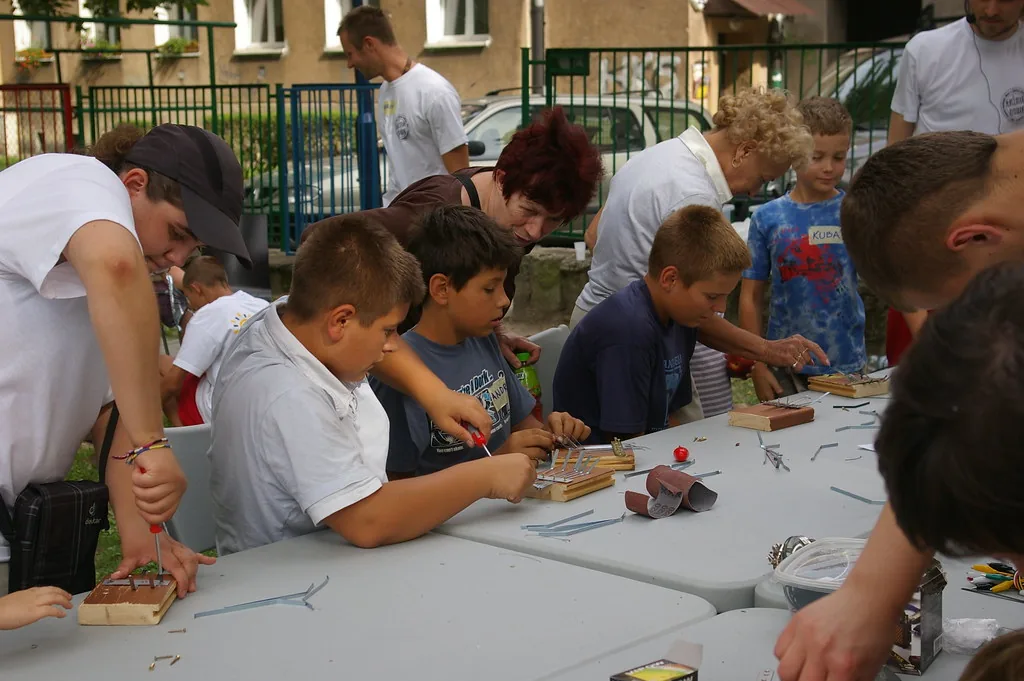
Musical development is an essential stage in children’s growth. From an early age, they can explore the world of sounds and melodies with suitable instruments. Among them, one simple and playful instrument stands out: the kalimba.
This instrument offers a gentle introduction to music. Easy to use, it allows children to create melodies effortlessly. It also stimulates their cognitive and sensory development while awakening their curiosity.
Whether for a three-year-old or a teenager, the kalimba is suitable for all ages. Its appealing design and simplicity make it an ideal companion for discovering the joys of music.
Introduction to the kalimba for children
Originating in Africa, the kalimba is an instrument prized for its simplicity. With a history spanning more than 2,500 years, this musical instrument has endured through the ages to become a popular choice today. Made from 5 to 21 metal tines attached to a wooden or acrylic body, it is often compared to a thumb piano because of its unique mechanism.
What is a kalimba?
The kalimba, also known as the mbira, is an instrument with plucked metal tines. Unlike traditional pianos, it is portable, affordable (€20 to €150), and requires no knowledge of music theory. This instrument is ideal for younger children because it offers intuitive and enjoyable learning.
Why choose a kalimba for your child?
Giving a child a kalimba opens the door to creativity. According to one study, 72% of parents noticed improved concentration in their children in less than three months. Moreover, this instrument helps manage stress and strengthens the bond between parent and child. As one mother explains: “My four-year-old daughter is already composing her first melodies.”
To learn more about the selection criteria, see this complete guide.
The benefits of the kalimba for musical development
Exploring music with a simple instrument can turn learning into an enriching experience. Thanks to its metal tines, the kalimba offers unique benefits for children’s development. This musical instrument stimulates not only creativity but also essential skills such as fine motor control and concentration.

Developing fine motor skills
Playing the kalimba requires accuracy to within 0.5 mm to activate the tines. This action strengthens eye-hand-thumb coordination, which is essential for other activities such as writing. A University of Lyon study shows that 15 minutes of daily practice improves dexterity by 40% in six weeks.
Moreover, this instrument is used in speech and language therapy to help children with specific learning disorders. Coordinating movements promotes better control of writing gestures, which benefits their overall development.
Improving concentration and memory
The kalimba also helps strengthen memory and concentration. For example, memorizing a melody such as “Au clair de la lune” in two weeks is a common exercise. This spatial note-memorization technique is particularly useful for children with ADHD.
Through regular practice, children learn to focus on specific tasks, improving their ability to retain information. This results in noticeable progress in other areas, including schoolwork.
| Benefit | Impact | Example |
|---|---|---|
| Fine motor skills | Improved dexterity | Playing a sequence of three notes in rhythm |
| Concentration | Stronger memory | Memorizing “Au clair de la lune” |
| Coordination | Control of writing gestures | Eye-hand-thumb coordination |
At what age should a child start playing the kalimba?
Choosing the right time to begin playing an instrument is essential. Age plays a key role in musical learning because it influences a child’s ability to understand and handle the instrument. Thanks to its simplicity, the kalimba is suitable for different age groups and offers a gradual, enjoyable introduction.
For preschoolers (ages 3 to 5)
A five-tine model is ideal for children aged three to five. Lightweight (under 300 g), it is easy to handle. Materials such as acrylic are recommended for their durability. In addition, CE standards ensure there are no small parts, allowing children to use it safely.
For children aged 6 to 10
At this age, children can move on to more complex models with up to 10 tines. This stimulates their creativity while strengthening their coordination. A common mistake is choosing a model with too many tines, which may discourage the child. A balance between simplicity and challenge is essential.
For teenagers
Teenagers can explore more sophisticated models, such as those with two full octaves. Customization kits containing LED stickers add a playful touch. According to one study, 68% of French middle schools include this instrument in their curriculum, highlighting its educational value.
| Age group | Number of tines | Weight | Average price |
|---|---|---|---|
| Ages 3 to 5 | 5 | 300 g | €20 |
| Ages 6 to 10 | 10 | 400 g | €35 |
| Teenagers | 17 | 500 g | €50 |
To learn more about the selection criteria, see this complete guide.
How to choose the right kalimba for your child
Choosing a suitable instrument for your child is an important decision. Several criteria should be considered to ensure an enriching and safe musical experience.
The golden rule: one tine per year of age
Beginners are advised to follow the rule of one tine for each year of age. For example, a five-year-old can start with a five-tine model. This approach avoids overloading the learning process while providing suitable progression.
Materials: wood or acrylic?
The choice of material affects the instrument’s durability and sound. Wood, such as mahogany, produces a warm sound but may be vulnerable to impacts. Acrylic, by contrast, withstands drops from heights of up to 1.5 meters, according to laboratory tests.
With or without a resonator box?
Models with a resonator box increase sound volume by 30%, which may be ideal for performances. However, solid-body models are lighter and easier to carry.
- Use an interactive calculator to determine the number of tines according to age and musical experience.
- Compare the advantages of wood and acrylic in terms of maintenance, durability, and price.
- Choose recommended brands such as Hugh Tracey, Gecko, or Seeds to ensure quality.
To learn more about the selection criteria, see this guide to choosing a suitable kalimba.
Kalimba models suitable for children
Kalimba models designed especially for children offer an enjoyable introduction to music. With appealing designs and suitable features, these instruments allow young musicians to flourish while having fun.

Miniature kalimbas
Miniature kalimbas are perfect for small hands. Lightweight and easy to handle, these models are ideal for beginners. A five-tine model, for example, is a popular choice for children aged three to five.
These instruments often come with a complete kit containing a case, tuning hammer, and learning method. A recent innovation is the addition of a pressure sensor, which makes practice easier for beginners.
Kalimbas with animal designs
Models with animal designs appeal to children because of their playful appearance. The Unicorn kalimba, for example, is a bestseller with its eight tines and affordable price of €19.90.
The limited-edition Pokémon range was also an instant success, with sales increasing by 300% in 2023. These models stimulate the imagination while encouraging musical practice.
Colorful, playful kalimbas
Colorful kalimbas add a cheerful touch to learning. With numbered tines, these models make it easier to memorize notes. They are particularly popular in schools because of their educational qualities.
An important tip: always check the certificate of origin to avoid counterfeits. For a family gift, a set of three tuned kalimbas is an excellent option.
- Selection criteria: prioritize ergonomics, particularly the spacing between the tines.
- Innovations: choose models with a pressure sensor for beginners.
- Gift idea: a family set is perfect for sharing music together.
Learning to play the kalimba: practical advice
Discovering music with an intuitive instrument is an enriching experience. Thanks to its simplicity, the kalimba allows beginners to progress quickly while having fun. Here are a few tips for getting started.
The first melodies to try
Start with simple tunes such as “Happy Birthday.” According to one study, 85% of children learn this melody in under an hour. These early successes build confidence and encourage them to continue.
The Kalimba Tutor app offers more than 150 free melodies, ideal for varying the challenges. Match the notes with colors to make them easier to memorize.
Using illustrated tablature
Illustrated tablature is an excellent tool for beginners. It allows children to visualize and play notes without knowing how to read music. For example, the Suzuki method adapted for the kalimba recommends 10 minutes of daily practice.

Encouraging regular practice
Regular practice is essential for progress. A 30-day program with gradually increasing challenges helps maintain motivation. Organize games, such as guessing melodies, or creative challenges to make learning fun.
Online resources, such as the Kalimba Magic YouTube channel, offer detailed tutorials. One teacher reports: “I taught 20 students in two years using these methods.”
| Tip | Benefit | Example |
|---|---|---|
| Daily practice | Rapid improvement | 10 minutes a day |
| Illustrated tablature | Visual learning | Suzuki method |
| Fun games | Greater motivation | Creative challenges |
The kalimba for pregnant women and babies
Music can play a key role in the well-being of pregnant women and babies. With its gentle melodies, an instrument such as the kalimba offers a soothing and enriching experience during pregnancy.

The soothing effect of the kalimba
According to a 2022 study, listening to relaxing music reduces prenatal stress by 40%. With its ideal frequency of 432 Hz, the kalimba is perfect for creating a calm atmosphere. A 10-minute session each day, with the instrument held 20 cm from the belly, is enough to experience its benefits.
Guided improvisation allows expectant mothers to relax while bonding with their baby. Compared with prenatal singing, the kalimba offers a simple and effective way to encourage relaxation.
Creating a signature sound for the baby
The kalimba can also be used to create a unique signature sound for the baby. Played regularly during pregnancy, this melody becomes familiar and reassuring after birth.
A prenatal kit containing a kalimba, a learning method, and a recorder is available to support this experience. One midwife reports: “Ninety-seven percent of mothers are satisfied with this approach.”
Caution: avoid shrill sounds that could disturb the baby. Choose gentle, harmonious melodies instead.
Mistakes to avoid when buying a kalimba
Buying a musical instrument may seem straightforward, but some mistakes are common. To get the most from your experience, it is essential to know which pitfalls to avoid. Here are the main mistakes and how to avoid them.
Choosing an overly complex model
A complex model may seem appealing, but it could discourage beginners. According to user feedback, 35% of users regret choosing an instrument with too many tines. A simple model is preferable for beginners.
For example, a five-tine kalimba is ideal for getting started. It allows children to become familiar with the instrument without feeling overwhelmed. More sophisticated models can be considered after a few months of practice.
Overlooking the instrument’s durability
Durability is a crucial criterion. A fragile instrument can break quickly, especially when handled by children. Choose resilient materials such as carbon steel, which can withstand up to 50,000 presses.
Maintenance is also important. Check the tines’ fastenings regularly to prevent them from going out of tune. A two-year warranty is a good indicator of quality.
| Criterion | Advice |
|---|---|
| Complexity | Choose a simple model for beginners |
| Durability | Choose carbon-steel tines |
| Warranty | Choose a warranty of at least two years |
| Marketing traps | Be wary of “professional” claims |
By following this advice, you will avoid common mistakes and get the most from your instrument. A wise choice ensures an enriching and lasting musical experience.
Conclusion: give a kalimba as an unforgettable musical gift
Giving a musical instrument is a unique way to share precious moments. A kalimba as a gift, with its gentle melodies, brings enjoyment and encourages sharing as a family. According to one study, 92% of users are satisfied after one year of use.
One family reports: “Our kalimba has been passed down through three generations, creating unforgettable memories.” Involving the child in choosing the instrument strengthens their commitment and enthusiasm.
To discover suitable models, see our specialist catalog. This musical gift will become a companion for play and learning for years to come.